Orbea Wild RS 2027 Avinox: the eMTB that changes the war against Bosch
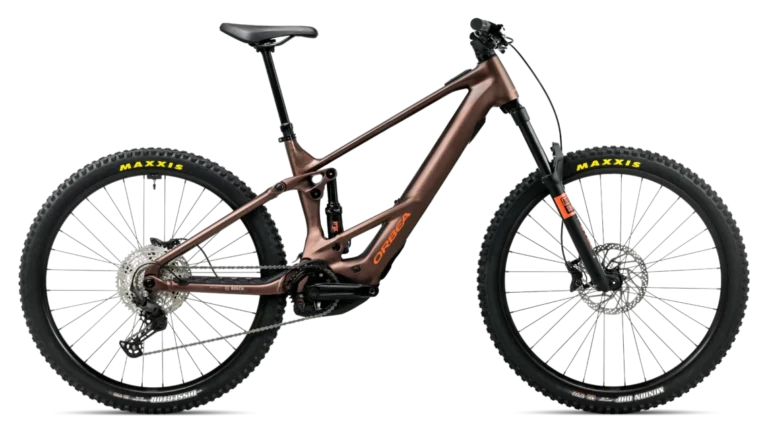
The new Orbea Wild LT with an Avinox motor is one of the most important eMTBs of the moment. Not just because Orbea is entering the battle of the most powerful motors in earnest, but because it is doing so its own way: not simply chasing the biggest wattage figure, but refining motor response, traction and electronic integration across the whole bike.
The key is in the system Avinox with Orbea's RS tuning. In other words, this is not simply about fitting a powerful motor to an enduro frame. Orbea has worked on power delivery to make the Wild LT more precise on technical climbs, more stable on descents and more cohesive as a complete bike.
Advertisement / sponsored link
Advertisement / sponsored link
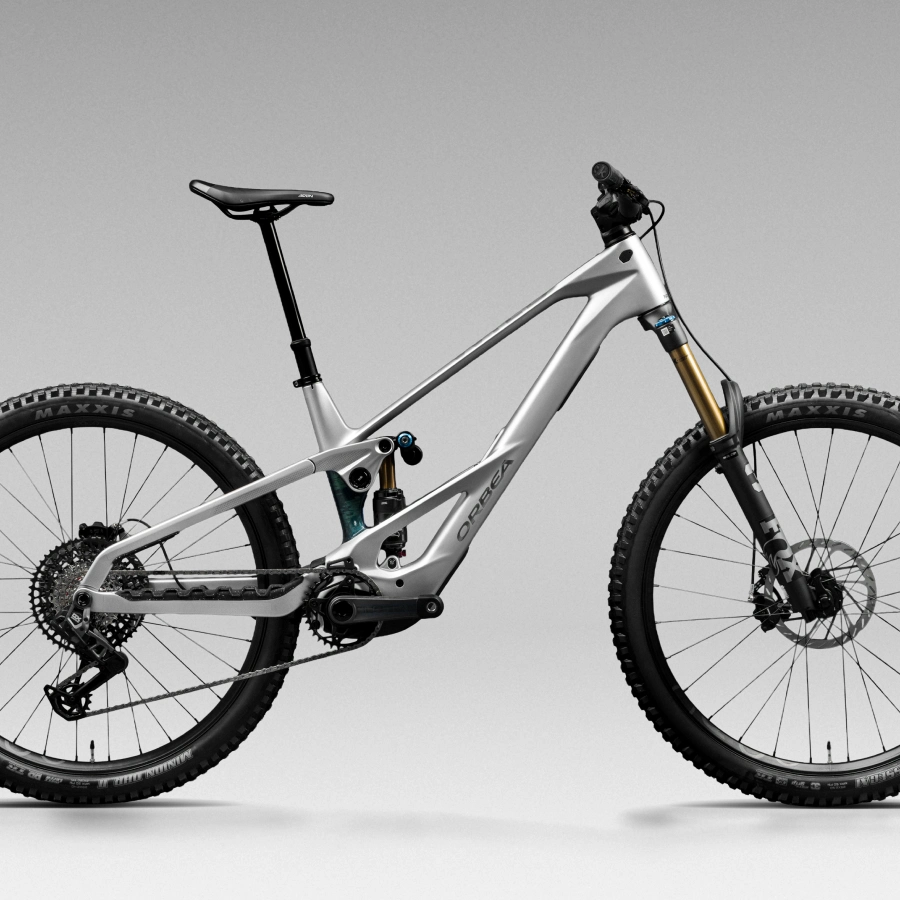
What is the new Orbea Wild LT Avinox?
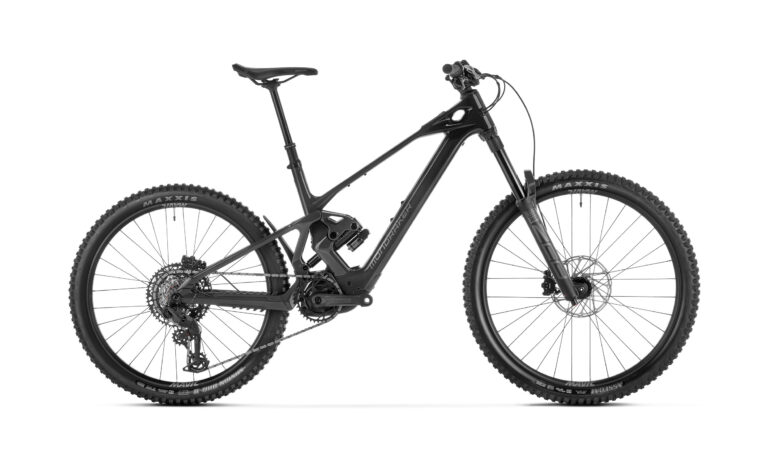
The Orbea Wild LT is Orbea's new long-travel eMTB. It is positioned as a full-power electric bike for enduro, aggressive descents, technical terrain and rides that call for a capable motor, a large battery and geometry designed for hard riding.
The main recipe is clear:
- 170 mm rear travel.
- 170 mm fork as standard, with the option of a 180 mm fork for more aggressive setups.
- Avinox M2S RS motor in most models.
- 600 Wh or 800 Wh batteries, depending on the configuration.
- 29” wheels or a mullet setup with a 29” front wheel and a 27.5” rear.
- OMR carbon or High Polish aluminium frame, depending on the version.
- Geometry adjustable via a flip chip.
- 155 mm cranks in all sizes to improve ground clearance.
This puts the Wild LT among the most aggressive eMTBs on the market. It is not a lightweight trail bike or a bike for gentle rides. It is an electric enduro machine for riders who want to descend hard, climb difficult terrain and have powerful assistance when things get serious.
Avinox M2S RS motor: the big news
The motor is the most important feature of this Wild LT. Orbea has not simply fitted a standard Avinox M2S. It has developed a specific setup called RS Tune, designed to make the motor respond sooner, with greater sensitivity and more controllable power delivery.

According to Orbea, the RS tuning has three aims:
- Faster response: the motor needs less pedal movement to begin assisting.
- Greater sensitivity: better detects the force and speed of pedaling.
- More control: assistance comes more naturally, especially in technical areas.
This matters. On an eMTB, the best motor is not always the one that pushes hardest, but the one that delivers its power best. On a rough climb with rocks, steps or roots, overly abrupt delivery can break rear-wheel traction. Orbea's idea is to give Avinox punch that the rider can control.
Power figures: understand the wattage
This motor needs a clear explanation, because its power figures can be confusing. For the Wild LT, Orbea claims up to 130 Nm of torque and 750 W in the tuned modes, and a Superboost that can unlock up to 1300 W and 150 Nm for a programmable period.
This does not mean the bike will exceed Europe's legal assisted-speed limit. Assistance must be limited in line with pedal-assist bicycle regulations. In practice, these power peaks help with acceleration, uphill starts, steps and traction on very technical gradients, rather than turning the bike into a motorcycle.
Put simply: more torque does not mean a higher maximum assisted speed; it means more drive when conditions are difficult.
Why RS Tune may be more important than the motor itself
The Avinox M2S motor already had impressive figures, but Orbea has tried to differentiate it through software. The brand claims a response up to three times faster and assistance that requires less pedal movement to activate.
This directly affects three very real situations in eMTB:
1. Uphill starts
When you stop on a rough climb, getting going again can be a nightmare. If the motor takes too long to engage, you lose balance. If it engages too abruptly, the wheel spins. The RS tuning aims to deliver assistance sooner, but in a controlled way.
2. Partial pedal strokes, or “ratcheting”
On technical terrain, you often cannot complete a full pedal stroke because the crank would strike a rock. You need to turn the crank just a few degrees to reposition the bike. Orbea has worked specifically on this behaviour.
3. Low-cadence traction
In slow climbs, torque matters more than maximum power. The goal is not to go fast, but to keep the bike moving without losing grip.
Advertisement / sponsored link
Batteries: 600 Wh or 800 Wh
Orbea offers the Wild LT with two main battery configurations: 600 Wh and 800 Wh. The 600 Wh battery makes sense for riders who prioritise agility, weight and a livelier feel. The 800 Wh option is the logical choice for long rides, lots of climbing or riders who rely heavily on higher assistance modes.
Advertisement / sponsored link
The difference is clear:
- 600 Wh: lower weight, better handling and lighter bike.
- 800 Wh: more range, more headroom for long rides and greater peace of mind when using powerful modes.
Orbea says the 800 Wh battery offers 33% more capacity than the 600 Wh version, with an approximate weight increase of 870 grams. For a heavier rider, someone carrying a backpack, riding long distances or living somewhere with lots of elevation gain, the 800 Wh battery will probably be the more sensible choice.

Geometry: real enduro, not just aggressive aesthetics
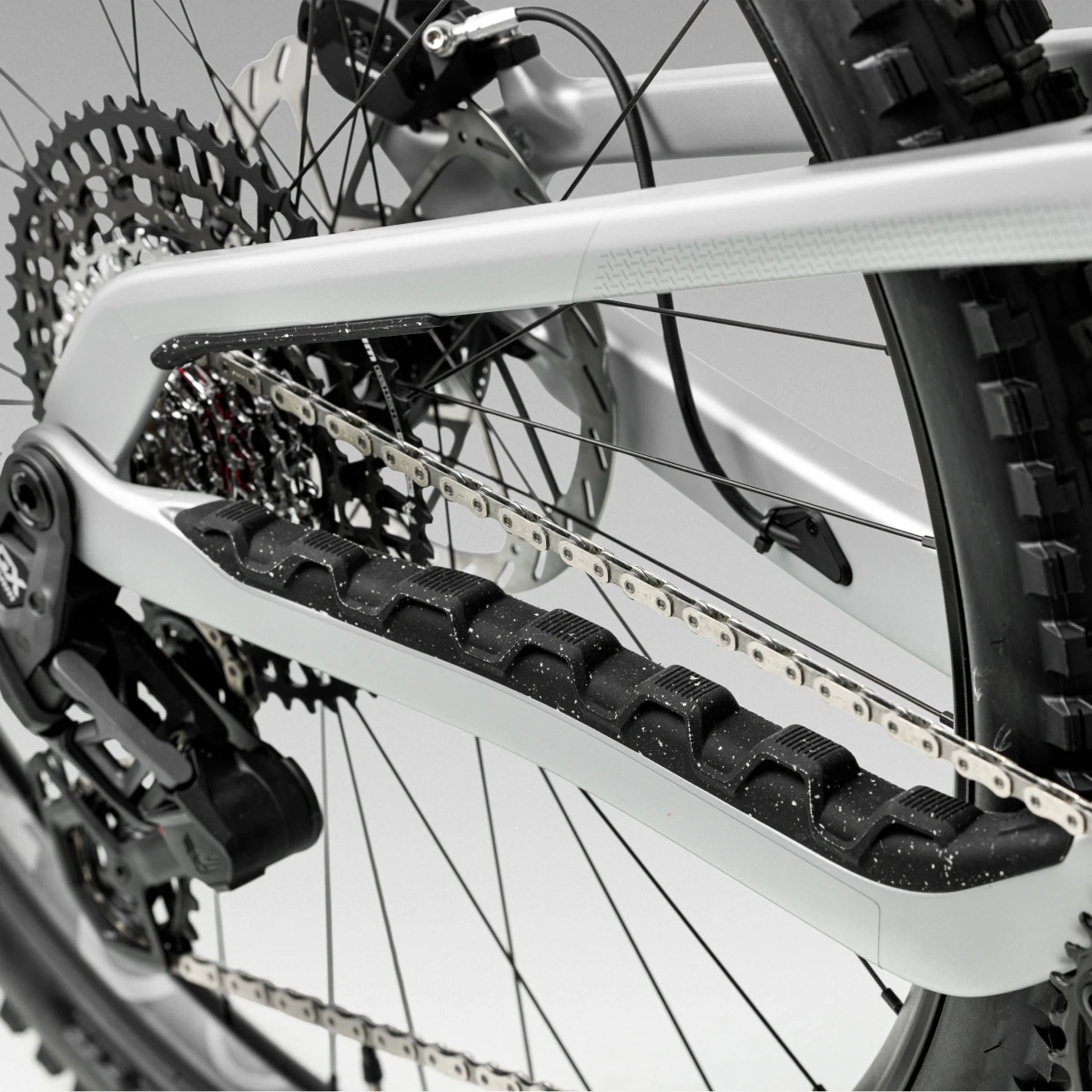
The Orbea Wild LT does more than house a powerful motor. Its frame is designed to keep weight low and central, which is essential on a full-power eMTB. A lower centre of gravity makes the bike feel more planted through fast corners, rough sections and demanding descents.
The geometry allows two main configurations:
- Full 29”: more speed, more stability and better rollover capability.
- Mullet: 29” at the front and 27.5” at the rear for a more playful bike that is easier to move around and more agile in tight corners.
Orbea also uses a dedicated linkage system to preserve the correct geometry when switching between 29” and mullet setups. This matters, because not every bike maintains its geometry well when the rear-wheel size changes.

Flip chip: more stability or sharper handling
The Wild LT offers High / Low adjustment via a flip chip. In the high position, the bike gains some ground clearance and is better suited to technical sections where you want to avoid crank strikes. In the low position, it becomes more stable for hard descending.
Orbea states a change of 8 mm in bottom-bracket height and 0.5 degrees in head angle. It is not a radical change, but it is enough to adapt the bike to very different routes.
Suspension: 170 mm with gravity-focused kinematics
The Wild LT has 170 mm rear travel and a 170 mm fork, with a 180 mm fork available on some builds. The kinematics are designed to provide sensitivity at the start of the stroke, mid-stroke support and bottom-out resistance.
Orbea has also reduced pedal kickback so the suspension can work more freely on rough ground. This should mean more traction when climbing and more comfort descending as the rear wheel takes repeated hits.
RS Ecosystem: Orbea Electronic Integration
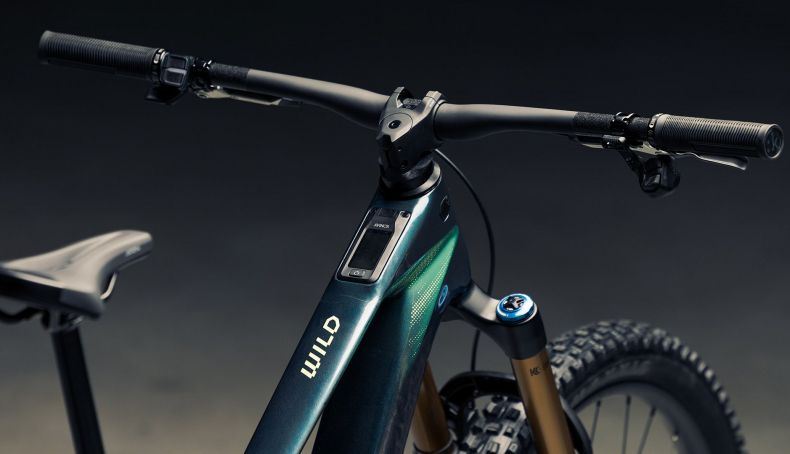
On RS models, Orbea integrates more than the motor and battery. It also adds its own ecosystem, with an RS-HMI remote, assistance information, motor control and smart dropper-post functions.

The remote aims to simplify the cockpit: fewer separate buttons, fewer independent batteries and more functions brought together in one system.
The most interesting functions are:
- Motor assistance control.
- Superboost activation.
- LED battery indicator.
- Stealth mode to reduce system lighting.
- Smart dropper post control in RS models.
- Integration with a FOX eNeo rear shock on compatible configurations.
MC10-RS Smart Dropper: more than a dropper post
One of the Wild LT RS's most technical details is its MC10-RS Smart Dropper. Orbea claims a weight of 548 grams for the version with 240 mm of travel, with tool-free travel adjustment using spacers.
Its smart functions are the most interesting part. It uses sensors to determine the exact seatpost position and offers functions such as:
- Partial Drop: partially lowers the post with a double click.
- Ready-To-Drop: primes the post to drop when the terrain demands it.
- Powered by the main battery: there is no separate battery to charge.
This may sound secondary, but it makes sense on an enduro eMTB. On technical terrain, dropping the post quickly and without thinking can be the difference between staying in control and being caught out.
Models and prices of the new Orbea Wild LT Avinox
The broad range combines carbon and aluminium frames, RS models and more affordable options. Prices may vary by configuration, country and MyO options, but the main structure is as follows:
| Model | Frame | Motor | Approx. price | Approach |
|---|---|---|---|---|
| Wild LT M-LTD RS | OMR carbon | DJI Avinox M2S | €13,499 | Top of the range, with a premium spec and maximum RS integration. |
| Wild LT M-TEAM RS | OMR carbon | DJI Avinox M2S | €9,999 | Very high performance with the RS ecosystem. |
| Wild LT M10 | OMR carbon | DJI Avinox M2S | €8,499 | A balanced carbon option for riders who want quality without an extreme build. |
| Wild LT M20 | OMR carbon | DJI Avinox M2S | €6,999 | Entry into the carbon range, with a powerful motor and configurable components. |
| Wild LT H-TEAM | Aluminium | DJI Avinox M2S | €7,999 | Aluminium with a high-end spec and a serious enduro focus. |
| Wild LT H10 | Aluminium | DJI Avinox M2S | €6,999 | A good balance of price, large battery and powerful motor. |
| Wild LT H20 | Aluminium | DJI Avinox M2, according to the official configurator consulted | €5,599 | The entry model in the Wild LT Avinox range. |
Important note: before buying, check Orbea's official configurator, as battery, suspension, wheel, dropper-post and charger options can change the final price.
Advertisement / sponsored link
Is it better than a Bosch Performance Line CX?
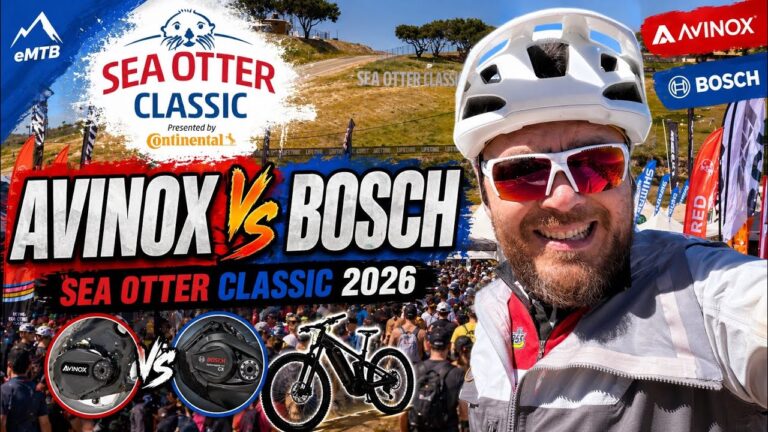
The comparison with Bosch is inevitable. Bosch dominates the eMTB market through reliability, its service network, natural pedalling feel and a very mature ecosystem. Avinox arrives with much more aggressive figures and highly advanced electronic integration.
On paper, the Orbea Wild LT Avinox has three strong selling points against a conventional Bosch-powered eMTB:
- More torque available in extreme situations.
- Very fast response thanks to the RS tuning.
- Deep electronic integration between the motor, remote, battery, dropper post and suspension on RS models.
But Bosch maintains important advantages:
- A very well-established service network.
- An extensive reliability record.
- More accumulated real-world experience among shops and riders.
- Widespread Smart System Ecosystem.
So the question is not just whether Avinox pushes harder. The real question is whether it will be as reliable, repairable and easy to maintain after several years, many charge cycles and plenty of mud.
Who the Orbea Wild LT Avinox makes sense for
This bike makes sense for a very specific profile:
- Riders who ride proper enduro.
- Riders who climb technical terrain, not just gravel tracks.
- Cyclists who want plenty of assistance on steep climbs.
- Riders seeking a powerful eMTB with serious descending geometry.
- Users who value electronic integration and premium configurations.
It is not the best option for anyone looking for a lightweight trail eMTB, a bike that is simple to maintain or a cheap electric bike for relaxed rides. There are simpler, cheaper and probably more logical options for those uses.
The best of the Orbea Wild LT Avinox
- A very powerful, finely tuned Avinox M2S RS motor.
- Superboost with up to 1300 W and 150 Nm.
- Real enduro geometry.
- 170 mm rear travel.
- 600 Wh and 800 Wh options.
- 29” or mullet setup.
- Extensive customisation through MyO.
- RS integration with the dropper post, remote and suspension on compatible models.
Questions that remain
- Long-term reliability of the Avinox system compared with Bosch, Shimano or Brose.
- Heavy reliance on electronics in RS models.
- High price on higher-end versions.
- Integrated Battery, less practical for some riders who charge away from home.
- Service support and spare-parts availability, a key consideration with new motors.
Conclusion: Orbea has not just made another Wild; it has sent a message
The new Orbea Wild LT Avinox is more than an update. It is a change of direction. Orbea is entering the battle of the most powerful motors, but with its own philosophy: more control, more traction and more integration.
The 150 Nm figure catches the eye, but the RS tuning is the real point of interest. If Orbea has made Avinox powerful without becoming abrupt, this Wild LT could become a benchmark eMTB for electric enduro.
Now comes the most important part: seeing how the system ages, how service support responds, how it withstands real-world use and whether such tightly integrated electronics add more than they complicate. On paper, the Wild LT Avinox is one of the year's most interesting electric bikes.
Orbea Wild LT Avinox FAQs
Does the new Orbea Wild LT have a Bosch motor?
Not in this new Wild LT Avinox generation. The major change is the Avinox system, with M2S RS versions in most of the models checked.
How much torque does the Orbea Wild LT's Avinox motor deliver?
Orbea claims up to 130 Nm in the tuned modes and up to 150 Nm with Superboost.
What battery capacity does it have?
Depending on the configuration, it can have a 600 Wh or 800 Wh Avinox battery. The 800 Wh option is designed to maximise range.
Is an eMTB this powerful legal?
The key is certification and ensuring that pedal assistance meets the applicable limits for electric bicycles. Peak power helps with acceleration and climbing, but should not raise the legal maximum assisted speed.
Which one is the most interesting in the range?
For most demanding riders, the M10, M20 or H10 versions may offer the most sensible balance of price, battery, motor and components. The RS versions have more integration, but also cost more.
Useful sources and links
Have you used this bike, motor or component?
Join eRIDERSeMTB on Telegram to discuss real experiences with other riders: Bosch, Avinox, Shimano, deals, faults and buying decisions. The community currently speaks Spanish.
Join TelegramAdvertisement / sponsored link
Advertisement / sponsored link
Advertisement / sponsored link