Wax versus oil for eMTB chains: choosing the right lubricant
Wax versus oil for eMTB chains: choosing the right lubricant
On an eMTB, the chain works harder than on a non-assisted MTB. The mid-drive motor adds torque, the bike is heavier, you spend longer climbing and the drivetrain carries more load. Choosing the wrong wax, dry lube, wet lube or all-weather lubricant can therefore coat the chain in abrasive sludge that eats away at the cassette, chainring and jockey wheels.
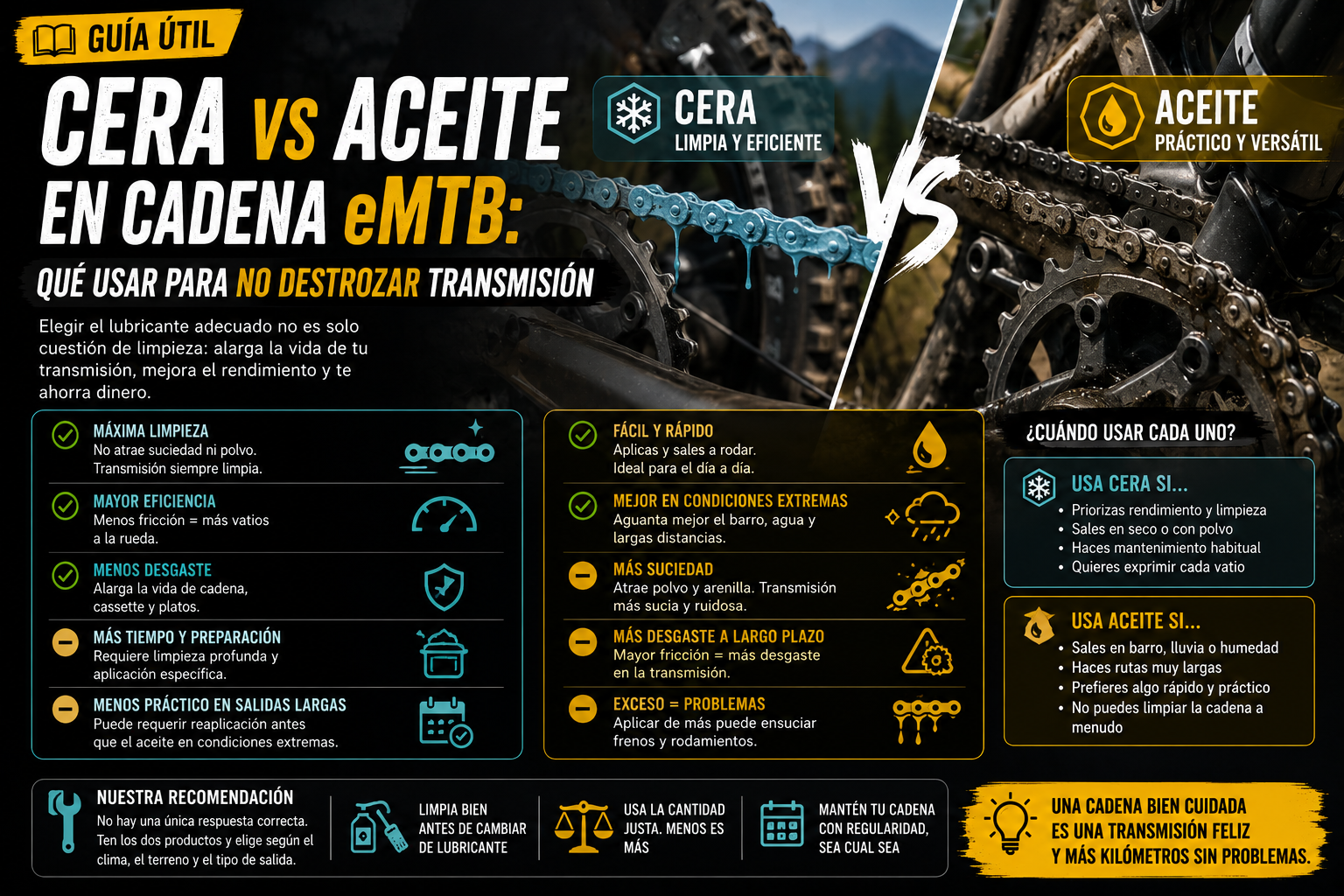
Cleaner, with less black sludge, and excellent in dry conditions if the chain is properly prepared.
A good option for dust and summer, but shorter-lasting in rain or mud.
Better for mud and rain, but attracts more dirt if overapplied.
Specific lubricants for higher torque loads in electric drivetrains.
Why an eMTB chain takes more punishment
A mid-drive eMTB motor does not drive the wheel directly: it pushes through the same chain the rider uses. Motor torque therefore passes through the chainring, chain, cassette and jockey wheels. If you also grind at low cadence, use high assistance modes, ride in mud or neglect chain cleaning, the drivetrain suffers much more.
Advertisement / sponsored link
Lubrication is not just about keeping things quiet. Its real role is to reduce friction, protect against wear, prevent corrosion and limit the formation of abrasive sludge from dirt.
Chart 1: what causes the most damage to an eMTB drivetrain
Wear is not caused only by a "lack of oil". Many drivetrains fail because of excess dirty lubricant, accumulated mud, shifting under load and a worn, elongated chain.
Impact on drivetrain wear
Chain wax: what it is and when it makes sense
Chain wax can be applied as liquid drip wax or by hot-wax immersion. Both methods aim to leave a dry or semi-dry film that lubricates without attracting as much dirt as wet lube. That makes wax particularly popular in dry terrain and fine dust, and among riders who want a clean drivetrain.
Preparation is critical. Squirt says that before first use, you must remove factory grease and any previous lubricants, rinse, allow to dry and apply to a dry chain. If you put wax over old oil, do not expect miracles: it will not adhere properly and may become noisy or wear off quickly.
Advantages of the wax
- Cleaner drivetrain.
- Less black sludge.
- Less dirt sticking in dry, dusty conditions.
- Good choice for summer and dry terrain.
- Fewer stains when touching the chain.
Drawbacks of wax
- Requires chain clean and dry.
- Does not work well over old oil.
- May need reapplying after rain or washing.
- It requires more maintenance discipline.
- The chain may become noisy if wax is applied too late or incorrectly.
Chain oil: dry, wet and all-weather
Oil still makes sense, especially for mud, rain, long rides and riders who do not want to prepare a chain for wax. The key is choosing the right type and removing excess. The useful lubricant is inside the rollers; shiny oil on the outside usually just attracts dirt.
| Type | Best scenario | Advantage | Problem if you use it wrong |
|---|---|---|---|
| Wax | Dry, dust, clean routes, frequent maintenance. | Very clean and not very sticky. | Poor performance if the chain is not degreased and dry. |
| Dry lube | Summer, dust, dry ground. | Easier than wax and less messy than wet lube. | Short-lived in rain, mud or after washing. |
| Wet lube | Winter, mud, rain, very wet routes. | Longer-lasting lubrication and greater water protection. | It attracts dirt if you apply too much. |
| All-weather | Mixed use, variable routes, daily eMTB. | A compromise between longevity and cleanliness. | Not the outright best in extreme mud or dry dust. |
Chart 2: wax vs oil according to terrain
Suitability by conditions
Advertisement / sponsored link
How to choose in 30 seconds
Do not follow trends. Choose according to terrain, weather, cleaning frequency and the maintenance you are willing to do.
Dry routes and dust
Wax or dry lube. A cleaner drivetrain with less dirt sticking to it.
Mud and rain
Wet or all-weather lube. The priority is resistance to water and mud.
Mixed use without complication
An eBike-specific all-weather lube. A good compromise if you do not want to switch products every week.
You want a spotless drivetrain
Wax, applied properly: a degreased, dry chain, with drying time allowed after reapplication.
Figure 3: Cleaning, Duration and Protection
Drivetrain cleanliness
Longevity in rain/mud
The most expensive error: excess oil
Many people lubricate a chain until it shines on the outside. That is not protection; it is a dust trap. The useful oil needs to penetrate the rollers and pins. Excess on the outside traps sand, dust and mud, forming sludge that acts like sandpaper on the cassette, chain and chainring.
Risk of attracting dirt
How to apply wax correctly
Degrease the chain
If you are switching from oil or starting with a new chain coated in factory grease, clean thoroughly. Wax needs a clean surface to adhere to.
Rinse and dry completely
The chain must be dry. Water inside reduces wax penetration and longevity.
Apply to the inner side
Apply to the rollers while turning the cranks backwards. There is no need to soak the cassette or jockey wheels.
Let it dry
Liquid wax needs time. Ideally, apply it the night before or several hours before leaving.
Reapply when the chain sounds dry
If the chain starts to sound metallic or you washed the bike, it's time to check.
How to apply oil correctly
Clean as much as necessary
If the chain is full of mud or black paste, add no more oil. First clean.
Advertisement / sponsored link
Apply drop to drop
One drop per link, or another controlled application. Avoid sprays near rotors and pads.
Allow to penetrate
Turn the drivetrain so that the product enters the rollers.
Wipe off excess from the outside
This step is mandatory. If oil remains on the outside, it will attract dirt.
Protect your brakes: oil and rotors do not mix
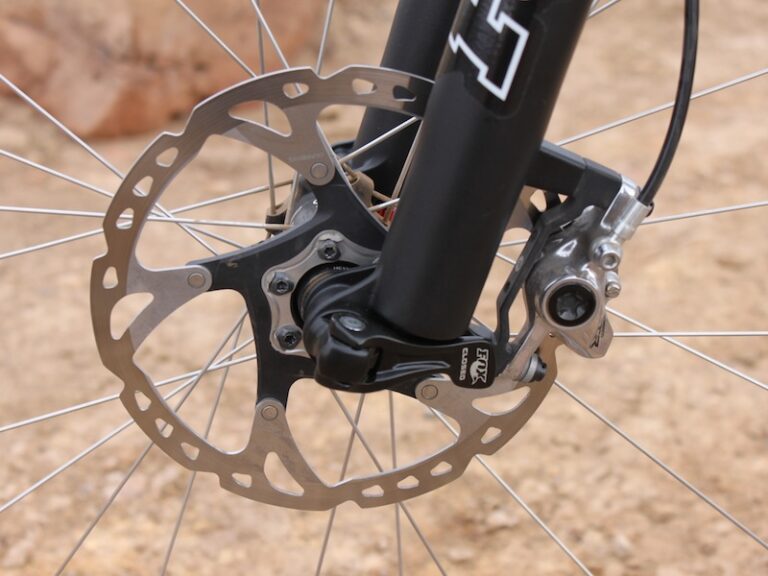
Chain lubricant must stay on the chain. If it reaches the rotor or pads, you can lose braking power, cause squealing and end up needing new pads. Shimano warns that oil or grease on rotors and pads can prevent the brakes from working properly.
Risk of contaminating brakes
Quick decision table
| Your case. | Recommended product | Reason |
|---|---|---|
| Summer, dust, dry routes | Wax or dry lube | Less dirt sticking and a cleaner drivetrain. |
| Winter, mud, frequent rain | Wet or all-weather lube | Increased water resistance and more persistent protection. |
| You want to keep things simple | All-weather eBike | Useful compromise for variable conditions. |
| You want maximum cleanliness | Wax | Less black sludge, but preparation is essential. |
| Long rides in uncertain weather | All-weather or light wet lube | Better margin if water or mud appears. |
| Dry Bike Park and Dust | Wax or dry lube | It prevents the dust from sticking too much. |
| Powerful eMTB and aggressive riding | eBike specific lubricant | Formulated for higher torque loads. |
Figure 4: hidden cost of poor maintenance
When a chain wears and elongates while running dirty, replacing it may not be enough: you may also need a new cassette, chainring and jockey wheels. On an eMTB, these components are not cheap.
Probability of accelerated wear and tear
Realistic routine by user type
Wax, chain degreased and re-applied with drying time.
All-weather eBike, basic cleaning and always remove excess.
Wet lube, more frequent cleaning and checks for black sludge.
Wax or dry lube; avoid excess product and clean the jockey wheels.
Frequent errors
Error 1
Adding oil before every ride without cleaning or wiping off excess. Result: abrasive black sludge.
Error 2
Apply wax on a chain with factory grease or old lubricant. Result: poor adherence.
Error 3
Spraying near the rear rotor. Result: contaminated brakes.
Error 4
Thinking that "eBike" lubricant replaces cleaning. It does not.
Practical Q&A
Is the wax always better than the oil?
No. Wax works very well in the dry and keeps the drivetrain clean, but requires a clean, dry chain. In mud or constant rain, a good wet or all-weather lube may be more practical.
Can I switch from oil to wax directly?
It's not recommended. First you have to degrease the chain well, rinse and dry. If oil is left inside, the wax does not work properly.
How often should I lubricate an eMTB chain?
It depends on dust, mud, water and kilometres covered. If the chain sounds dry, you have washed the bike or you have just finished a wet ride, it is time to inspect it. Always allow wax to dry.
Will a regular lubricant work, or do I need an eBike-specific one?
A regular lubricant can work, but eBike-specific products are designed for higher torque loads. For a powerful eMTB and aggressive riding, a dedicated lubricant makes sense.
What should I do if oil gets on the rotor?
Clean the rotor with a dedicated brake cleaner or isopropyl alcohol. If the pads have absorbed oil, they will often need replacing.
Conclusion
To avoid destroying an eMTB drivetrain, the question is not simply "wax or oil?" The right questions are what terrain you ride, how often you clean, how much mud you encounter and whether you are willing to prepare the chain properly.
If you ride in the dry and want cleanliness, choose wax. For mud or rain, wet or all-weather lube. For an easy option covering most conditions, choose an eBike-specific all-weather lubricant. In every case, the rule is the same: a clean chain, the right product, excess removed and no lubricant on the brakes.
Have you used this bike, motor or component?
Join eRIDERSeMTB on Telegram to discuss real experiences with other riders: Bosch, Avinox, Shimano, deals, faults and buying decisions. The community currently speaks Spanish.
Join TelegramAdvertisement / sponsored link
Advertisement / sponsored link
Advertisement / sponsored link
Advertisement / sponsored link