Nm, peak watts and eMTB assistance: what each motor figure means
Let's clear things up, because there is plenty of headline hype here: 120 Nm, 1,000 W peak power, 600% assistance, an 800 Wh battery... then you hit the trails and the bike does not perform as expected.
Nm: turning force, not magic
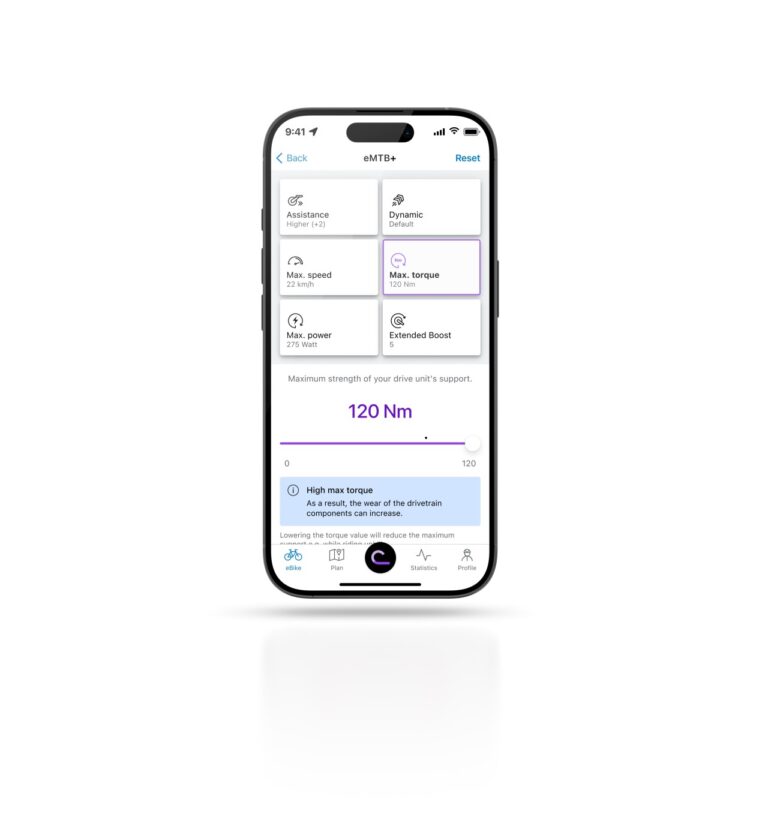
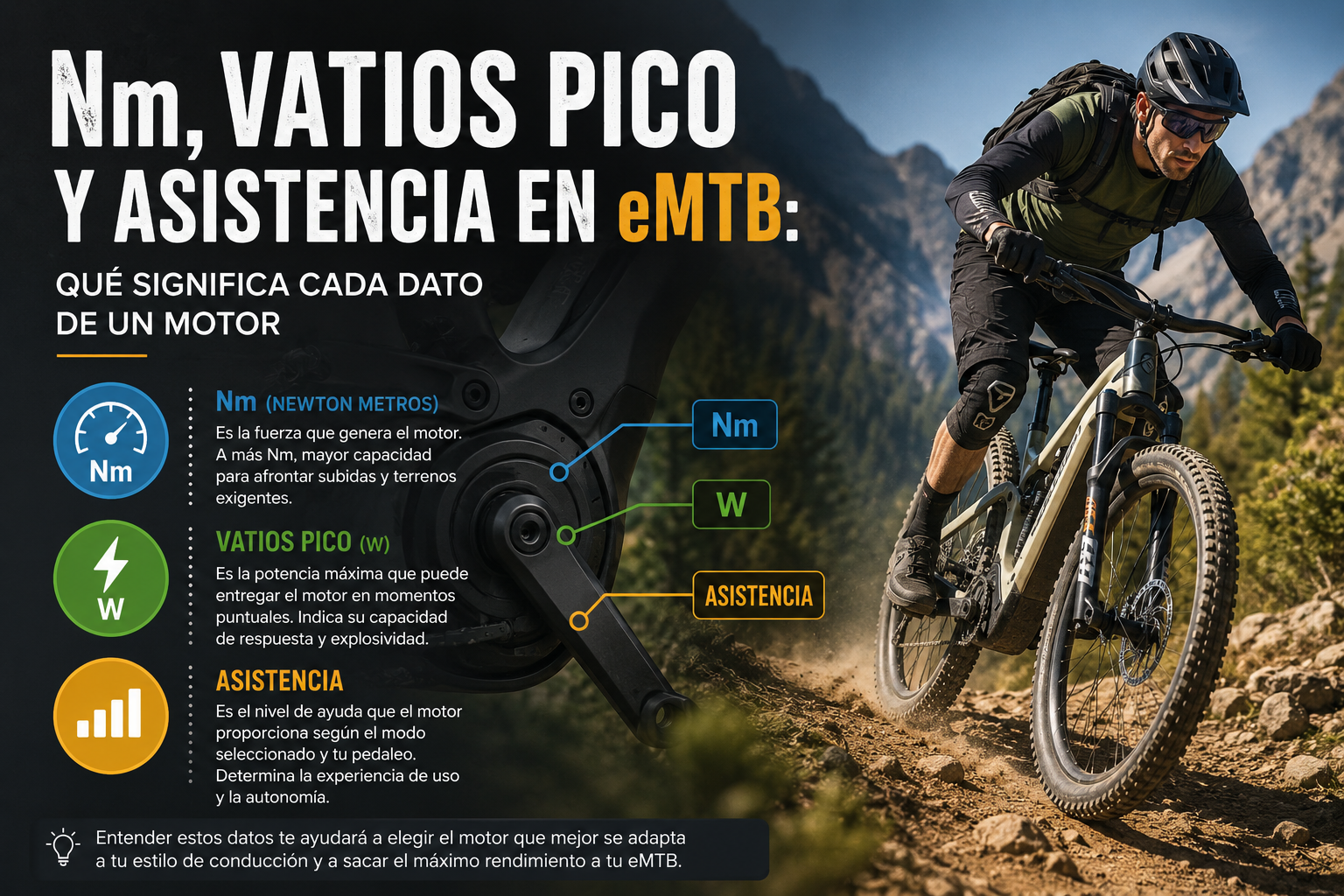
Nm measures motor torque: the force with which the motor helps turn the drivetrain. It is particularly useful when pulling away, on steep climbs and in technical sections. But more Nm does not always mean a better bike. If the motor delivers that force abruptly, it can break traction, drain the battery and make the bike harder to handle.
Advertisement / sponsored link
Advertisement / sponsored link
Peak watts: maximum power for a limited time
Peak watts measure the maximum power the system can deliver at specific moments. The figure is impressive, but you need to consider how long it lasts, at what temperature, with which battery and how the software limits it. A huge power peak that causes overheating or excessive consumption will not get you through a long ride.
| Fact | What it seems to mean | What really matters |
|---|---|---|
| 120 Nm | A stronger motor | Control, traction, smoothness and drivetrain wear. |
| 1,000 W peak | Huge power delivery | Peak duration, heat, energy consumption and available battery charge. |
| 600% assistance | It climbs by itself | Cadence, mode, grip and whether it lets you pedal naturally. |
| 800 Wh | Huge range | Total weight, elevation gain, temperature, tyres and the assistance mode used. |
Assistance in %: how much it multiplies your effort
A figure of 600% means the system can greatly multiply your input. But this depends on sensors, cadence, mode and software. Some motors deliver huge power but feel artificial, while others with lower figures inspire more confidence.
Wh: fuel for an electric bike
Battery Wh measure energy capacity, not guaranteed kilometres. An eMTB with soft tyres, a heavy rider, plenty of Turbo use and 1,500 metres of elevation gain can drain its battery quickly, even with a high Wh capacity.
Cadence: where many motors really show their differences
Cadence is the number of crank revolutions per minute. Some motors work smoothly at high cadence, while others provide more support at low cadence. If you grind away in a high gear at low cadence, the motor, chain and battery are under more strain.
My honest view
Do not choose a motor on Nm alone. Look at support, battery, warranty, app, noise, consumption, feel and its behaviour on technical climbs. Bigger numbers sell, but on the trail, confidence matters most.
Sources and references
- DJI Avinox: System Specifications
- Bosch eBike Systems: eBike systems and motors
- Shimano STEPS / EP: assistance systems
Nm, peak watts and assistance: what they mean on the trail
Numbers are useful, but they do not tell the whole story. A good motor is not the one with the loudest claims on its spec sheet: it is the one that helps without costing you traction, battery charge or confidence.
A quick read before browsing catalogues
In eMTB, four figures are used as competing bragging rights: Nm, peak watts, assistance percentage and Wh. The problem is that each tells only part of the story. A bike with plenty of torque can climb a wall, yes, but it can also cause more drivetrain wear, break traction or feel abrupt if the software is poorly tuned.
The right question is not "how much does it have?" It is: how does it deliver that assistance when you are tired, on loose rock, with rear-wheel traction at its limit and the battery dropping below 30%? That is where real performance separates itself from marketing.
Advertisement / sponsored link
A table to keep things clear
| Fact | What it promises | What eMTB PRO checks | The risk of getting carried away |
|---|---|---|---|
| Motor torque, Nm | More low-speed force | Traction, smoothness, noise, wear and control on technical terrain | Wheelspin, surges and drivetrain strain |
| Peak watts | More push at specific times | Actual duration, thermal limiting and reduced output at low battery charge | Big headlines, little consistency |
| % assistance | Multiply your pedalling | Natural feel, sensors, cadence and configurable modes | A twitchy bike, high consumption and less control over power delivery |
| Battery Wh | More range | Weight, elevation gain, tyres, temperature, mode and route | Buying extra kilograms when you think you are buying extra kilometres |
Real-world examples: where each figure makes a difference
A seemingly impossible climb on loose rock
The most powerful motor does not always win here. The winner is the one that lets you meter out the power. If torque arrives like a kick, the rear wheel spins and digs in. If it builds progressively, you climb more cleanly, even with fewer Nm.
A long ride with stronger friends
Peak watts matter less than efficiency. A motor that uses lots of energy to feel like a rocket can leave you stranded at the end. On hilly 40-60 km rides, assistance-mode management and bike weight matter enormously.
A slow technical trail with steps
Torque helps reposition the bike, but cadence and pedal response are crucial. If the motor takes half a second to respond or keeps pushing when it should not, it can knock you off your line.
Have you used this bike, motor or component?
Join eRIDERSeMTB on Telegram to discuss real experiences with other riders: Bosch, Avinox, Shimano, deals, faults and buying decisions. The community currently speaks Spanish.
Join TelegramAdvertisement / sponsored link
Advertisement / sponsored link
Advertisement / sponsored link
Advertisement / sponsored link