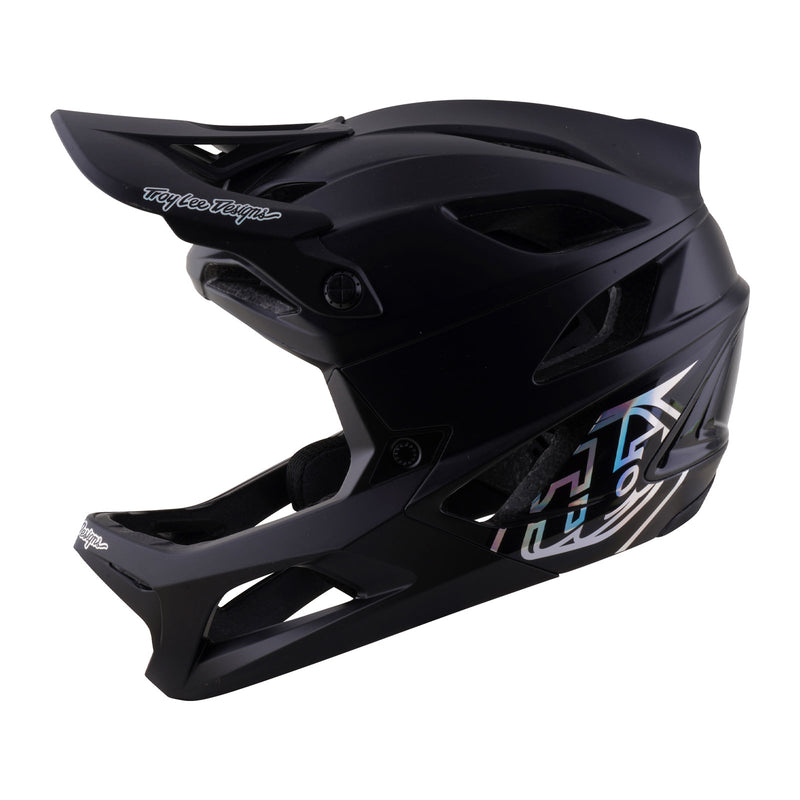
Troy Lee Designs Stage 2: the new full-face eMTB helmet in detail
New product and buying guide · eMTB PRO
A claimed 690 g, Mips Integra Fuse and repositionable fit pads: we analyse the new Stage 2, its sizes and what to check before buying in Spain.
Advertisement / sponsored link
Stage 2: a new arrival that matters beyond its weight
An eMTB lets you link descents and climb back up without relying on an uplift. Your helmet, however, stays on your head throughout the ride. A full-face helmet for this use therefore has a specific balance to strike: providing coverage without making you want to take it off as soon as the access track begins. That is precisely where the new Troy Lee Designs Stage 2 fits in.
The brand identifies it as a new product for 2026. Its appeal is not a promise that you will descend faster, but the combination of a full-face structure with fit options worth understanding before buying. This article analyses official documentation and product photographs. This is not our own test of ventilation, impact performance or comfort, nor a size recommendation made remotely.
If you already have a comfortable full-face helmet in good condition, a new release does not in itself create a need to replace it. If you are looking for your first one, it offers another model to try in a shop. Keep these situations separate so that product news does not automatically become a purchase.
Key specifications and two discrepancies you should know about
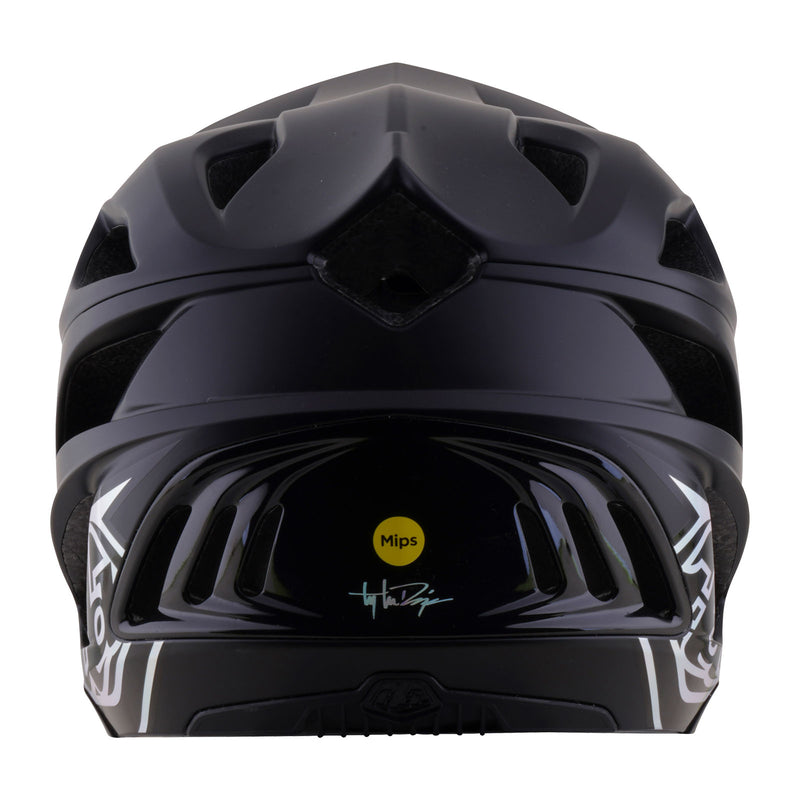
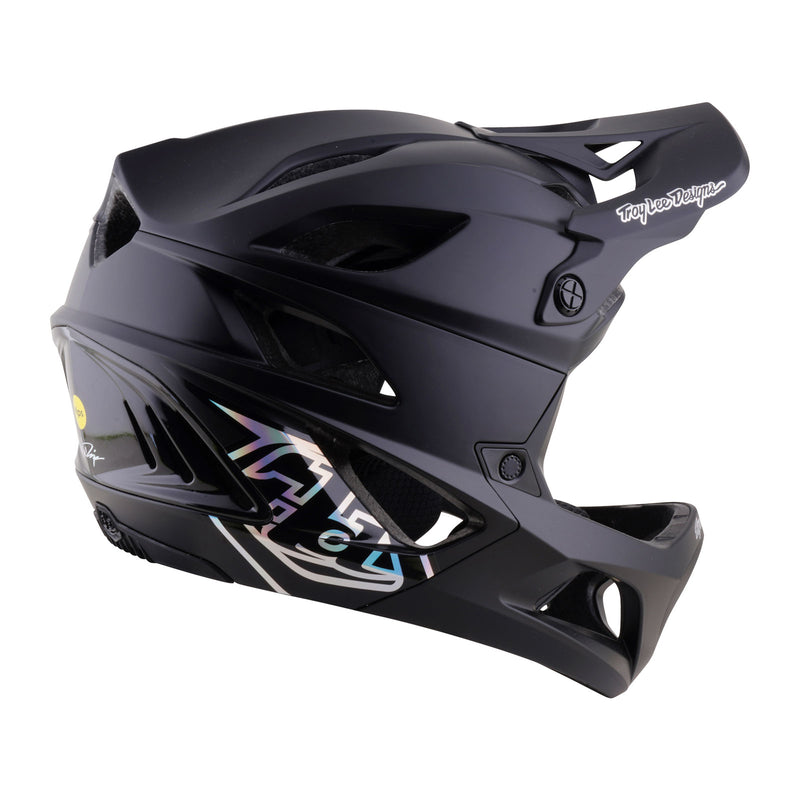
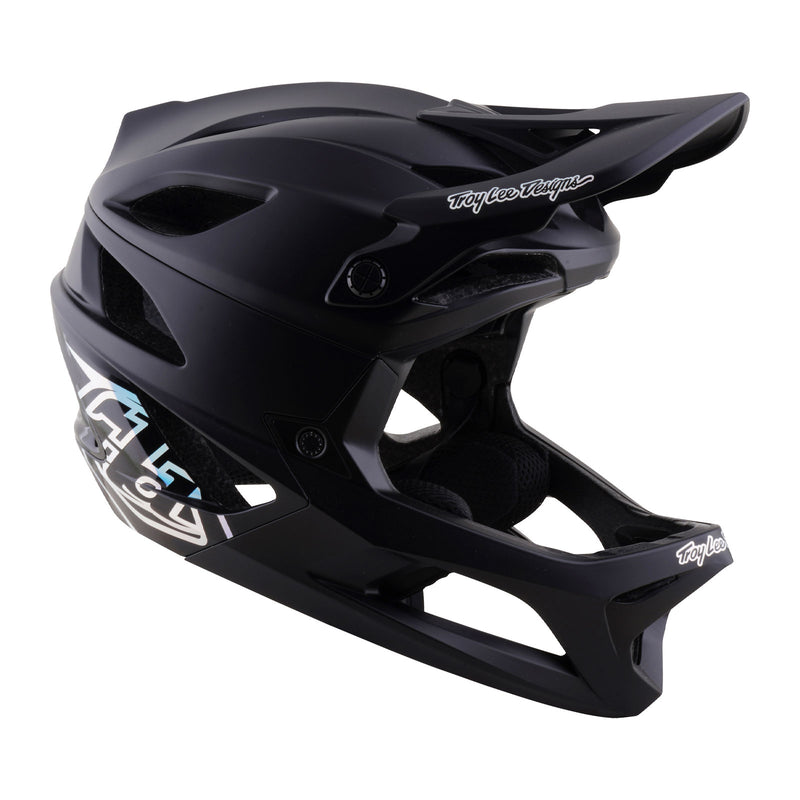
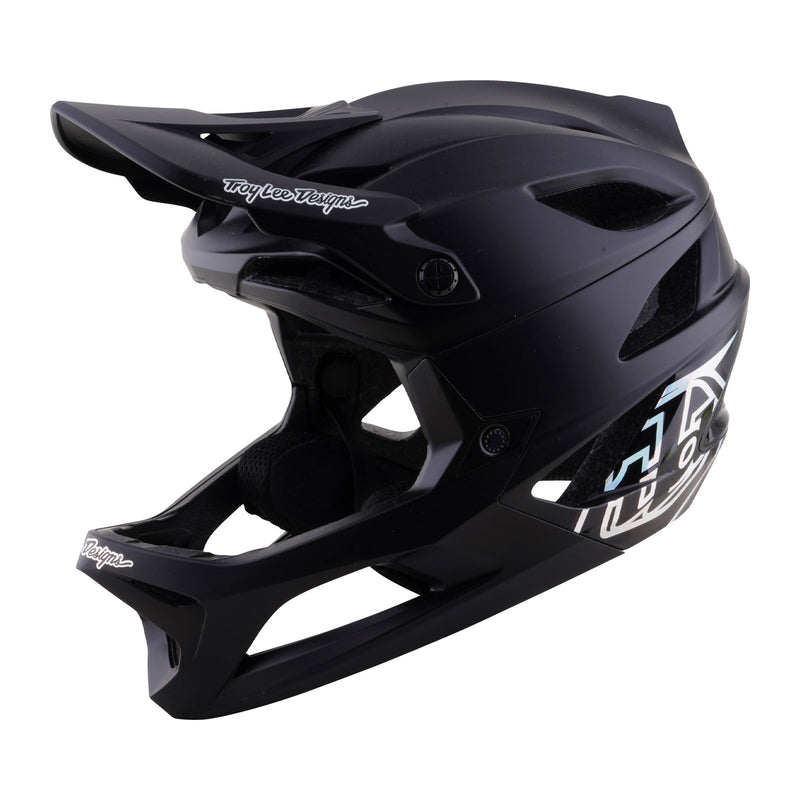
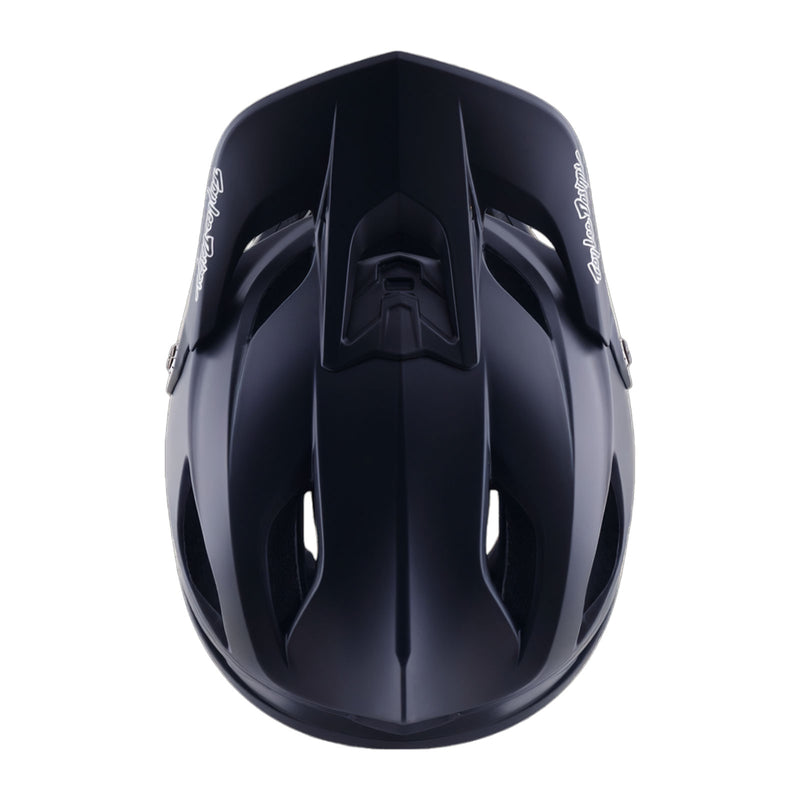
The official Stage 2 product page lists 690 g, a polycarbonate shell, a Fidlock closure and Mips Integra Fuse. It specifies repositionable cheek and rear fit pads. These are catalogue specifications: we have not weighed a helmet, and the figure should not be applied to all sizes as though it were our own measurement.
| Buying consideration | Official information consulted | What to check |
|---|---|---|
| Weight | Claimed weight: 690 g | Unit size and configuration |
| Size XS/SM | 54–56 cm on the product page | Conformity document indicates 53–56 cm |
| MD/LG size | 57–59 cm | Head shape and actual contact |
| Size XL/XXL | 60–63 cm | Compatibility with glasses and backpack |
| Ventilation | 12 intake vents and 13 exhaust vents in the specifications | The comparison table on the same page lists 9 intake vents |
| Visor | Three positions | Visual field with your glasses |
These discrepancies appear in the brand's own documents. We do not pick the most appealing number or invent a product revision to explain them. Particularly at the lower end of the size range, ask for written confirmation of the model you will receive. Counting openings in a photograph does not measure airflow on a climb either.
Advertisement / sponsored link
Mips Integra Fuse: what it does and doesn't prove
Mips explains Integra Fuse as a low-friction solution integrated into the impact-absorbing liner, allowing the pads to move relative to it in certain oblique impacts. Its aim is to manage some rotational motion. The system's explanation is not an independent test result specific to the Stage 2.
It is important to distinguish three things: a helmet incorporating a technology, meeting its stated requirements and being the best fit for you. None replaces the others. Nor can we infer a percentage reduction in injuries or superiority over every other full-face helmet from a trade name.
For the buyer, the practical implication is simple: check that the interior is complete, correctly fitted and unmodified. Do not remove parts to gain space or try to resolve a pressure point by modifying safety components. If the fit is tolerable only after an unauthorised modification, that helmet is not a suitable choice.
The system does not make crashes harmless. Mips warns that no helmet or system can protect against every injury. Buying criteria must therefore still include fit, condition and the instructions for the complete helmet, as well as the technology on the label.
Choose a size to fit your head, not just the label
Start with a flexible tape measure and repeat the measurement to catch errors. The Troy Lee Designs measurement guide places the tape above the eyebrows and ears. That measurement helps you decide what to try on; it does not mean that two people with the same head circumference need the same helmet.
In the shop, distinguish even pressure from localised pain. A secure fit should not be confused with a spot that starts to hurt your forehead or temples. Keep the helmet on for a while and follow the manufacturer's fit check with the retailer's help. Do not compensate for an oversized helmet by tightening the closure until it becomes uncomfortable.
The Stage 2's repositionable pads let you fine-tune contact, but they do not change the shell size or the shape of your head. Ask to see the approved positions and how the pads are secured. Before paying, check the fit again with the configuration you will take home, not a different demonstration liner.
If you fall between two size ranges, do not automatically choose the larger one "for comfort". Try both and reject any that does not stay securely in place. Keep the exact size and configuration code; it will be more useful when ordering spares than remembering only the colour or the Stage name.
Advertisement / sponsored link
Eyewear, backpack and ventilation: the combination you will actually ride with
Bring your eyewear when trying it on, whether you use goggles or glasses with arms. Check that it sits correctly, leaves your nose clear and does not interfere with the helmet's edge. A frame may seem compatible in front of a mirror but become uncomfortable in your riding position.
Also check it with your usual backpack. When you look up, the top of the pack should not push the helmet or restrict the movement needed to see the trail. If the two interfere, check both products' fit; do not assume it will sort itself out on the first descent.
Advertisement / sponsored link
The adjustable visor offers different positions, but check them while wearing the helmet: how much field of vision remains, and where you can stow your eyewear when you stop. Avoid improvised mounts or unauthorised accessories. Space to stow goggles is not a promise of compatibility with every brand.
As for heat, a photograph showing large openings does not establish that the helmet ventilates better than a rival. A meaningful comparison would need to control effort, temperature and riding conditions. Before buying, ask about the shop's trial or return policy without assuming it will accept a helmet already used on a ride.
Three types of ride, three buying priorities
- Long climb and technical descent: pay particular attention to the combination of eyewear, internal fit and ease of wearing the equipment throughout the ride. Motor assistance does not eliminate effort or turn ventilation specifications into a comfort test.
- Uplifts and repeated descents: first check the venue's requirements and the compatibility of your complete setup. Lower weight should not take priority over fit and conditions of use.
- Gentle ride with long connecting sections: establish why you want a full-face helmet and try alternatives suited to your activity. Buying this model just because it is new may be a poor decision if it does not meet a specific need.
These profiles are selection criteria, not safety ratings. A helmet does not justify increasing the difficulty beyond what you can tackle in control.
Certifications: read the document for the correct model
The Certifications page distinguishes Stage 2, Stage and Stage Stunt. The PDF linked to Stage 2 explicitly identifies that model, lists EN 1078, NTA 8776, CPSC 1203 and ASTM references including F1952 and F2032, and is dated 2 February 2026.
This is manufacturer documentation, not a laboratory audit carried out by eMTB PRO. The document's date does not establish when the helmet went on sale either. For the same reason, we do not present a standard as a percentage of protection or as permission to ignore a sporting event's rules.
Before using it in a competition or at a venue with its own requirements, compare the current rules with the helmet's label and documentation. If the organiser requires a specific standard, send them the exact reference. The word "enduro" in a product description does not in itself satisfy that requirement.
This check is especially important when buying across markets. An advert photograph, translated description or document for another Stage does not identify what will arrive in the box. If the retailer and manufacturer give conflicting information, resolve it before using the helmet.
Buying in Spain without mixing markets or generations
Stage 2 is not shorthand for Stage Stunt. A discounted previous-generation Stage does not mean you are looking at this model either. Compare the full name, product reference, photographs and documentation. If a retailer uses an ambiguous title, ask for a label photograph before judging the discount.
The brand has an official European store, but our checks did not confirm a final Spanish price for the Stage 2. We therefore do not convert the US price into a supposed euro price or publish an unverified European price. Availability of a size in another country does not guarantee immediate delivery here.
To compare offers, ask for the delivered cost, return conditions, pad availability and who handles problems. With a helmet, having a way to resolve an incorrect size can be worth more than a small difference in the initial price. Also ask whether the exact replacement liner is available to buy.
Check the return period before removing labels or using it outside the shop. Keep the invoice and product reference. A discount does not remove the need to check a helmet's condition, provenance and documentation; an unknown usage history makes that assessment harder.
After buying: what to get sorted out
Before your first ride, find the instructions supplied for Stage 2 and keep a copy. The public repository of manuals we checked contains Stage manuals, including documents from previous years, but does not identify a separate Stage 2 manual. We do not automatically apply those procedures to the new model: ask for the manual corresponding to your helmet.
Use it to confirm cleaning procedures, pad removal, parts replacement and what to do after an impact. We do not prescribe a detergent, temperature or drying time here without those specific instructions. Note the compatible spare parts and do not substitute a part simply because it looks like one from another helmet.
If the helmet suffers an impact or you find damage, do not assume it is fit for use based only on an exterior photograph. Stop using it, consult the instructions and contact the manufacturer or distributor. A home inspection does not certify its protective capability. When transporting it, arrange your luggage so you can monitor its condition and follow the care instructions.
Who it suits and questions to ask before deciding
The Stage 2 deserves a place on the try-on shortlist for anyone seeking a full-face helmet for both pedalling and technical descents. On paper, its appeal lies in the combination of fit, coverage and the Mips system, not in attributing performance we have not measured. Conclusions about noise, heat or stability on rough terrain still require a real-world test.
Our buying priorities would be correct fit, documentation for the actual helmet, compatibility with your equipment and then cost. If the first fails, the rest cannot fix it. If your current helmet meets your needs, a new release creates no editorial obligation to replace it.
Did eMTB PRO measure the 690 g weight?
No. It is the weight declared by the manufacturer, not a measurement of our unit.
Advertisement / sponsored link
Does the smallest size start at 53 or 54 cm?
The product page states 54–56 cm and the declaration 53–56. Confirm the product reference and try the fit; we do not resolve that discrepancy by assumption.
How many air intakes does it have?
The specifications list 12, while the comparison table on the same page lists 9. We leave this pending clarification rather than turning it into a ventilation score.
Is this a review of a supplied test helmet?
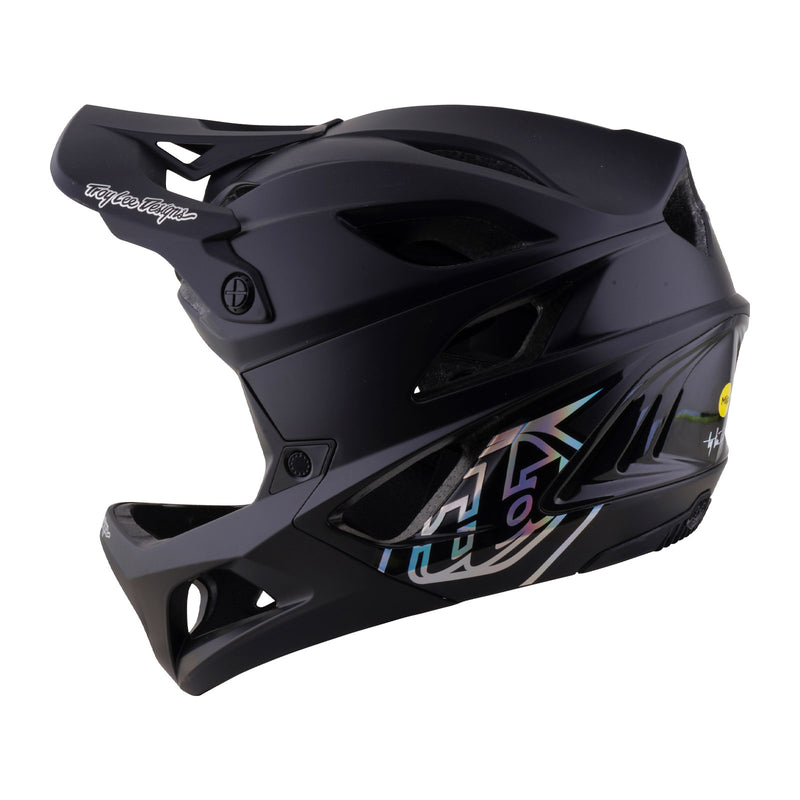
No. It is a news article and buying analysis based on documentation, with official photographs of the Stage 2 Stealth Black.
Sources and documentation
Information checked on 26/10/2026. Original article based on official documentation, not our own trail test. Equipment and availability may vary by market.
Have you used this bike, motor or component?
Join eRIDERSeMTB on Telegram to discuss real experiences with other riders: Bosch, Avinox, Shimano, deals, faults and buying decisions. The community currently speaks Spanish.
Join TelegramAdvertisement / sponsored link
Advertisement / sponsored link
Advertisement / sponsored link