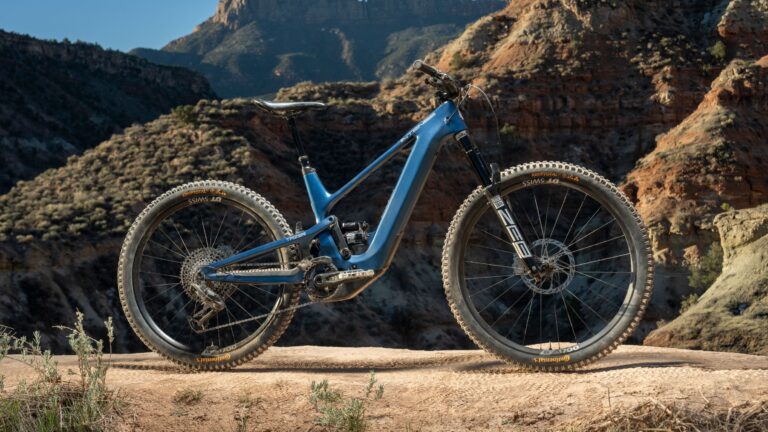
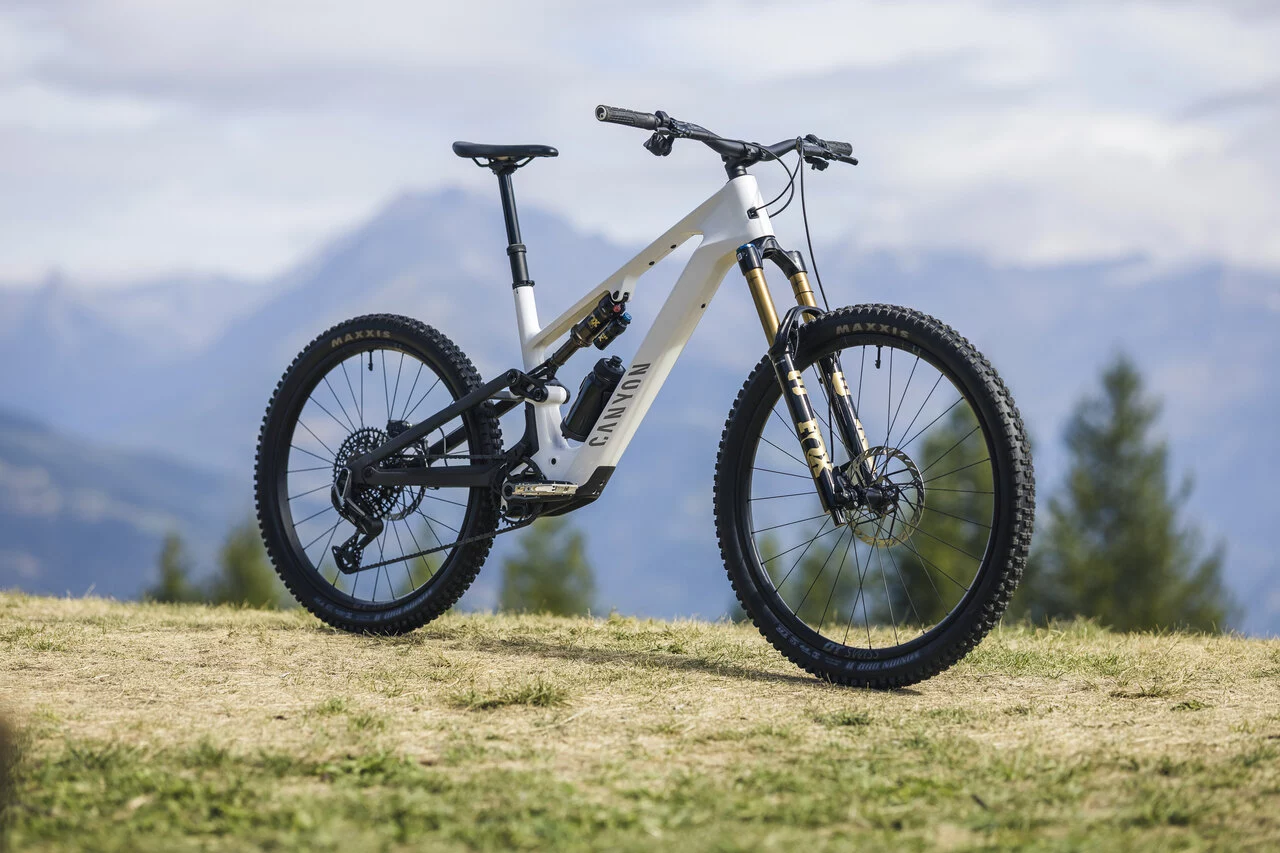
Canyon Spectral:ON CF 9 with Avinox M2S: €6,999, 700 Wh and 2027 deliveries
Technical news · eMTB PRO
Official figures are now available for the Spectral:ON CF 9 AXS: 21.7 kg in size M, FP700 and Factory suspension. We analyse the price, schedule and what to confirm before reserving.
Advertisement / sponsored link
No longer a show prototype: what has been unveiled
On 13 October 2026, Canyon unveiled the new Spectral:ON CF 9 AXS with Avinox M2S. The key is not simply another major brand joining Avinox: there is now an identified production build, a Spanish price and an ordering schedule. Those details allow a real purchase to be assessed, even though bikes are not yet available for immediate delivery.
This bike should be separated from the prototype context we saw at Eurobike. Here we are discussing the officially announced fourth-generation Spectral:ON CF with an M2S motor and external SRAM drivetrain. Do not confuse it with the Avinox MG integrated motor-and-gearbox concept or apply specifications from the previous Shimano-equipped Spectral:ON.
This is a relevant step for riders seeking a powerful trail/all-mountain eMTB without moving straight to a long-travel machine. This article cross-checks official documentation and sets out buying checks. It is not our own trail test: we claim no measured results for range, noise, grip or suspension behaviour.
Price, weight and specification: the figures that actually apply to the CF 9
| Component | Published data |
|---|---|
| Model analysed | Spectral:ON CF 9 AXS in Supernova White |
| Price on the Spanish website | €6,999 before shipping and packaging |
| Declared weight | 21.7 kg; standard specification in size M |
| Motor and battery | Avinox M2S and 700 Wh FP700 battery |
| Travel | 160 mm front and 155 mm rear |
| Suspension | FOX 36 Factory and Float X Factory |
| Drivetrain | SRAM X0 Eagle AXS Transmission |
| Brakes and wheels | SRAM Maven Silver and DT Swiss HXC1700 |
The purchase reference is the Canyon product page for Spain, checked on 15 October. A catalogue figure is not a verified weight for every size with your pedals, accessories and tubeless setup. Compare bikes on the same basis and budget for the final cost shown when confirming the configuration.
The frame is carbon, but material alone does not describe handling. What matters is how geometry, tires, suspension and mass distribution work together. An appealing spec sheet is a good reason to take interest, not proof that a bike will be best for everyone.
Advertisement / sponsored link
M2S and 1,500 W: maximum capability does not mean constant assistance
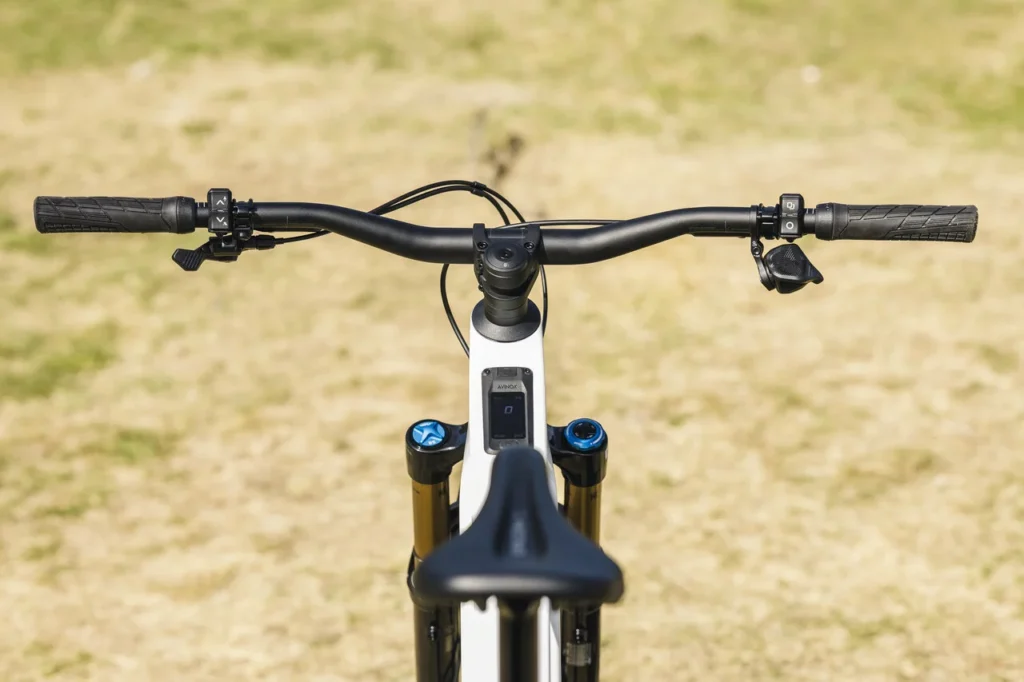
The M2S supports up to 150 Nm in Boost and up to 130 Nm in the normal assist modes according to the Avinox documentation. Maximum power also depends on the battery and configuration. The FP700 is among the combinations capable of enabling the 1,500 W ceiling; this does not mean every assistance level delivers it constantly.
That distinction is particularly important here. Canyon presents the motor-and-battery combination as a model strength, but the maximum figure does not describe response to a pedal stroke, consumption on a climb or how long high demand can be sustained. Terrain, cadence, temperature and settings still affect the outcome.
The system technical documentation distinguishes nominal power from peak power. Do not treat "1,500 W" as a direct measure of range or a promise of identical assistance throughout a ride. The ability to modulate assistance matters as much as having plenty available when needed.
In a future test, we would examine hill starts, low-speed steps and response after stopping pedalling. These situations reveal control, not just climbing speed. Until this specific integration is tested, claiming it already climbs better than every rival would be advertising disguised as a conclusion.
700 Wh and an elevation-gain claim you should not treat as a guarantee
The FP700 lets Canyon combine a mid-capacity battery with the M2S system. It is not the same 800 Wh battery found in other Avinox builds, or simply a smaller number in the same housing. The manufacturer's battery documentation is the reference to consult for system performance and compatibility.
Canyon claims up to 2,000 metres of climbing in Eco. This is a conditional marketing claim, not the elevation gain every rider in Spain should expect. Total weight, gradient, speed, surface, tire casing, pressure and selected assistance level can radically change the energy required. Nor does it allow two bikes to be compared if each brand has used a different route.
Start with your own rides. Note how much elevation gain you normally cover, at what assistance level and how much reserve you need to get home. If you regularly ride long days without access to charging, ask for comparable data before assuming that lower weight offsets any difference in capacity. If your rides are short and technical, battery size may not be the first limitation you need to address.
Geometry and wheels: the changes go beyond the motor
The Official presentation describes a platform with a 29-inch front wheel and a 27.5-inch rear wheel, also designed to accommodate dual 29-inch wheels using the specified adjustment. The chainstays differ between the S/M and L/XL size groups. These are relevant design choices because weight distribution is not determined solely by fitting the same motor.
The published geometry combines a 64-degree head angle with a 78.5-degree seat angle. Before treating these values as a universal recipe, remember that your actual riding position also depends on frame size, saddle height, stem and suspension sag. Choosing a size letter out of habit may be less useful than comparing measurements with a bike you already know.
For anyone considering a different rear wheel, there is another question: are you following Canyon's complete specified configuration? It is not enough for a wheel to fit physically. You need to check the associated adjustment and the platform's limitations. We do not recommend mixing settings to create your own geometry without documentation permitting it.
The 160/155 mm of travel points towards demanding trail and all-mountain riding. It does not automatically make the bike a replacement for a longer-travel enduro bike, nor does it alone guarantee more fun than a less powerful trail bike. Your regular rides remain the best guide when narrowing down a purchase.
Advertisement / sponsored link
Advertisement / sponsored link
The build matters as much as the motor's model name
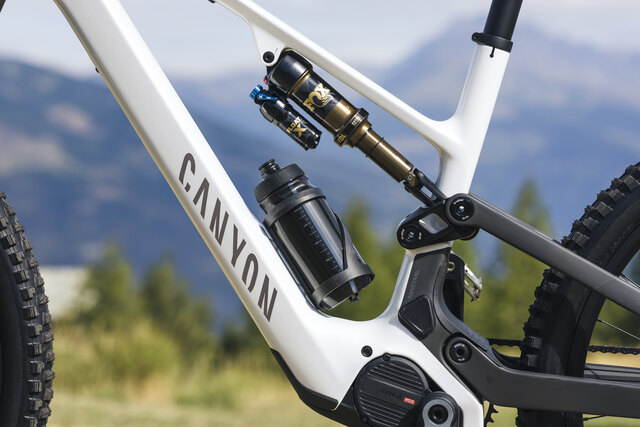
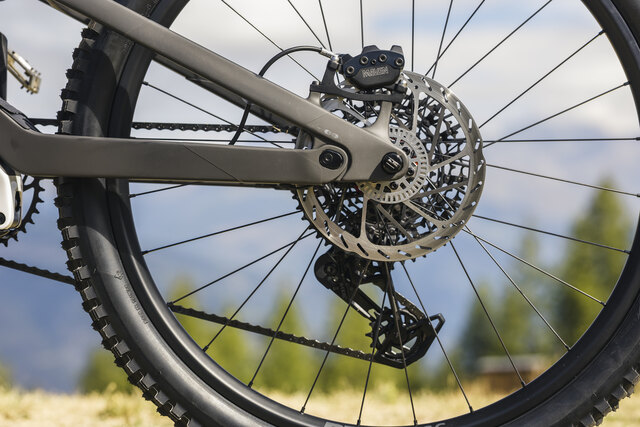
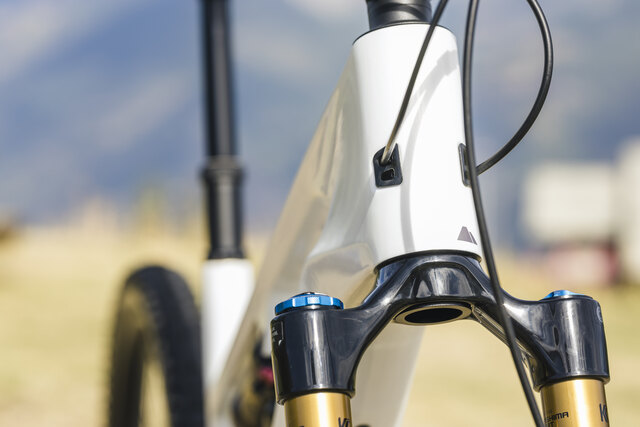
The combination of FOX Factory, X0 Transmission, Maven Silver and HXC1700 wheels explains some of the CF 9's appeal. But a useful comparison is not about counting logos. It makes sense to check which components affect your riding and what they cost to maintain where you live.
Start with the tires and brakes. The right tire casing for your weight and terrain may matter more than an electronic upgrade you rarely use. We do not recommend changing components as soon as the bike arrives without first checking its setup, but neither should you assume the standard build suits every route.
For the drivetrain, consider exposure to impacts, spare parts availability and diagnostics. For the wheels, look at repair and servicing, not just rim material. And for suspension, set aside time for a documented initial setup. An expensive bike with a poor setup can deliver a worse experience than a simpler one properly adjusted to you.
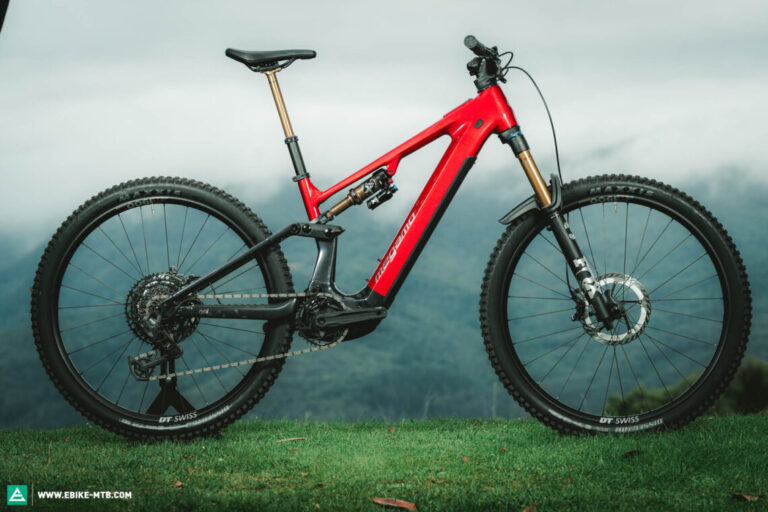
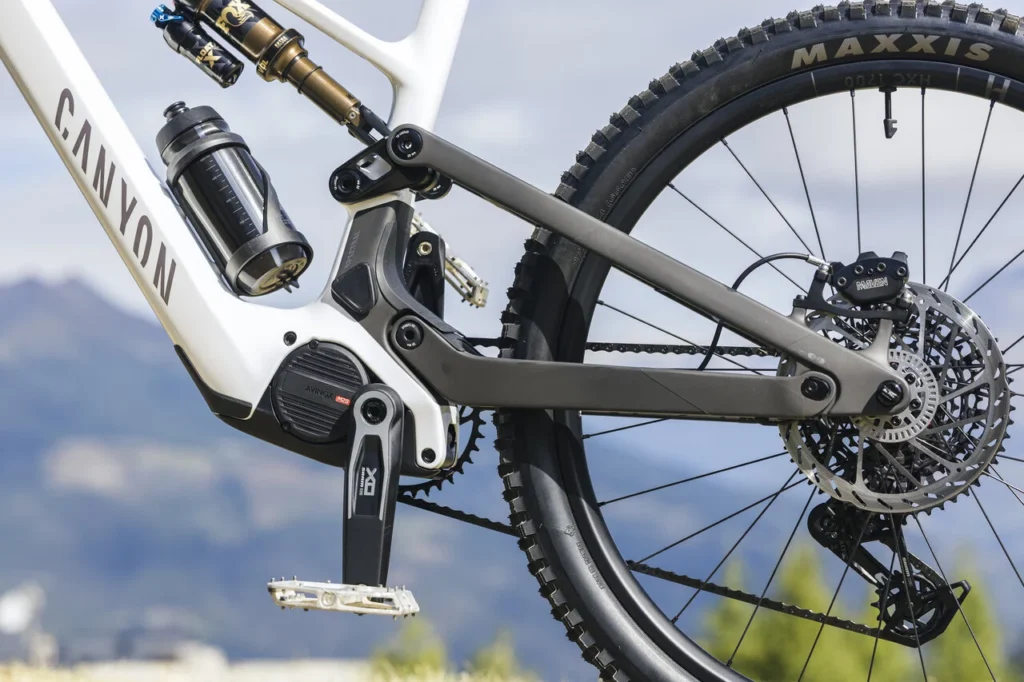
Launch photographs help identify components in the build, but they do not replace the specification for the bike you order. If a component varies by market, size or date, confirm it before completing your purchase. Nor do we claim durability or reliability from our own rides that we have not yet verified.
Fast charging and battery removal: the awkward questions
The model description links fast charging to an optional 12 A charger. The general accessories list on the same product page shows 4 A and 12 A models. We therefore do not assume which charger each order will include: ask for confirmation of the exact contents before factoring charging times into your buying decision.
The difference matters if you fit in two rides, travel or have only a short charging break. Compatibility with a fast-charging system does not mean that charger comes in the box. Nor is it correct to apply the charging time advertised for one charger to a different, standard charger.
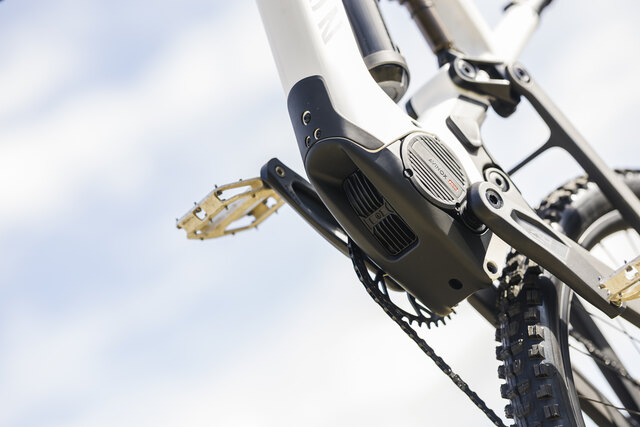
Battery removal deserves a separate check. If you cannot take the bike to a power socket, you need to know the procedure for this generation, the tools required and whether it is intended as an everyday task. We do not claim quick removal for daily use without verifying those conditions. A battery that can be replaced in a workshop is not necessarily convenient to remove after every ride.
The underside photograph shows the integration and protective parts; it does not demonstrate ease of removal. For a rider who keeps the bike in a storage room without a socket, this may matter more than a few tenths of a kilogram or a maximum power figure.
Maintenance and buying in Spain: look beyond the launch
Canyon highlights internal guides for hose and cable routing as a maintenance improvement. This design choice has potential value: it reduces reliance on assembly tricks and may make servicing easier. Even so, it does not justify promising a specific workshop bill without knowing the task and the service provider carrying it out.
Before buying from Spain, identify who will service the frame, motor, battery and components. Ask about the diagnostic process and the logistics if an issue requires shipping the bike. You do not need to assume problems will occur; you need to understand the procedure before you need it.
For your annual budget, think about tires, brake pads, chains and servicing. Plenty of assistance encourages repeat climbs and more riding, but it does not make the drivetrain indestructible. Mileage and the demands of your rides give a better picture of the real cost than comparing only the advertised prices of two builds.
The other precaution is record-keeping: save the advertised specification, order contents and delivery schedule confirmed when you buy. Dates from a global launch provide guidance but do not replace your individual delivery date. Nor should you use the previous generation's availability to infer that this one is already in stock.
When orders open and which details remain outstanding
Canyon's announced schedule distinguishes the launch, orders and delivery. The CF 9 was unveiled on 13 October; the general plan places pre-orders for most markets on 4 December 2026 and the start of deliveries on 19 January 2027. The Spanish page currently lists it as coming soon, not as a bike ready to leave the warehouse.
The range will expand in stages: the website lists the LTD for 12 November, CF 8 for 4 December and CF 7 for 19 January. We do not fill in their prices or specifications with assumptions. If your decision depends on a cheaper version, waiting for its official product page avoids comparing a real bike with an imagined one.
My editorial assessment favours following this launch, not recommending an immediate purchase. There is already enough information to put the CF 9 on a buying shortlist; actual deliveries, the final specification of each order and comparable ride tests are still missing. For anyone who needs a bike now, that schedule makes a significant practical difference.
FAQ: distinctions worth keeping clear
Does the unveiled CF 9 weigh 20.8 kg?
That is not the figure on its Spanish product page, which lists 21.7 kg in size M. Canyon reserves the 20.8 kg figure for the forthcoming LTD.
Advertisement / sponsored link
Does it use the Avinox MG with integrated gearing?
No. The announced CF 9 AXS uses the M2S and an external SRAM X0 drivetrain. Do not confuse it with trade-show concepts.
Are the 1,500 W always available?
This should not be interpreted as continuous power. It is a maximum for the motor-battery system, subject to mode, settings and operating conditions.
Has eMTB PRO tried it yet?
No. This analysis uses official documentation and launch photographs. We do not present another publication's impressions as our own ride test.
The Spectral:ON CF 9 deserves attention because it turns Canyon's adoption of Avinox into a concrete offering. The best way to assess this step is to consider all the pieces together: final price, size, battery, charging, maintenance and delivery date. The power figure starts the conversation; it should not end it.
Sources and documentation
Information checked on 15/10/2026. Original article based on official documentation, not our own ride test. Equipment and availability may vary by market.
Have you used this bike, motor or component?
Join eRIDERSeMTB on Telegram to discuss real experiences with other riders: Bosch, Avinox, Shimano, deals, faults and buying decisions. The community currently speaks Spanish.
Join TelegramAdvertisement / sponsored link
Advertisement / sponsored link
Advertisement / sponsored link