Santa Cruz Vala 90: 600 Wh, fixed battery and what to check before buying
Technical guide · eMTB PRO
The Vala 90 combines Bosch CX, carbon and mixed wheel sizes. But the buying decision starts before pedalling: where you will charge the bike, what rides you do and how much you really need PowerMore.
Advertisement / sponsored link
The first question is not how many Nm it has
Imagine two buyers of the same bike. One gets home from work, opens the garage and has the bike beside a socket. The other lives in a flat, keeps the eMTB in a storage room without electricity and usually charges a removed battery at home. The motor, fork and colour may excite them equally; the ownership experience will probably differ.
The Santa Cruz Vala calls for that comparison before discussing the build. This guide uses the 2026 model-year Vala Carbon 90. We are not announcing a new launch today or presenting impressions from our own test: we cross-check documentation and suggest checks to take to the shop.
Start by writing down three requirements your next bike must meet. For example: accessible charging without stairs, enough range for your usual ride and reasonably local technical support. Then add preferences: mechanical or electronic shifting, suspension feel, finish and budget. A preference is negotiable; an essential requirement should not disappear because you found a deal.
The Vala deserves to be studied as a whole. Our proposal is to evaluate it first for how it fits into your week and then for how it fits into a catalog comparison.
Advertisement / sponsored link
Which Vala we are examining: do not mix Carbon, AL and Lite
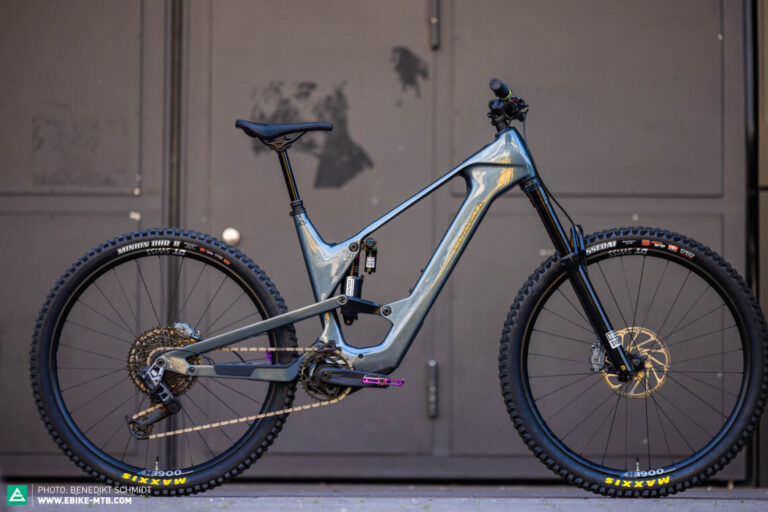
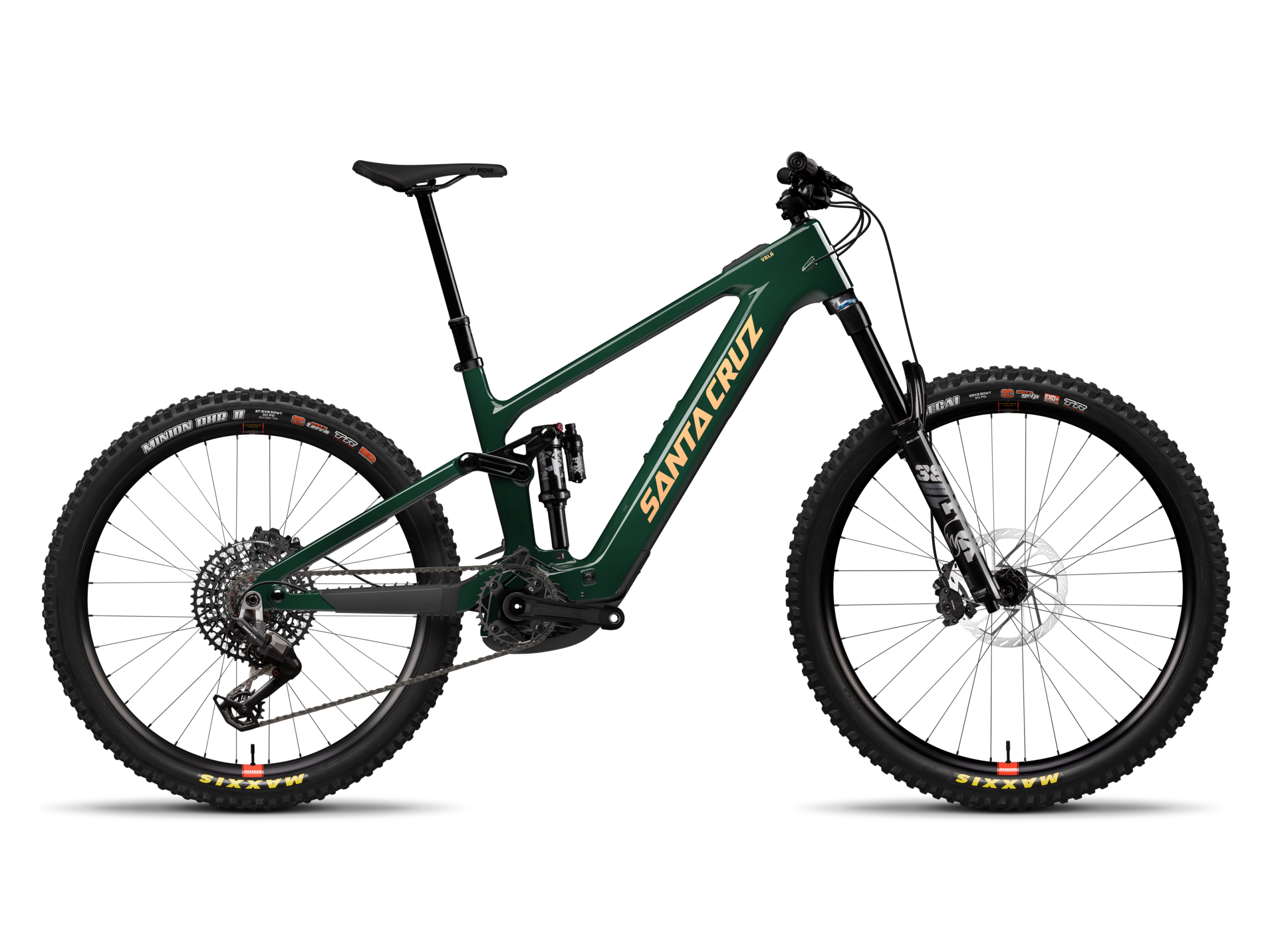
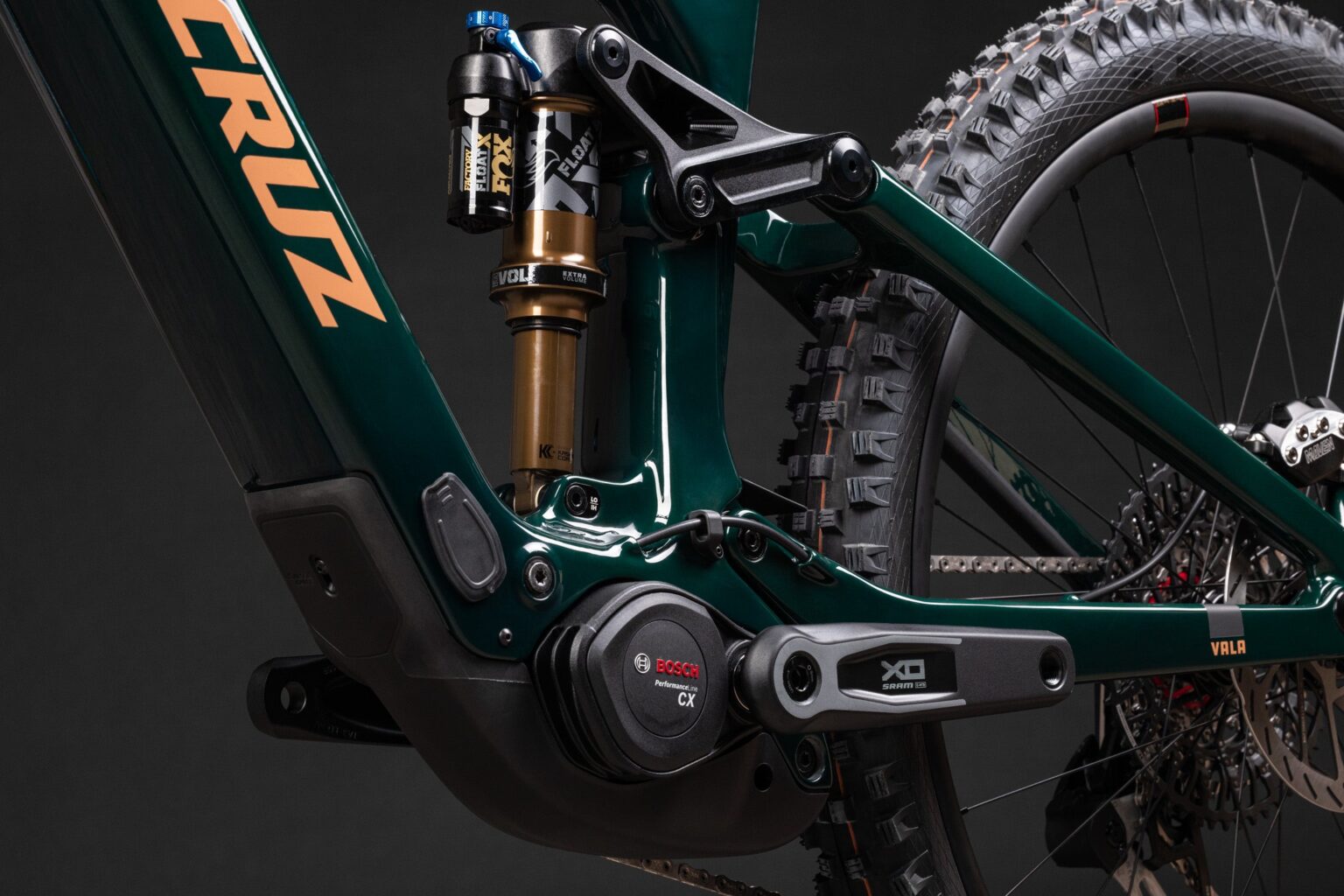
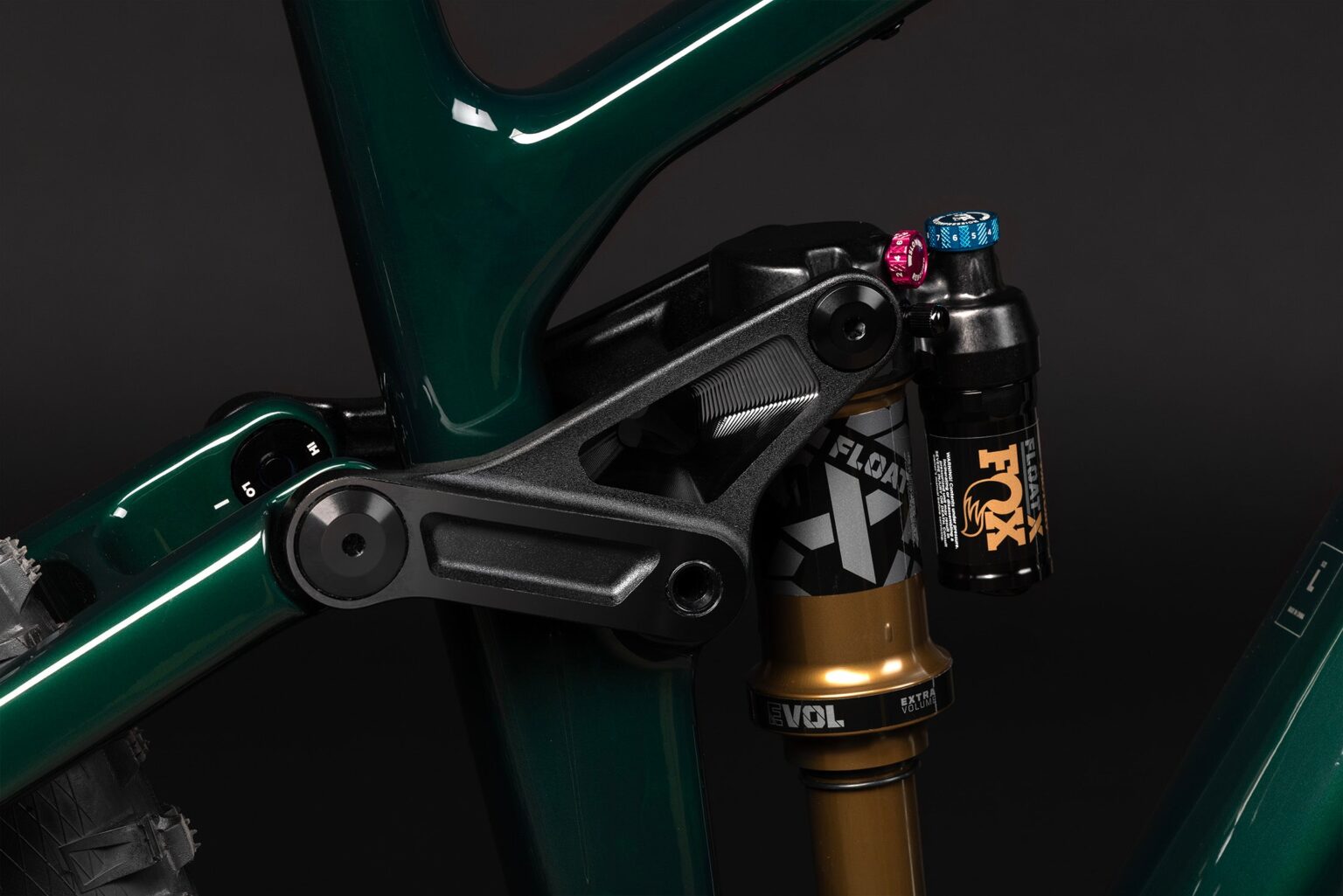
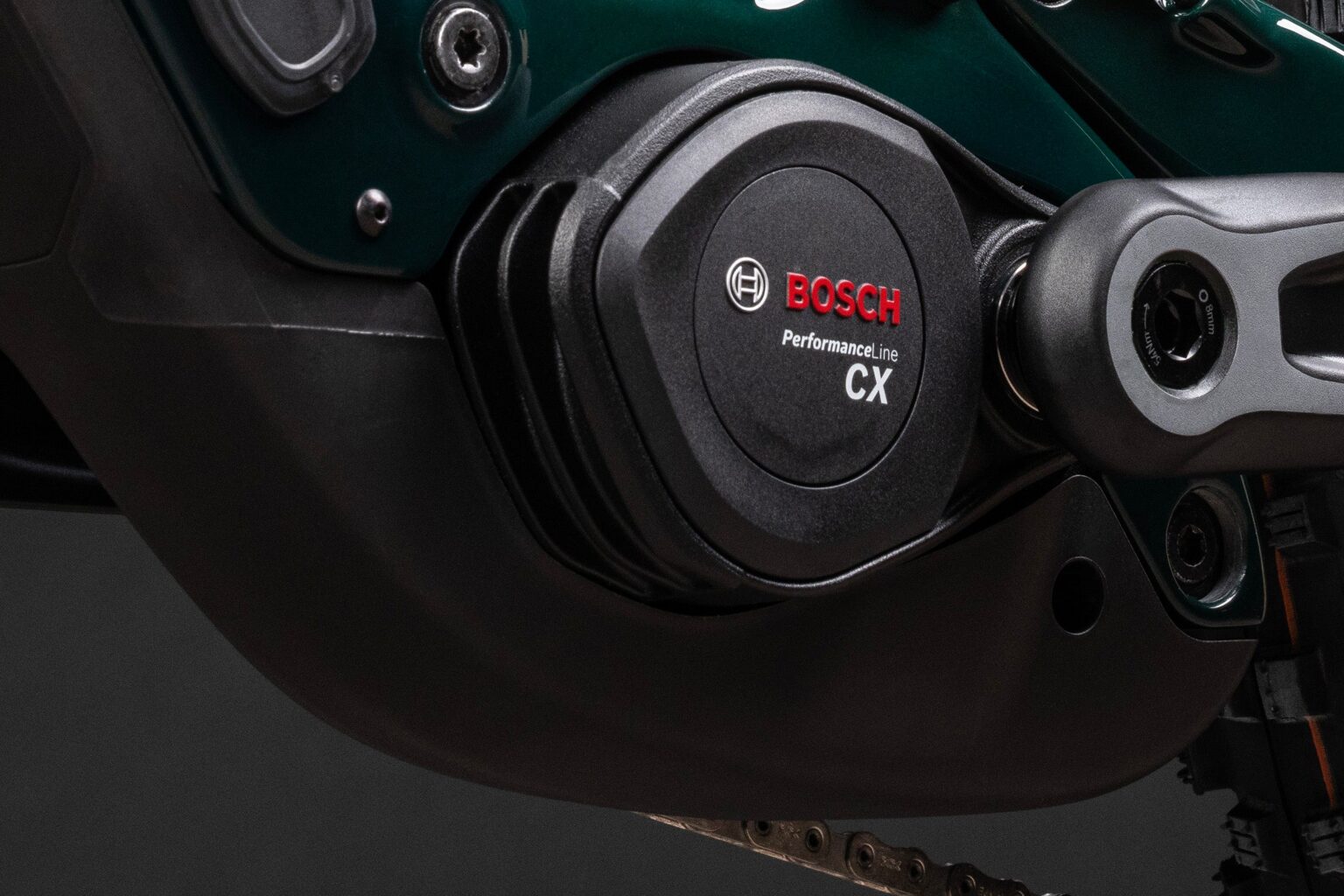
The official Vala 90 2026 specification sheet identifies a Carbon C frame, advertised travel of 160 mm front and 150 mm rear, MX wheels, a Bosch Performance Line CX motor and a 600 Wh battery. Highlights include the FOX 38 Float Performance, Float X Performance rear shock and SRAM Eagle 90 T-Type drivetrain. These are reference specifications, not a guarantee of stock in Spain.
In the family catalogue includes aluminium and carbon versions, as well as Lite builds from another model year. A listing simply saying 'Vala' does not establish that it offers the same configuration. Nor does a family photograph confirm every component on the advertised bike.
Ask for the quote to include the full name, model year, size and equipment. Keep that specification sheet with the final price in euros, delivery details and included accessories. A screenshot of another country's price is useful for research, but does not establish the cost of receiving it here. Have any component substitutions documented before paying.
This apparently administrative step prevents a false comparison: a discounted bike may be attractive without being equivalent to the one you just saw reviewed. What matters is knowing what you are buying, not making every offer look like the same product.
Fixed battery: check your charging space, not just the socket
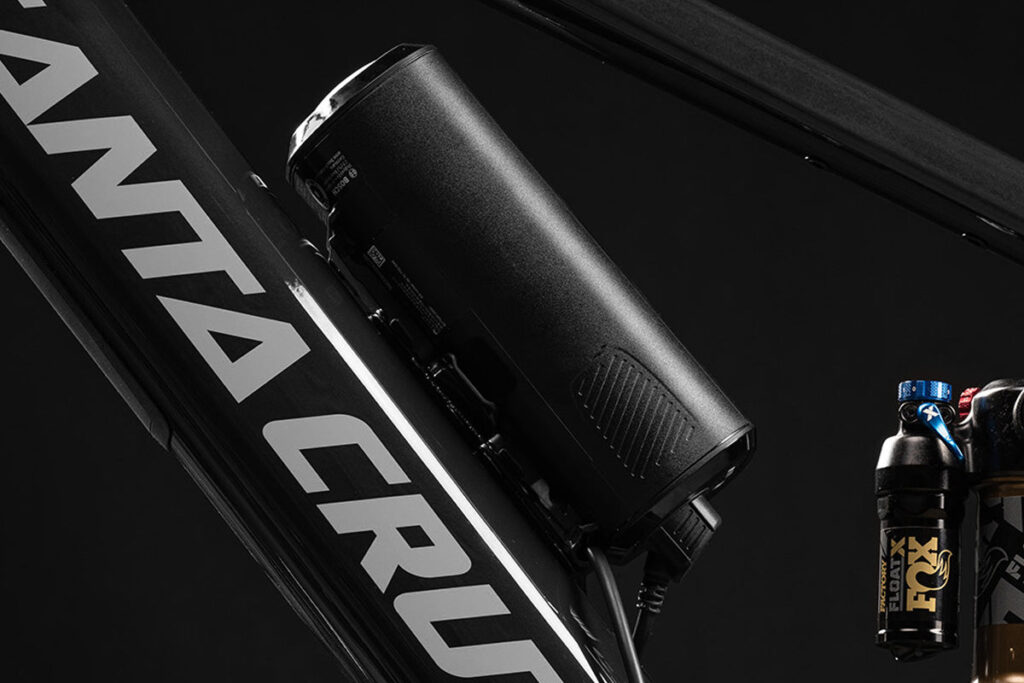
Santa Cruz specifies in the Vala technical support documentation that the battery is charged inside the frame and removed for servicing, not as a daily operation. It also rules out replacing it with the 800 Wh PowerTube, whose dimensions do not suit this design.
The practical implications are yours to consider: picture arriving home on a rainy day. Where does the mud go? Can you bring the complete bike to the charging point without blocking a door? Is there room for the charger and cable without creating an obstruction? If relying on a shared area, resolve access and permission to charge before buying, not afterwards.
Holidays change the situation. Ask your accommodation whether it permits the bike in a suitable area and offers an authorised charging point. 'There are sockets' does not always mean you can leave an eMTB there. Prior confirmation is more useful than discovering on arrival that bike storage and electricity are on different floors.
The official getting-started guide requires following the system's safety instructions and ensuring the battery is dry before charging. Do not improvise battery removal to solve an accommodation problem: consult authorised service support.
600 Wh: assess your ride with a reserve, not someone else's range figure
A capacity figure alone does not answer 'will it be enough?' Build your own record: route, elevation gain, conditions, assistance used and battery remaining at the finish. A demonstration on a familiar loop offers much more than extrapolating another rider's result on different terrain.
An illustrative example only: imagine estimating consumption of 420 Wh on your reference ride. Subtracting that from a nominal 600 Wh leaves 180 Wh, or 30%. This is not a measurement of the Vala or a promised range. It serves to show why it's interesting to talk about margin and not just ending the route. Neither the usable energy nor the accuracy of the indicator should be considered perfect.
If that reference comes from another bike, use it as an initial indication, not an equivalence. Next, test a representative bike and repeat the route in comparable conditions. Also note whether you rode alone, waited for companions or tried to maintain an unusually high pace: describing the ride helps interpret the result.
Our editorial rule is simple: do not buy a bike that leaves you at the limit on every normal ride. If most routes require an extra accessory or a charging stop, include them in the cost and convenience comparison from the outset. To prepare your record, see our range planning guide.
Advertisement / sponsored link
PowerMore: planned expansion, not an emergency wildcard
PowerMore adds 250 Wh to the internal 600 Wh: 850 Wh nominal capacity in total. The sum is arithmetic, not a guarantee of kilometers. The range documentation presents this accessory as an extension for rides that need it.
The Vala support recommends connecting it from the start of the ride. It advises against swapping extenders when the main battery is very low, because a freshly charged auxiliary unit does not guarantee full power. It also specifies the front mounts for the extender; do not pick any convenient pair of bolts.
Before buying it, ask for a demonstration with the mount, cable and the bottle you use. Check the approved fitting, actual clearance and completed installation. Ask the workshop to check operation on your specific bike; looking as though an accessory fits does not replace that check.
Watch out for the international offer: the Free Range campaign we consulted ties the free gift for eligible 2026 models to purchases in the United States or Canada from 15 May 2026. We do not extend it to Spain. Ask your local seller exactly what their offer includes and require it to appear in the quote.
Advertisement / sponsored link
Geometry and progression: two decisions that need to be separated
Santa Cruz offers independent adjustments: geometry changes bottom-bracket height by 4 mm and head angle by 0.3 degrees; progression changes from 26 to 29%, according to the official description of the platform. These figures describe setup options; they do not establish that one position is universally better.
To make use of them, we suggest a short protocol. First record the position supplied by the shop, suspension settings and tire pressures. Do several reference rides without chasing records. Then describe the problem precisely: where it occurs, when it does not and what you changed since the previous ride.
Avoid changing geometry, tires and rear shock together. Even if you notice an improvement, you lose the ability to attribute it to one change. Ask the workshop to follow the manual and its tightening torques; this guide does not replace those instructions or suggest adjusting bolts by intuition.
The Santa Cruz suspension calculator allows you to select weight, model and year as initial reference. Record the starting point, not just the position you end up preferring. Going back to a known configuration is much easier when it doesn't depend on remembering what you did three weeks earlier.
The 90 build: check each component's full designation
The equipment table Vala 90 MY26 specifies Maven Base brakes, 200 mm HS2 rotors front and rear, Reserve 30 HD AL rims and a OneUp dropper post. This matters: 'Maven' or 'Reserve' alone does not mean every photograph of a higher-spec Vala shows those same parts.
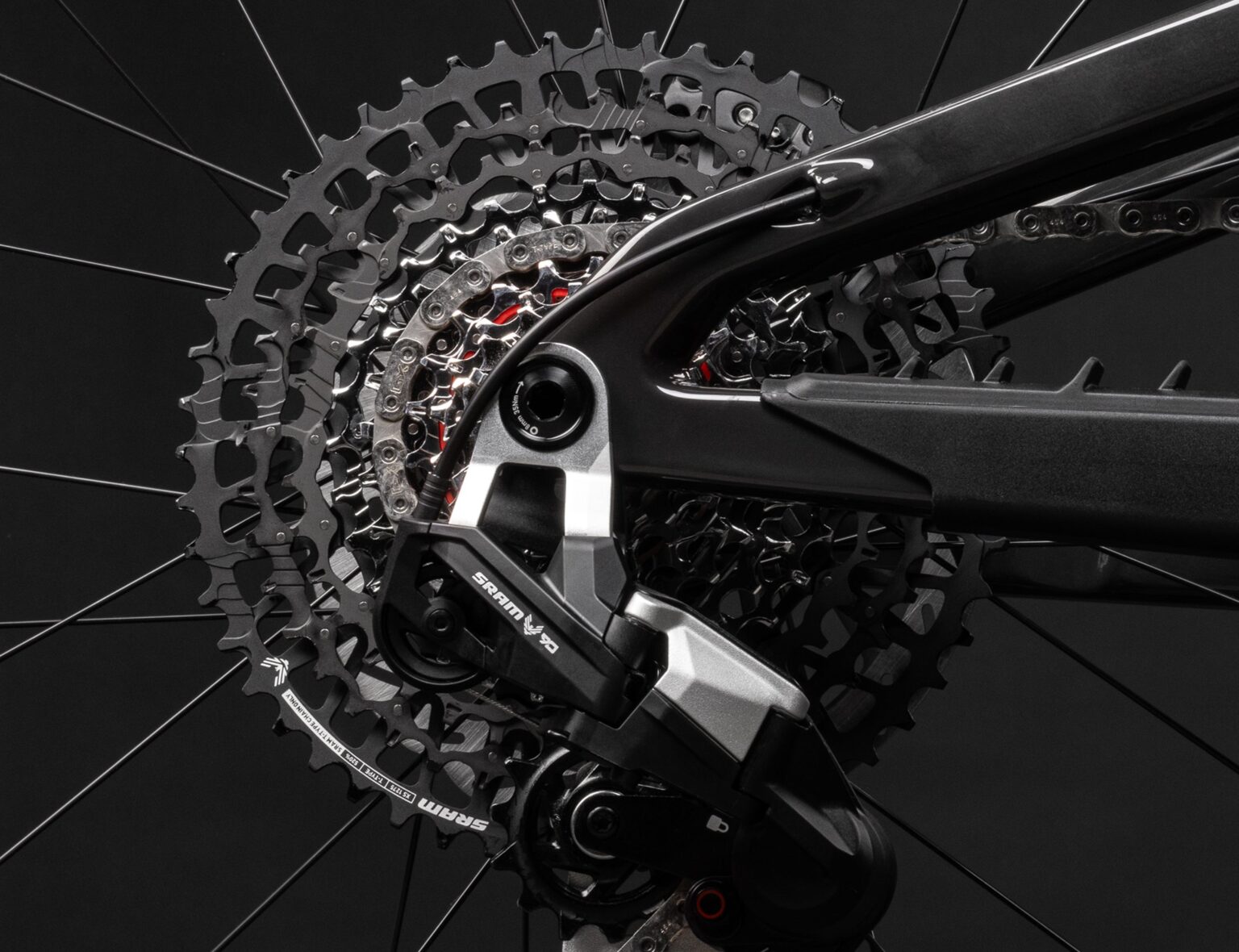
In the drivetrain, the official mechanical Eagle guide requires the Single Click shifter on eMTBs. Check the fitted product reference and that the shop has completed setup. Being cable-operated does not automatically make the drivetrain compatible with every old spare part you have at home.
To compare two quotes, use three columns: what actually changes, what you need and what you simply like. You may really want electronic shifting; that does not make it a priority over size, charging arrangements or maintenance. A mechanical build does not eliminate servicing requirements either.
Request indicative consumable prices and ask which spare parts the shop normally handles. The answer need not be the cheapest, but should be clear enough to calculate post-purchase costs. We leave groupset details to the SRAM Eagle 90 guide, rather than turning this article into another drivetrain spec sheet.
Size, dropper post and transport: three tests before paying a deposit
In the shop, do more than sit on it and check whether you can reach the ground. Ask to set the saddle to your pedalling position, fully lower the dropper post and check contact points with your usual kit. If between sizes, a real test arranged by the dealer is worth more than a generic preference for long or short bikes.
The official dropper-post compatibility tool cross-references model, size and height to the saddle rails. Use it before buying a different dropper post: requesting more travel without checking fit and pedalling height can create a problem rather than solve one.
Also try loading the bike into your vehicle. Bring the rack's dimensions or exact model and check its limits against the relevant manual. Weigh the configuration you will transport, including accessories; do not treat a catalogue figure as the weight of your ready-to-ride bike.
The Santa Cruz documentation requires a compatible rack and warns against overloading it. Our loading and bike-rack guide explains how to distinguish per-rail limits, total load and vehicle requirements.
Advertisement / sponsored link
What to request at handover and keep for the workshop
Treat handover as a demonstration, not collecting a box. Ask to be shown charging, reading system status and identifying the installed configuration. If offered a software update, ask what changes on that bike and which functions become active. Do not assume capabilities from the headline of a general Bosch update.
Keep the invoice, serial number, build specification and initial settings in a folder. Add photographs of consumable part references when accessible, without dismantling parts to get them. For a later enquiry, an exact code avoids conversations based on 'I think it had the same one as the other version'.
Request a servicing quote and establish who handles electrical faults. A shop selling the brand does not itself tell you workshop lead times or spare-part availability. For a bike used several times a week, time unable to ride also counts towards ownership costs.
Finally, consult the commercial warranty terms applicable to your purchase. Do not read lifetime coverage as free comprehensive maintenance or automatically apply coverage advertised for the frame to the motor.
Quick questions and eMTB PRO buying advice
Would I rule it out just because it has 600 Wh?
No. First I would assess my usual ride and the reserve on return. Capacity stops being an abstract discussion when you know what you need to cover and how often.
Would I buy before resolving charging arrangements?
We do not recommend it. Before paying, I would establish exactly where the bike will be kept and how it will be charged. That is a condition of use, not an accessory you can postpone indefinitely.
Do I have to choose the most expensive build?
No. I would request a specific comparison of equipment, service and final cost. I would decide what genuinely improves my experience while keeping money for setup, maintenance and equipment I actually need.
Our conclusion: the Vala 90 deserves a place on your shortlist if its format suits your rides, you can charge it conveniently and you prefer assessing the complete bike to chasing the biggest number. If an essential requirement is not met, continuing to look does not make it a bad bike: it means you are buying for yourself.
Before signing, resolve five things: exact version, confirmed size, charging location, complete budget and a workshop to rely on. That conversation may offer more than another specifications video. Base the final decision on a verifiable test and local offer, not a range promise or photographs of another build.
Sources and documentation
Information checked on 25 September 2026. Editorial guide based on official documentation, not our own ride test. Equipment and availability may vary by market.
- Santa Cruz: Vala 90 MY26 specification sheet
- Santa Cruz: Vala 1 MY26 support, mounting and compatibility
- Santa Cruz: Vala range and platform settings
- Santa Cruz: Free Range territorial conditions
- Santa Cruz: Bosch getting-started guide, charging and transport
- Santa Cruz: initial suspension adjustment calculator
- Santa Cruz: dropper-post compatibility calculator
- SRAM: mechanical Eagle Transmission documentation
Have you used this bike, motor or component?
Join eRIDERSeMTB on Telegram to discuss real experiences with other riders: Bosch, Avinox, Shimano, deals, faults and buying decisions. The community currently speaks Spanish.
Join TelegramAdvertisement / sponsored link
Advertisement / sponsored link
Advertisement / sponsored link