Mechanical SRAM Eagle 90: Single Click, eMTB compatibility and upgrade costs
Technical guide · September 2026
Eagle 90 brings cable shifting to Transmission. The shifter an eMTB needs, parts you can retain, and whether the upgrade is worth it.
Advertisement / sponsored link
For riders who want Transmission but prefer cable shifting
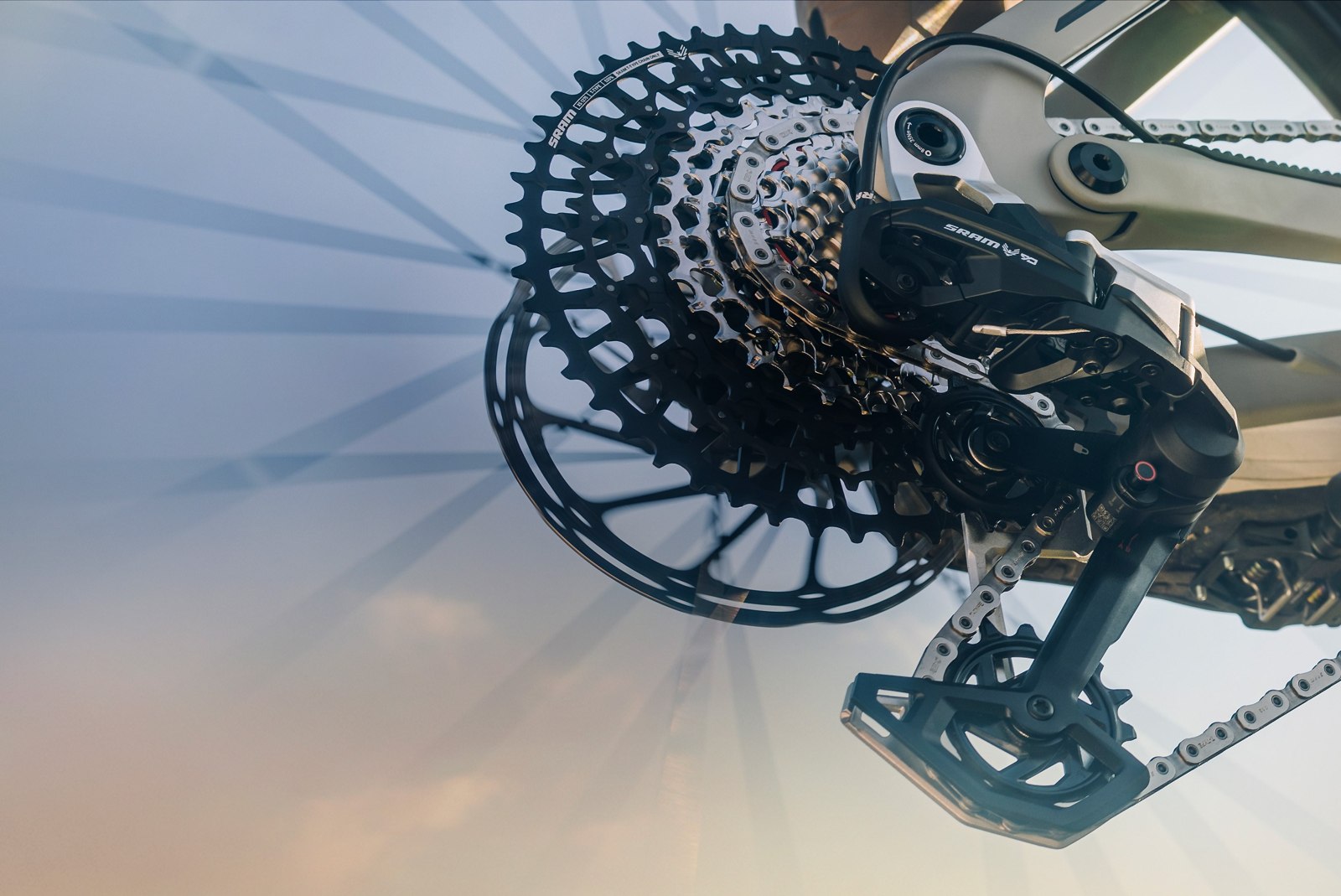
SRAM Eagle 90 has a specific proposition: bringing mechanical actuation to the T-Type Transmission architecture. That appeals to riders who want to select each gear with a cable-operated lever and base their spares around mechanical consumables. Buying it, however, requires more than choosing a rear derailleur for its looks.
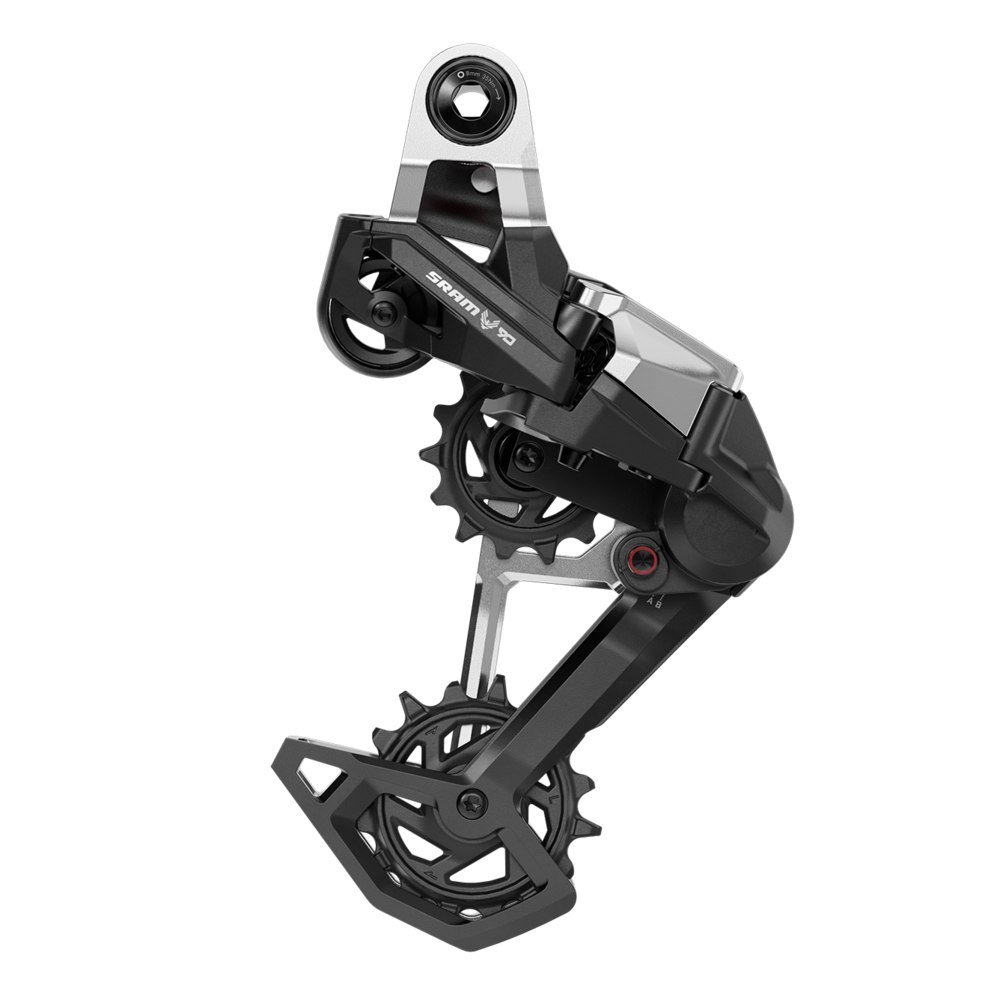
The Eagle 90 RD-90-A1 is a twelve-speed rear derailleur with Full Mount and T-Type cable pull. On an eMTB, it must be paired with the correct shifter, compatible drivetrain and frame-specific installation. Sharing the Eagle name with older parts does not automatically make them reusable.
The question we will address is practical: how much of your bike you can keep, what to ask the shop for and how to assess the result. This is a buying and setup guide based on technical documentation, with editorial analysis, not a durability test we have carried out. The convenience of cable shifting matters to some riders, but should be weighed against the complete cost.
Full Mount: check the frame before adding to your cart
SRAM specifies exclusive compatibility with the Hangerless/UDH interface for the Eagle 90 E-MTB groupset. That requirement concerns the frame, not just a replacement hanger you can buy. A conversion quote should start by identifying the bike's brand, model, year and configuration.
Advertisement / sponsored link
Imagine two visually similar eMTBs from the same range. One may have the required interface while the other belongs to an earlier generation. The model name you remember from the invoice is no substitute for identifying the specific frame. Find its documentation or ask the manufacturer for confirmation.
If your bike meets the requirement, drivetrain compatibility and setup still need addressing. If it does not, there is no point continuing to collect groupset parts in the hope that an improvised adapter will solve the problem. The upgrade is no longer the same project.
From our editorial perspective, the benefit of checking this first is financial: it avoids hours comparing cassettes and shifters for an unworkable installation. It also lets you consider alternatives within your existing system if the real need is to replace an impact-damaged rear derailleur or deteriorated cable housing.
Single Click is the eMTB-specific choice
The shifter SL-90-PA-A1 is the Eagle 90 Single Click variant. SRAM explains that limits the cable-pull lever to one shift per actuation to meet the demands of electric-bike use and help reduce chain wear or breakage. The double-click variant is not intended for this application.
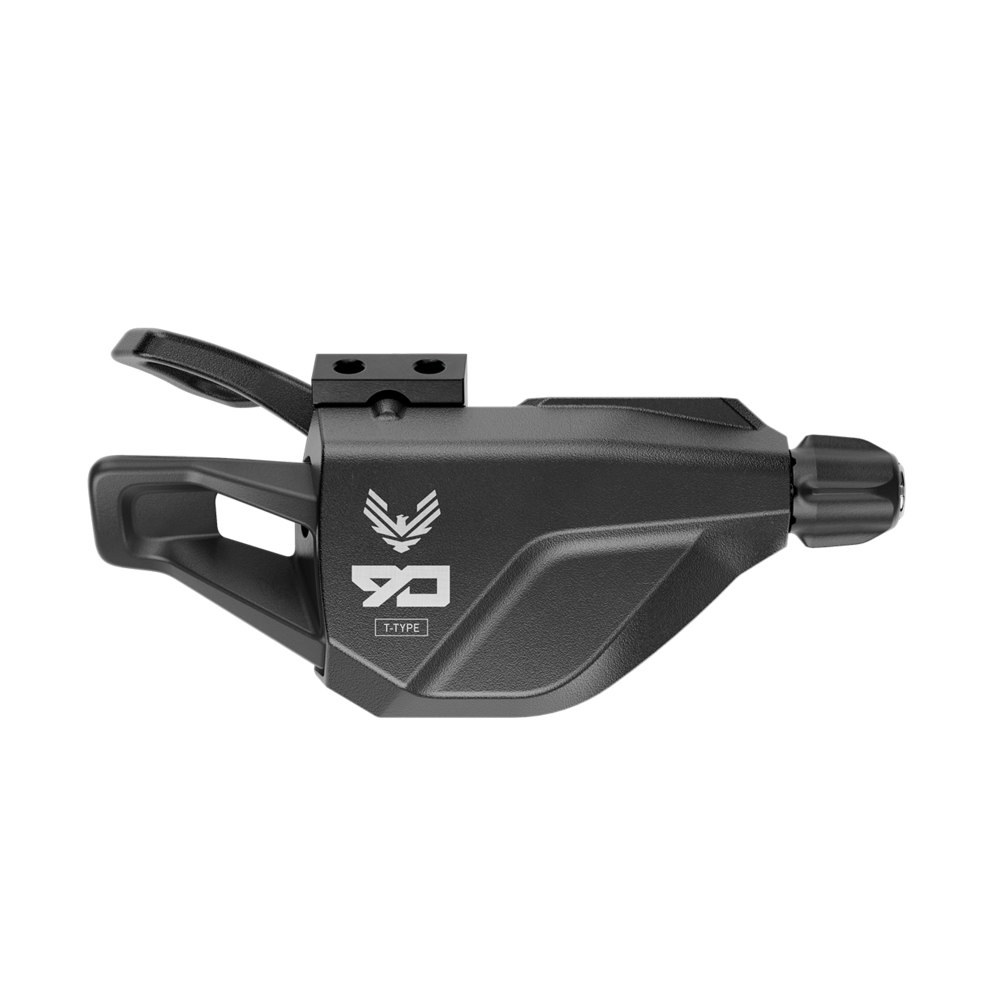
Before buying a groupset advertised as 'complete Eagle 90', ask for the shifter's product reference. A small photograph or generic title may hide differences between MTB and eMTB packages. If buying individual components, put that reference on the parts list so comparisons between shops are like for like.
With Single Click you can make successive shifts, but each action must be deliberate. On first using it, we suggest learning the lever travel and recognising each completed shift before making another. There is nothing to gain by testing the system's limits on your first climb.
Check ergonomics with the brake already positioned and while wearing gloves. If pressing the lever compromises your hold on the grip, reposition the shifter. Correct compatibility alone does not guarantee a comfortable hand position.
Your old Eagle shifter is not compatible just because it shares the name
The response of SRAM on previous-generation shifters is explicit: Eagle Drivetrain's X-Actuation cable pull and Eagle Transmission's T-Type cable pull are not interchangeable. Replacing only the rear derailleur and keeping any old Eagle shifter is not a valid upgrade.
To assess the rest of the system, record the full cassette and chain references, not just 'twelve-speed'. Add the freehub, chainring and motor interface. A photograph of the teeth alone does not confirm which family a part belongs to.
| Current status | What should be budgeted |
|---|---|
| Previous mechanical Eagle | Review the complete system, starting with shifter and rear derailleur |
| T-Type Transmission installed | Which components are retained and where the cable will run |
| Frame without the required interface | Alternative within a drivetrain supported by the frame |
Moving from an electronic build to a mechanical one also needs a realistic quote: the shifter, cable and housing must all be addressed. Calculate savings after that check. Already having a compatible cassette does not prove the frame allows your desired cable routing without additional work.
XS-1275: identify the freehub and calculate your lowest gear
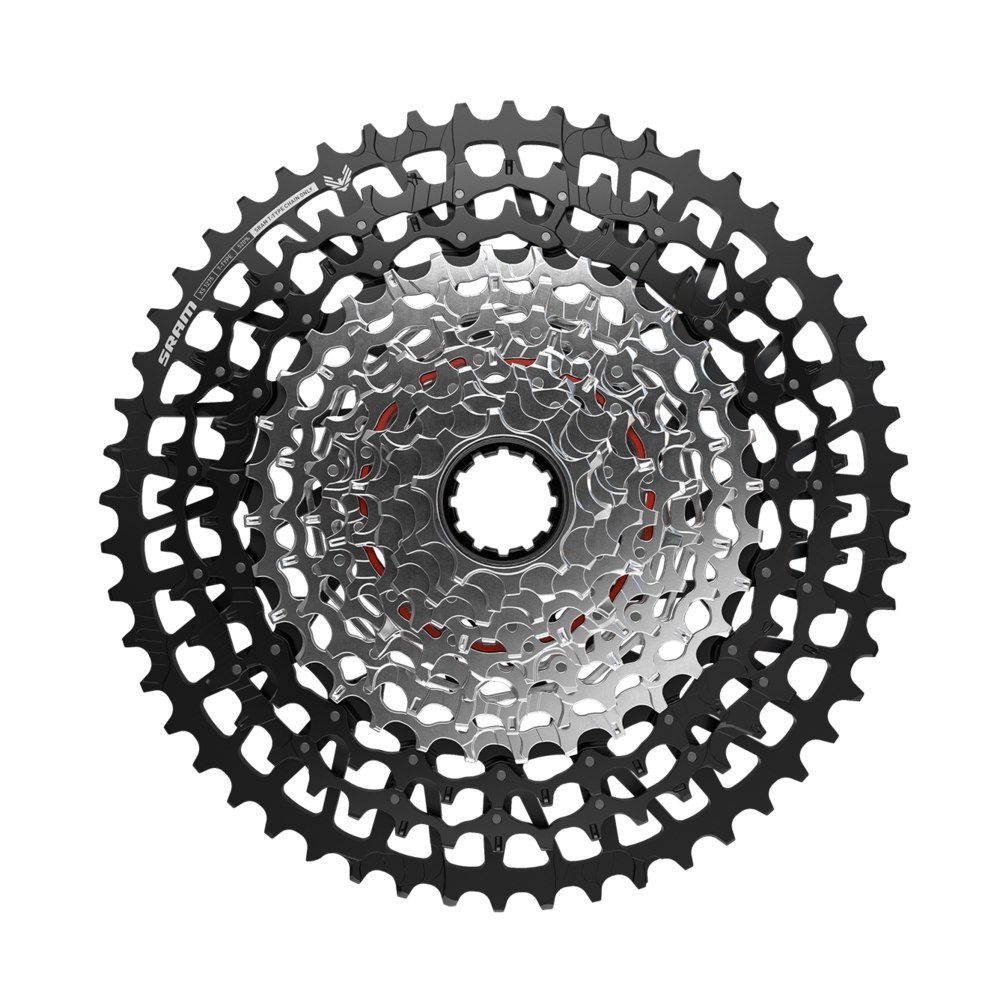
The cassette XS-1275 is T-Type, fits an XD freehub and has twelve sprockets ranging from 10 to 52 teeth. The sequence ends in 38, 44 and 52, and the claimed range is 520%. Check the exact product reference: the number of speeds or a similar-looking large sprocket does not identify the cassette technology.
Advertisement / sponsored link
Advertisement / sponsored link
A calculation example helps with chainring choice, provided there is an approved option for your motor. With 36/52, the ratio is approximately 0.692; with 34/52, it drops to 0.654. The second combination travels 5.6% less distance per crank revolution with the same wheel. That difference may appeal to riders who prioritise climbing slowly at a comfortable cadence.
This is not a promise of a fixed range improvement or a gradient everyone can climb. Wheel size, terrain, assistance mode and rider ability vary. The calculation describes gearing, not a trail test.
When comparing with your current drivetrain, write down the lowest and highest ratios of both. You can then decide whether you gain something useful or are simply paying to reproduce gears you already have.
The eMTB groupset package has motor-specific variants
The specification page for the Eagle 90 E-MTB groupset distinguishes variants for Bosch and SRAM/Brose, plus an option with a 104 BCD chainring and no crank arms. These alternatives explain why two packages with the same name may contain different parts. Check the motor reference and final configuration, not just the brand.
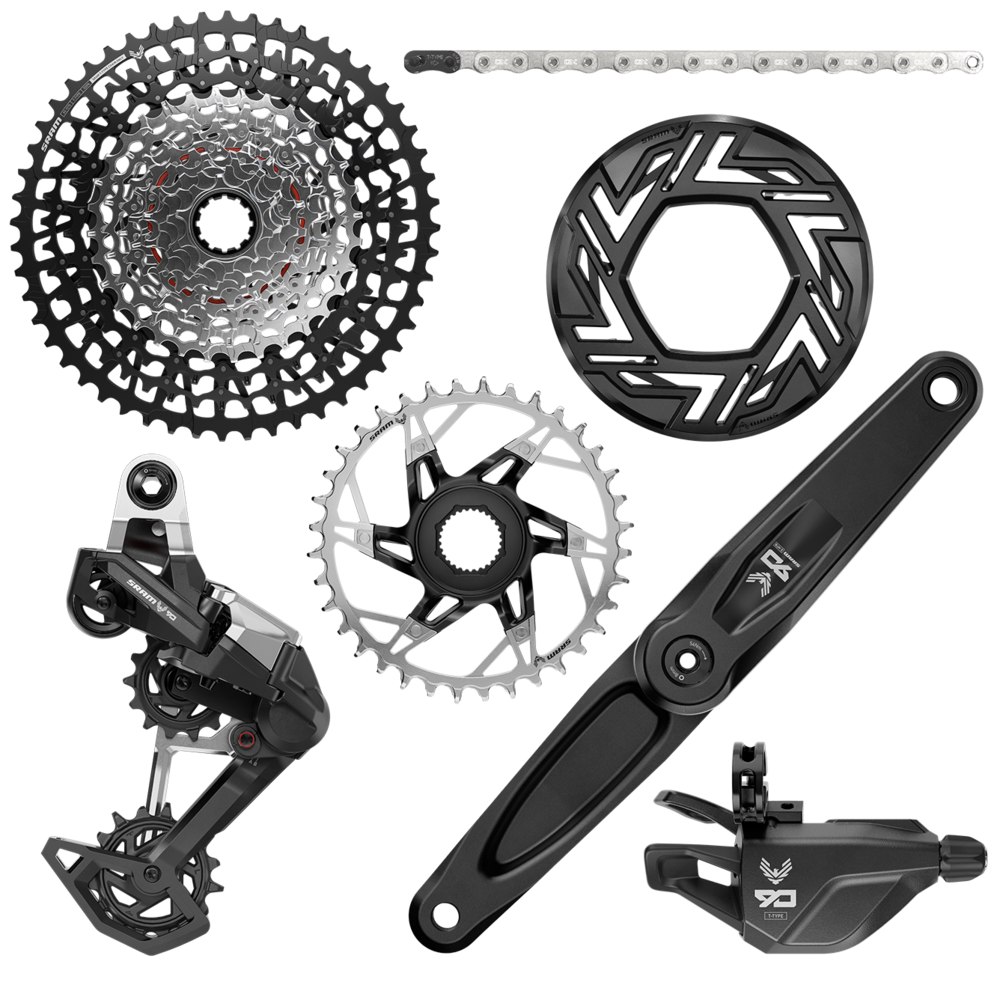
If you want to keep your current cranks, ask the shop to treat that decision separately from chainring choice. Crank length, interface and lateral position are different matters. A crank of suitable length may not suit the installation you need.
On an eMTB with frequent pedal strikes, note when they happen: pedalling in ruts, slow corners or root sections. That record helps discuss available crank lengths without attributing the whole problem to one dimension. Suspension travel, bike height and technique also belong in the discussion.
Our buying recommendation is to request one definitive component list. Avoid comparing a motor-specific groupset with a conventional MTB one and assuming the price difference represents an equivalent deal.
The installation needs your bike data
The mechanical Eagle welcome guide requires determining chain length, Setup Key position and Setup Cog for the bike and chainring combination. It also reminds you to check those details when changing the chainring or a geometry configuration that affects setup. The absence of traditional limit and B-tension screws does not remove that preparation.
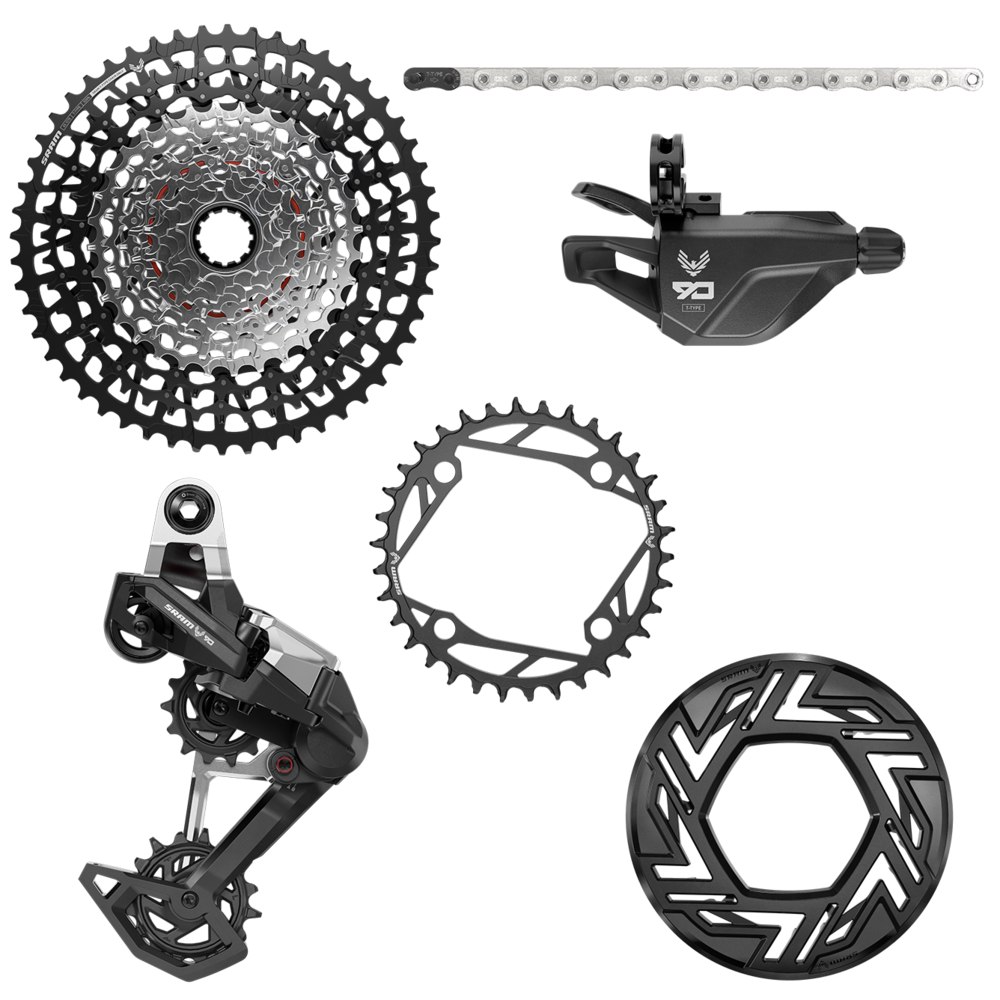
For an upgrade, ask the workshop to record those three details and the product references used on its job sheet. If you change a chainring months later, you can consult the starting configuration rather than reconstruct it from memory. This traceability is useful even when everything works well.
The SRAM TECH installation video shows a dedicated cable-routing and tensioning stage after fitting the assembly. At handover, ask to check handlebar rotation and ensure the housing is not pulled tight or kinked. For an internally routed frame, confirm beforehand what work is needed to access the cable route.
A mechanic must follow the sequence and torque specifications in the current documentation. This guide does not turn a brief process description into sufficient instructions for installing the rear derailleur without consulting the manual.
Shifting with assistance: what to check on the first ride
Shifting under load is part of Transmission's proposition and depends on a compatible, correctly adjusted system. For the rider, a useful check starts on a wide, predictable climb: shift one gear at a time and observe whether each transition completes consistently. Begin with moderate effort, without seeking an extreme situation.
If operation feels unusual, record the starting gear and the gear you shifted into. Also note whether it happens at every assistance level or after an impact. Those details make the problem much easier to reproduce than saying 'sometimes it shifts badly'.
On a technical section, anticipating the right gear remains a useful skill. A system designed to work under load does not require you to leave every shift until the point of greatest effort. Technology should make the manoeuvre easier, not turn every obstacle into a component test.
When assessing the purchase, look for consistency in your usual circumstances: tired hands, gloves, mud or climbs involving many shifts. The benefit may be comfortable, predictable actuation even if you have not gained a second on a descent.
How to investigate a problem without guessing the diagnosis
The cable adds a physical route that needs attention during maintenance. If a shift becomes stiff, visually check for kinks, displaced housing ends or transport damage. Do not assume turning the barrel adjuster will solve every problem: first establish what has changed since the last ride when everything worked normally.
A useful approach for the workshop is to distinguish three situations: the shifter feels different, the shifter works but the shift does not complete, or noise occurs while pedalling without shifting. These are observations, not diagnoses. There may be more than one cause, and parts should not be replaced on the basis of a single sensation.
Advertisement / sponsored link
After removing and refitting the wheel, a brief check somewhere safe helps detect changed behaviour. If the chain skips unexpectedly or you notice interference, stop the test and inspect the installation before applying more load.
For a route away from home, prepare tools and replacement parts that you really know how to use. Carrying a cable without knowing its installation does not amount to having solved a fault. Effective preparation combines compatible material with previously practiced skills.
Repairability: compare the part and workshop turnaround
The Eagle 90 features replaceable parts in the derailleur body and cage. SRAM also documents compatibility for certain pulley wheels, cages and mounting components within Transmission. Identify the exact spare part: repairable does not mean any similar-looking part will fit.
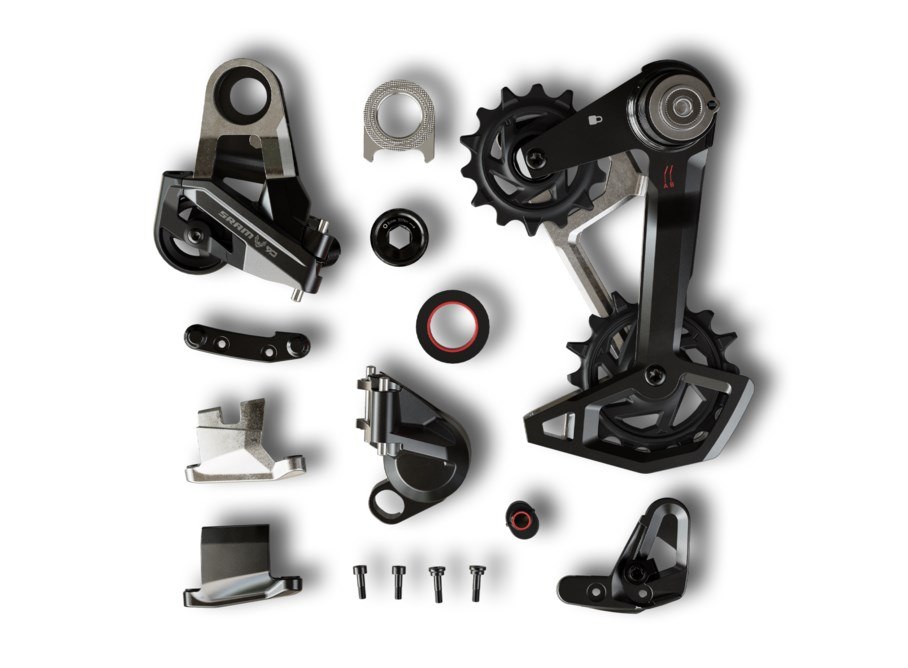
Before buying, ask for two indicative quotes: repairing a damaged exposed part and replacing the complete rear derailleur. You do not need to predict a future breakage. You want to know what alternatives the workshop offers and whether it can obtain the necessary parts within a reasonable time.
To compare costs, add parts, installation and initial consumables. Then consider two scenarios relevant to you, such as keeping the drivetrain for several years or changing bikes soon. Repairability matters more when you plan to keep the system and accessible service is available.
We are not calculating a guaranteed lifespan in kilometres here. It depends on care and conditions, and no single figure supports a promise of savings. Our editorial conclusion is more specific: Eagle 90 is interesting when the bike supports T-Type and the rider values cable operation and individual-component repairs, backed by a workable installation budget.
Questions to be resolved
Do I need to charge a battery to use Eagle 90?
The rear derailleur is cable-operated. That preference may simplify your preparations, but you still need to maintain the drivetrain and look after the cable-housing route. Do not confuse it with Eagle AXS derailleurs.
Can I use the Double Click shifter if I promise to press it carefully?
For eMTB use, choose SRAM's specified Single Click variant. An intention to shift carefully does not replace the component specified for this application.
Can I keep my twelve-speed cassette?
Only after identifying its product reference and compatibility. Counting sprockets does not answer the question. Insist that the quote specifies which cassette will be retained and which chain and chainring it will work with.
Is it worth replacing a drivetrain that already works well?
It depends on what you want to improve. If the problem is damaged housing or a poorly positioned shifter, address that first and then calculate the Eagle 90 cost. If several parts need replacing and your frame supports the system, compare the two complete projects. That calculation is more useful than the rear derailleur's standalone price.
Sources and documentation
Information checked on September 8, 2026. Photographs belong to the identified manufacturers; specifications and availability may vary by market. Editorial analysis, not our own ride test.
- SRAM Eagle 90 RD-90-A1
- SRAM Eagle 90 E-MTB GS-90-PA-A1
- SRAM Single Click SL-90-PA-A1
- SRAM: what is Single Click for?
- SRAM: previous-generation Eagle shifters
- SRAM XS-1275 CS-XS-1275-A1
- SRAM Eagle Mechanical Transmission Welcome Guide
- SRAM TECH: Eagle 90/70 Mechanical Transmission System Installation
- SRAM: Eagle AXS and Eagle 90/70 spare parts compatibility
Have you used this bike, motor or component?
Join eRIDERSeMTB on Telegram to discuss real experiences with other riders: Bosch, Avinox, Shimano, deals, faults and buying decisions. The community currently speaks Spanish.
Join TelegramAdvertisement / sponsored link
Advertisement / sponsored link
Advertisement / sponsored link