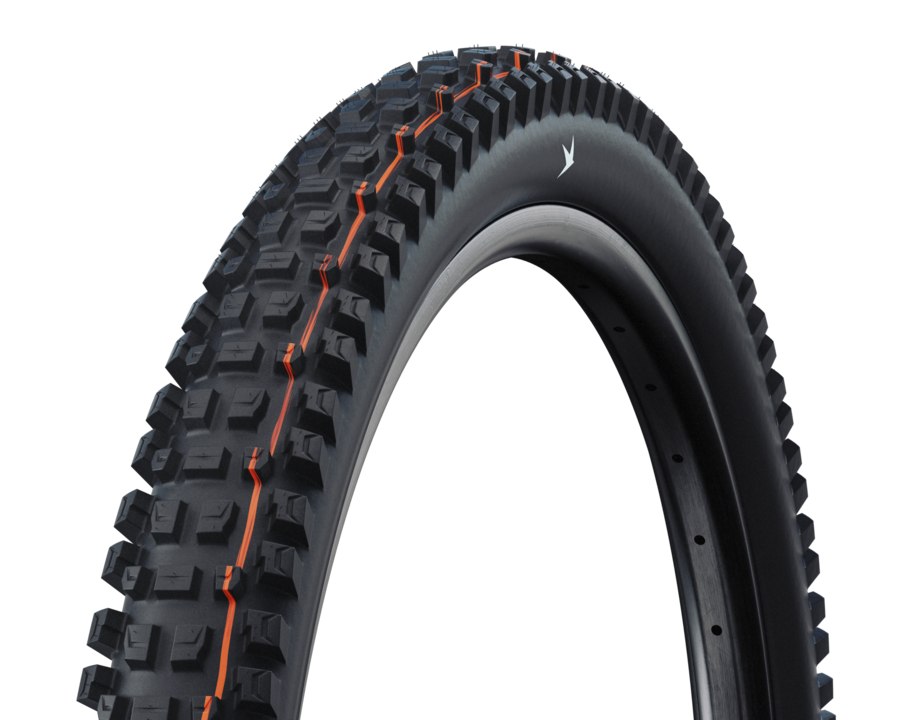
Schwalbe Albert radial: choose the right version and set your eMTB tire pressure
Technical guide · September 2026
Albert changes casing construction, but the right choice still depends on the exact model, compound and terrain. How the versions compare.
Advertisement / sponsored link
Albert is a specific tire, not just a technology
The Schwalbe Albert is worth considering if you are looking into a radial-casing trail or enduro tire, but the word 'radial' does not make the buying decision for you. You need to choose the size, construction and compound, and check exactly which product is being sold. Two Albert tires can share a tread pattern yet need a much more careful comparison than a sidewall photo suggests.
The useful question is what you want to improve over your current tire: cornering support, response on rocks, impact resistance or behaviour in wet conditions. Also note what you do not want to lose, such as easy pedalling on long connecting sections. This list avoids automatically choosing the toughest, softest option when your actual riding calls for a different combination.
Schwalbe describes the Albert as a versatile trail and enduro tire, also suitable for eMTB use. Our editorial view is that it deserves assessment as a combination of tread and casing. Radial construction offers an interesting technical option; the word alone does not prove it is the best tire for every terrain or bike.
In September 2026, check the full product reference
The range update described by Schwalbe for 2026 removes ADDIX from the name of the compounds, reorganizes families and introduces a new formulation of ULTRA SOFT. Therefore, not all differences are a simple change of label. Nor would it be correct to say that SOFT is entirely new because the word ADDIX has disappeared.
Advertisement / sponsored link
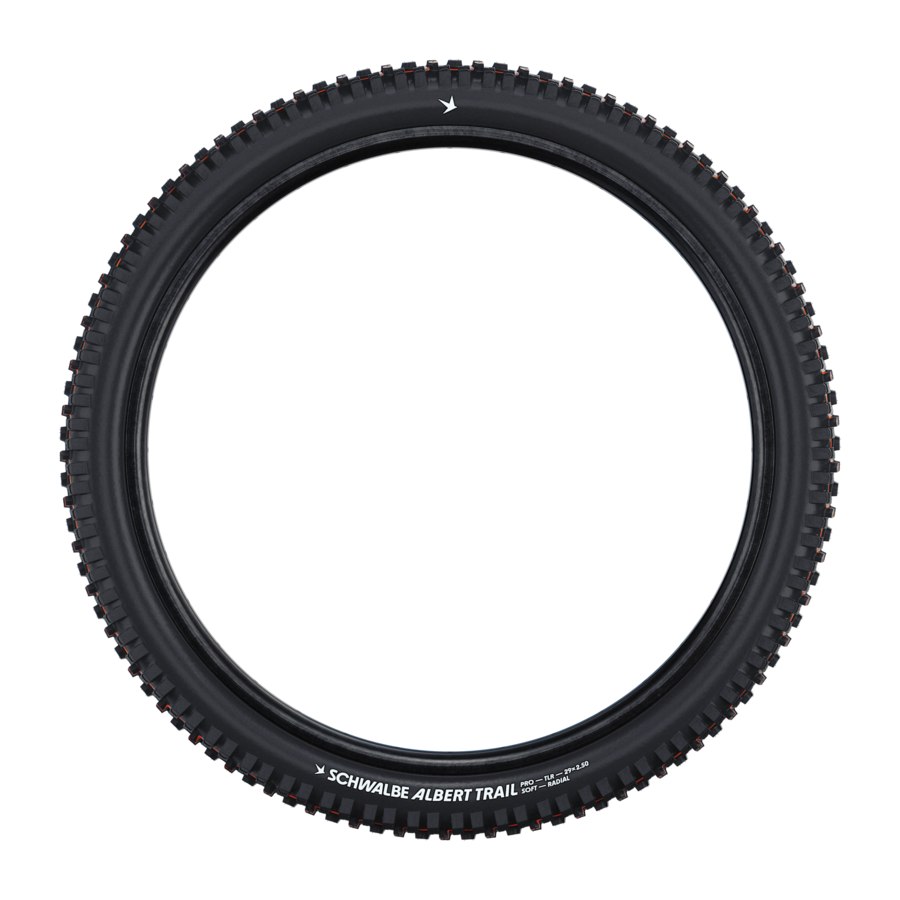
A verifiable example: the North American website still lists the Albert Gravity Pro ADDIX Soft 11654592; the current European specification page shows GRAVITY PRO Albert Radial SOFT 11654592.01. The suffix is part of the product's identity. Do not mix their photographs, specifications and weights as though they were a single offer.
When requesting a quote, ask for the complete product reference and EAN as well as size and compound. If a shop has older stock, compare it as such. It may suit your riding, but assess the discount against the product actually supplied. A new catalogue listing does not guarantee immediate availability at a Spanish shop either.
What radial means and how to interpret 30 %
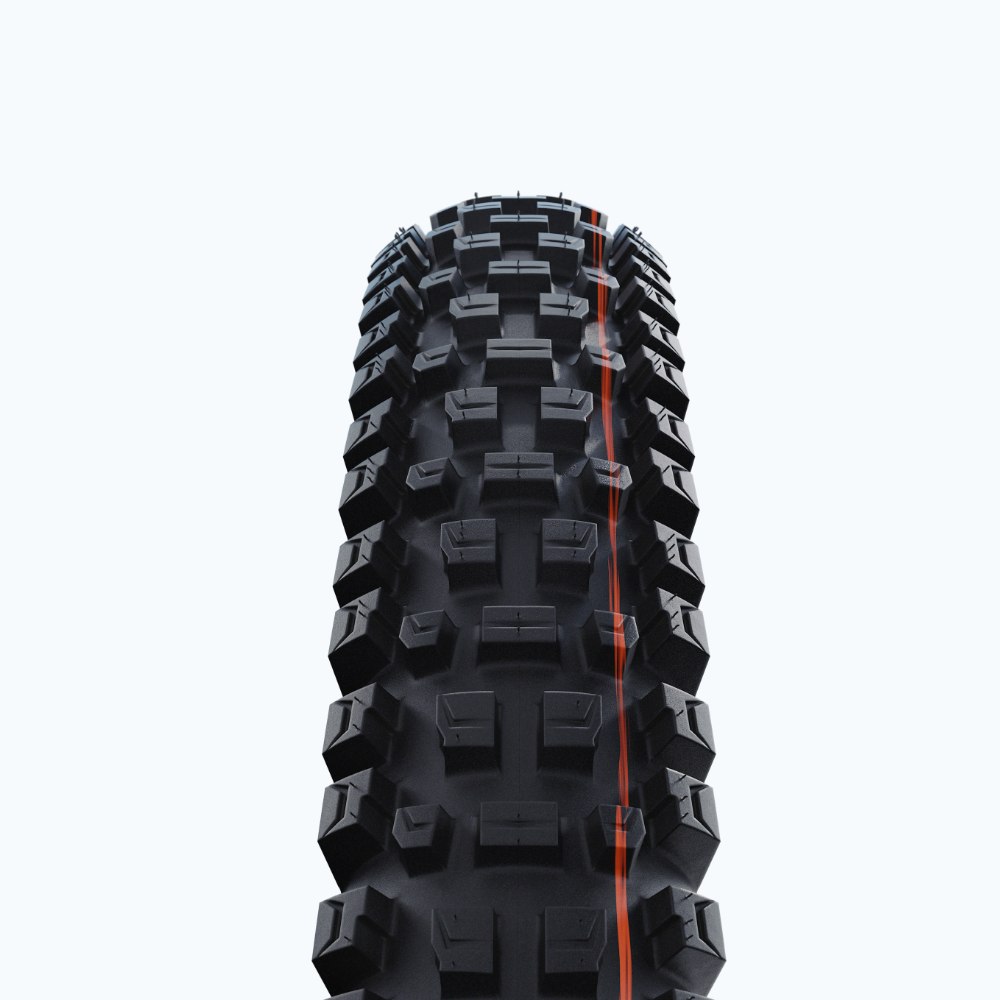
Schwalbe explains that the threads in its radial casing run at an angle closer to 90° than the conventional 45° diagonal layout, without exactly copying a car tire's radial structure. The brand claims approximately 30% more contact area at the same pressure. This is the manufacturer's comparison of its radial technology, not a guaranteed percentage improvement in grip.
Distinguish contact area, force and feel. A larger contact patch does not mean you can brake 30% later or lean 30% further. Nor does it let you calculate cornering speed directly. For a buying decision, the figure suggests a handling hypothesis that must then be assessed on the trail with a consistent setup.
A useful assessment could focus on the same rooty or rocky section where your current wheel forces you to correct your line. Record pressure, the previous tire and conditions, and observe whether holding your line becomes easier. That information is more relevant to your decision than repeating the promotional percentage as if it described every situation on a ride.
TRAIL PRO and GRAVITY PRO: three products to guide your choice
These official specification pages, consulted on 8 September 2026, illustrate current options. Weights are claimed by the brand and apply to each specific product, not the entire Albert range. The table is not intended to isolate every variable in a casing comparison either: size also changes here, as does compound in one row.
| Reference | Construction and compound | Size | Declared weight |
|---|---|---|---|
| 11654590.01 | TRAIL PRO radial SOFT | 29 × 2.50 | 1,170 g |
| 11654592.01 | GRAVITY PRO radial SOFT | 29 × 2.60 | 1,425 g |
| 11654681 | GRAVITY PRO radial ULTRA SOFT | 27.5 × 2.50 | 1,310 g |
Schwalbe positions TRAIL PRO as the lighter construction and GRAVITY PRO for harder use. We recommend starting with your wheel's history, not just your body weight. If you have had rim strikes, identify when they happened and at what pressure before blaming an inadequate casing. If you have never had problems, you do not need to choose the heaviest option automatically either.
On a mullet eMTB, record each wheel separately. An order for two identical tires can be wrong even if the product name and compound match your choice perfectly.
SOFT and ULTRA SOFT: choose for each wheel and route
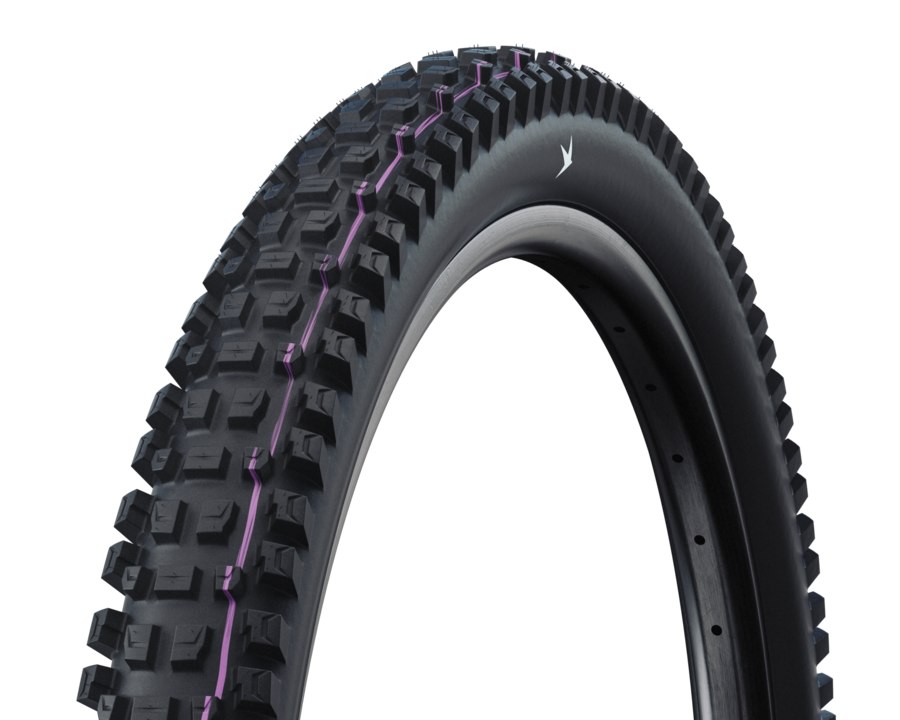
The specification page for the current Albert presents SOFT as the more versatile option and ULTRA SOFT as the one most focused on grip and damping. The brand suggests combining SOFT at the rear with ULTRA SOFT at the front. That is one possible setup, not a requirement or confirmation that all riders will prefer it.
Advertisement / sponsored link
To decide, mentally divide your route into what takes the most time and what demands the most of you. You might pedal along a track for an hour to reach ten minutes of technical descending, or spend the morning linking short descents. Both rides can be called enduro, but they do not call for the same balance of priorities.
We suggest favouring the grip-focused option on the wheel and in the situations where you really need it, without inventing a penalty in range or service life. To know how much energy use changes, you will have to measure it on your bike. And if you compare old and current ULTRA SOFT versions, keep the identification of both: an account published years ago does not automatically describe the formulation in your hands today.
Advertisement / sponsored link
What to look for in the tread and which terrain to use as a reference
In the Albert introduction, Schwalbe explains the use of two types of tread blocks, a relatively close, rounded profile and shoulder features derived from its work on Tacky Chan. The radial technology page itself highlights hardpacked ground. These are clues to understanding the design, not a promise of identical behaviour on dry rock, dust or mud.
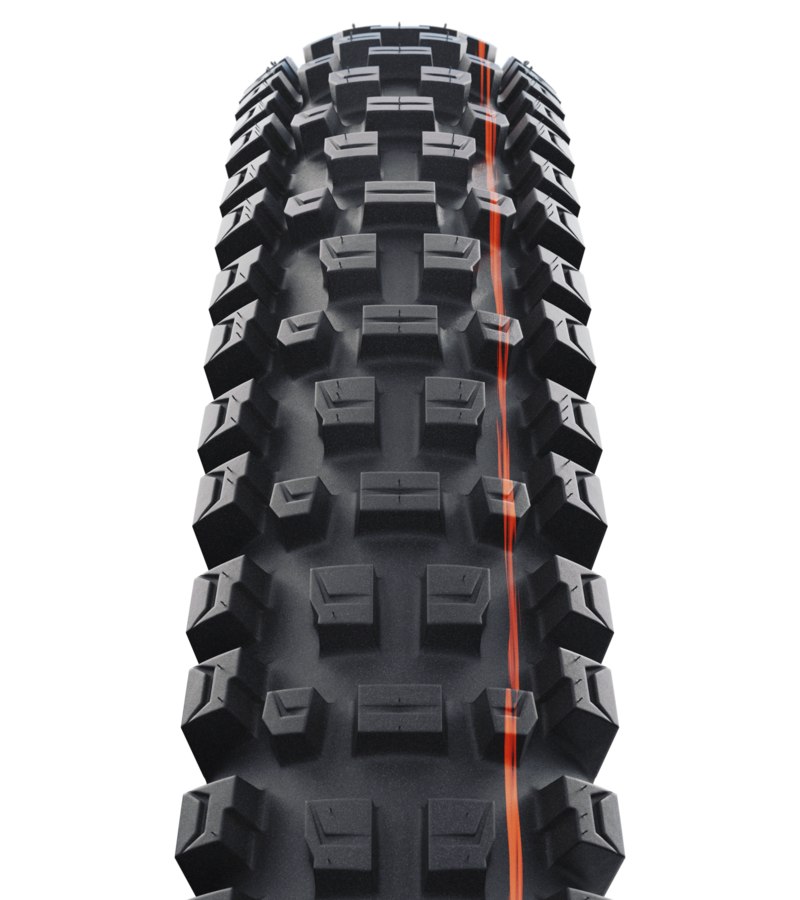
Before changing tires, describe the ground precisely. A hard track covered in a layer of dust does not behave like a clean hardpacked surface. Wet rock is not the same as deep mud either. If your problem always occurs on one of these surfaces, use that situation for comparison rather than describing everything as 'lack of grip'.
Also note the phase in which it happens: braking in a straight line, beginning to lean or accelerating out of a corner. That record helps you decide whether the Albert combination you are considering addresses your priority. You do not need to ride at the limit to gather information: a familiar section at a controlled speed lets you compare predictability, corrections and confidence without turning the assessment into a race.
Starting pressure is not a matter of applying a percentage
The official recommendation from Schwalbe for getting started with radial tires is to use the same pressure as a diagonal tire of comparable construction, then adjust it. It does not prescribe an automatic 50% increase. That percentage appears in a contact-area comparison and should not become a universal inflation instruction.
Start with the same pressure gauge and record each wheel separately. For example, note a setup A, ride a familiar section and then change the pressure in just one tire by a small increment, such as 0.1 bar, always within the system's limits. That increment is a suggested evaluation step, not a recommended Albert pressure or a manufacturer standard.
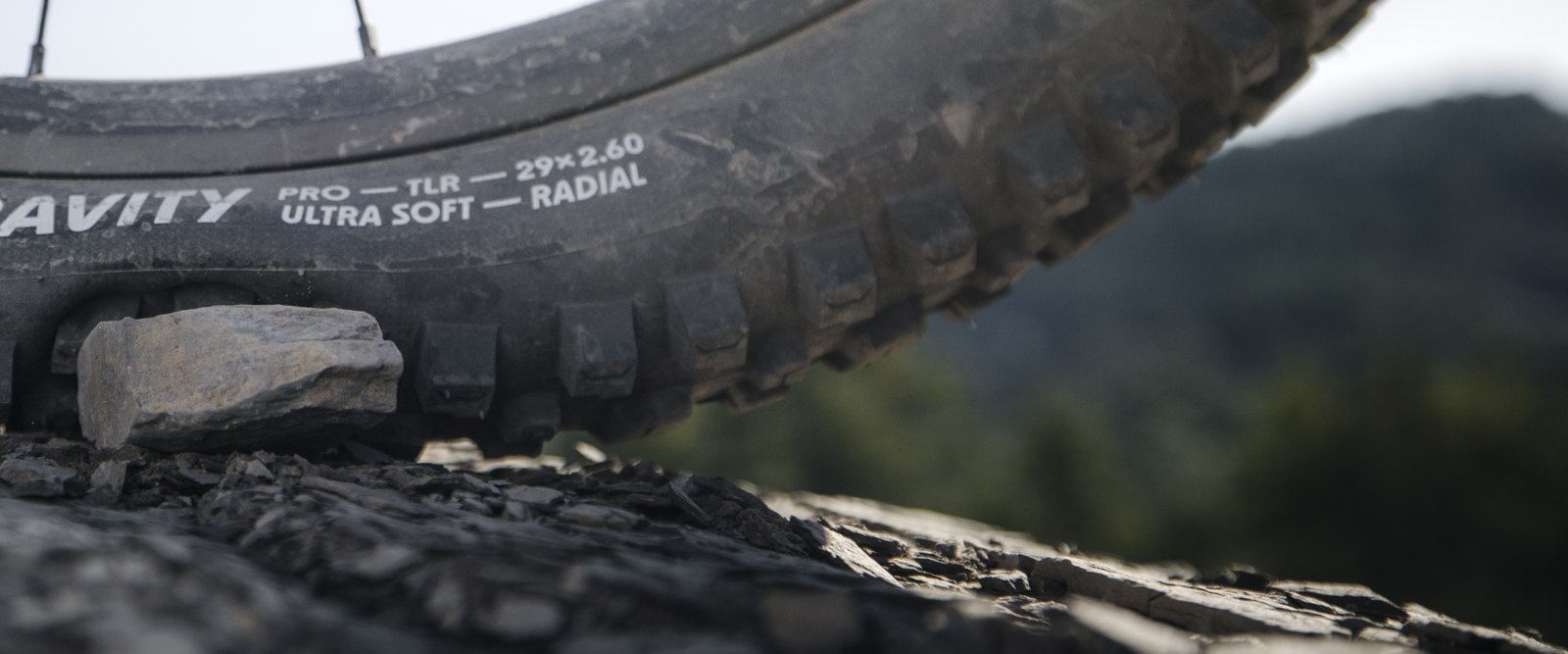
Look for repeatable behaviour, not the lowest pressure that lets you finish a descent. If you notice pressure loss, impacts or unexpected movement, inspect the setup before continuing. Keeping tire and suspension settings consistent during each comparison will help you understand what changed. Changing everything at once may produce a different bike, but tells you very little about the tire.
2.50 and 2.60: check clearance before seeking more volume
The printed size identifies a variant, but the final check must be made on the actual wheel. Schwalbe notes in its radial FAQ that these tires tend to be slightly taller and narrower than diagonal tires, and that width also depends on rim and pressure. Checking lateral chainstay clearance alone is therefore not enough.
Ask for your frame and fork's tire limits and check clearance with the tire fitted. Allow for suspension travel where applicable and follow the manufacturers' instructions. If a tire sits very close, do not assume it 'fits' simply because it can turn in a workstand. It needs functional clearance for the use those parts permit.
When comparing 2.50 and 2.60, start with clearance, then decide what to evaluate. If you buy both sizes, leave the rest of the setup unchanged and record the complete product reference. Changing width, casing and compound simultaneously prevents you from attributing the difference to one feature. It may be a worthwhile upgrade, but describe it as a complete setup change, not an isolated width test.
Tubeless: the compatible system determines the limit
The current products in the table are TLR, and their specifications state a maximum of 2.6 bar, also expressed by the brand as 38 psi. That is a product limit, not a target riding pressure. The Schwalbe tubeless guide also requires compliance with the rim's specifications. Where maximums differ, you must not exceed the most restrictive limit in the system.
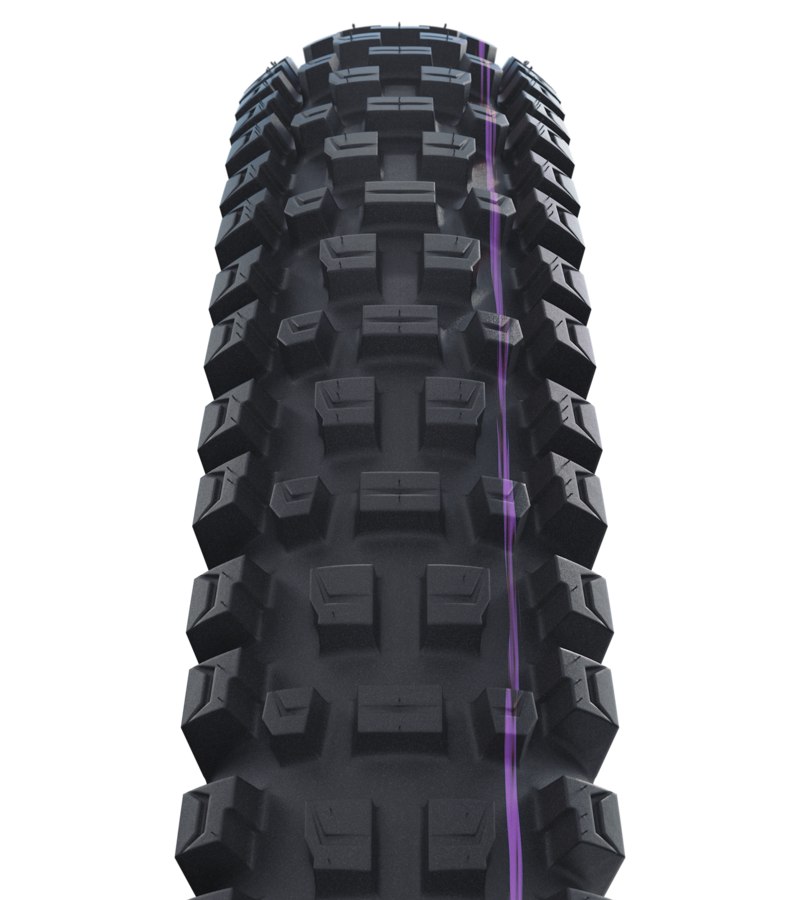
Before fitting, establish compatibility between rim, tire, tape, valve and sealant. Read their instructions and do not guess the sealant quantity simply because you used it on another wheel. Once finished, check that the bead is seated evenly and record the pressure after the setup has stabilised, following the recommended procedure.
If it loses air, first locate the leak. A pressure drop does not automatically prove the radial casing is defective. Several parts of the system may need checking, and identifying whether air escapes through the valve, the rim interface or the tire helps diagnosis. Do not try to solve a bead-seating problem by exceeding the pressure limit. An unstable setup must be checked before heading onto the trails.
How to decide whether it is worthwhile without inventing kilometres or watts
The financial decision does not require a universal price. Ask for the price of the exact product in Spain, check whether fitting is included and add consumables where applicable. Two apparently identical deals may involve different generations, casings or workshop work. That detailed comparison is especially useful when buying a pair rather than a single tire.
To assess the result, record three things over several rides: behaviour on your reference section, problems and visible wear changes. Add pressure and conditions so you do not compare a damp morning with a dry afternoon as though everything else were equal. A new tire does not let you attribute every improvement to its design if the previous one was badly worn.
We think Albert deserves a place on the shortlist if you want to explore radial construction with a versatile tread pattern. Keep your original criteria in mind: what you need to improve and which compromises you accept. We cannot assign it a specific gain in range, grip or service life without a comparable test. If the setup feels more predictable in your usual conditions and its running costs suit you, that is a practical reason to choose it again.
Frequently Asked Questions about Albert Radial
Does an extra 30 % of contact mean an extra 30 % of grip?
That is not a valid equivalence. The figure describes a contact-area comparison published by Schwalbe. It does not let you calculate braking performance, speed or lean angle directly. Use it to understand the technical concept, not as a guarantee for your ride.
Do you need much higher pressure when switching to radial tires?
There is no general requirement to do so. Schwalbe's starting reference is the pressure used in a comparable diagonal tire. Behaviour is then assessed within tire and rim limits, changing one variable at a time.
Advertisement / sponsored link
Can I fit Albert front and rear?
The brand allows for different combinations on each wheel. Before choosing, check both sizes and decide on casing and compound separately. On a mullet bike, remembering each wheel's diameter matters as much as getting the product name right.
Is an ADDIX Ultra Soft offer the same as the current ULTRA SOFT?
Do not automatically treat them as equivalent. Schwalbe documents a new ULTRA SOFT formulation in its range reorganisation. Check the reference and label of the tire being offered before comparing specifications, reviews and price.
Sources and documentation
Information checked on September 8, 2026. Photographs belong to the identified manufacturers; specifications and availability may vary by market. Editorial analysis, not our own ride test.
- Albert GRAVITY PRO radial SOFT11654592.01
- Albert TRAIL PRO radial SOFT11654590.01
- Albert GRAVITY PRO radial ULTRA SOFT11654681
- Schwalbe: radial technology and FAQs
- Schwalbe: 2026 MTB range reorganisation
- Albert Gravity Pro ADDIX Soft11654592: previous reference
- Previous Albert Trail Pro: official range gallery
- Schwalbe: Albert and Shredda technical presentation
- Schwalbe: mounting and tubeless technology
Have you used this bike, motor or component?
Join eRIDERSeMTB on Telegram to discuss real experiences with other riders: Bosch, Avinox, Shimano, deals, faults and buying decisions. The community currently speaks Spanish.
Join TelegramAdvertisement / sponsored link
Advertisement / sponsored link
Advertisement / sponsored link