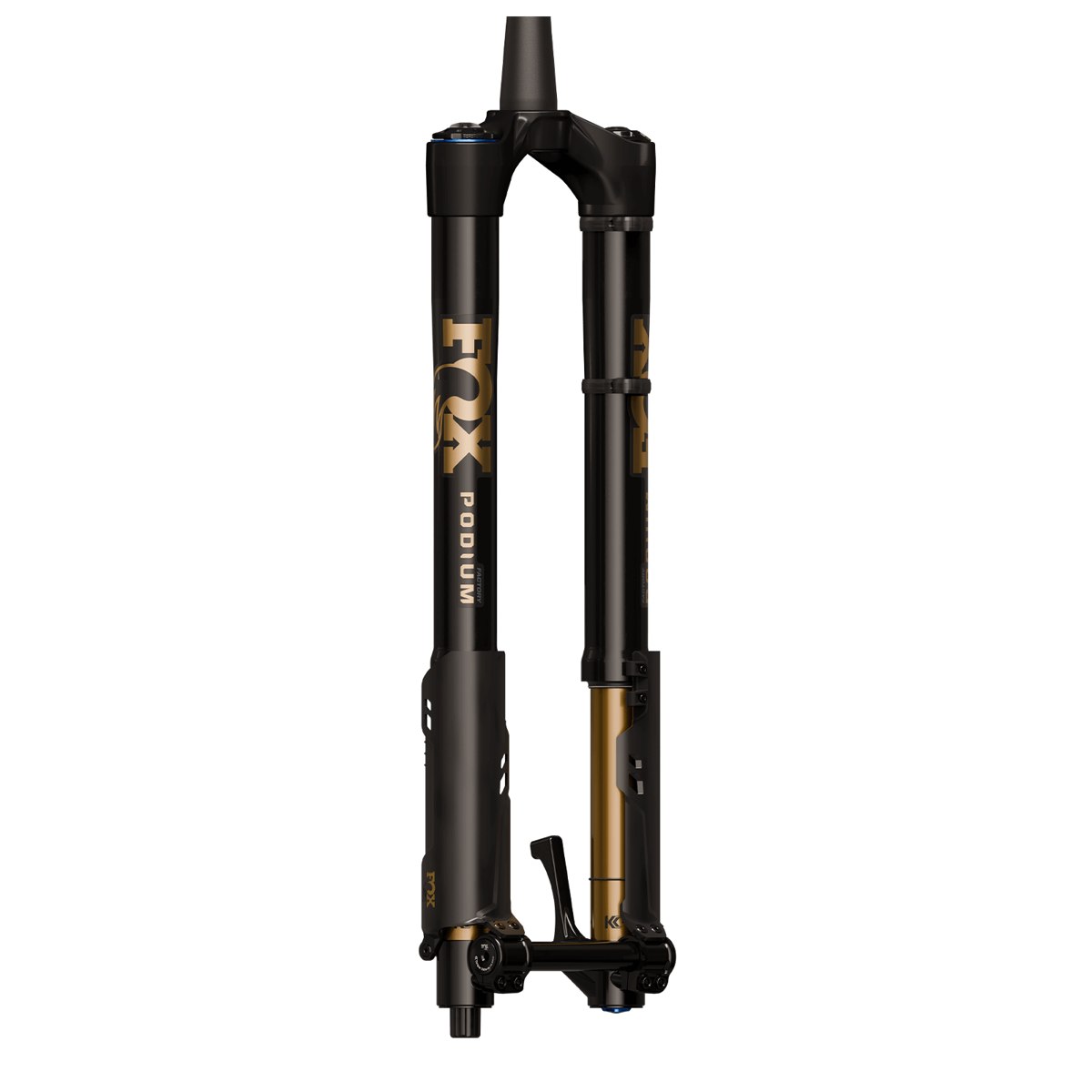
FOX Podium: what an inverted fork changes and what to check before fitting one
Technical guide · September 2026
Look beyond travel: the 20 mm hub, brake, hose routing and servicing determine whether the Podium fits your eMTB.
Advertisement / sponsored link
The purchase starts with the problem you want to solve.
The FOX Podium makes sense if you want a fork aimed at demanding descents and are prepared to review the entire front-end setup. Buying it just because it looks like a motorcycle fork can be expensive: the wheel, brake and workshop time are part of the decision too. Before choosing, write down what currently limits you: loss of precision, insufficient support under braking, fatigue on rough terrain or a fork that needs servicing.
These are different situations. An uncomfortable front end does not in itself prove a lack of stiffness. The tire may be overinflated, rebound may be unsuitable or several settings may be working poorly together. We suggest first addressing what you can measure with your current setup, then deciding whether you need a different architecture. That gives you a useful baseline for assessing the investment.
FOX positions the Podium as a single-crown fork for gravity riding. That positioning helps guide the purchase but does not support a promise of a specific improvement on your routes. The difference worth paying for is one you can use repeatedly, not one that appears just once on an exceptional descent.
What an inverted design really means
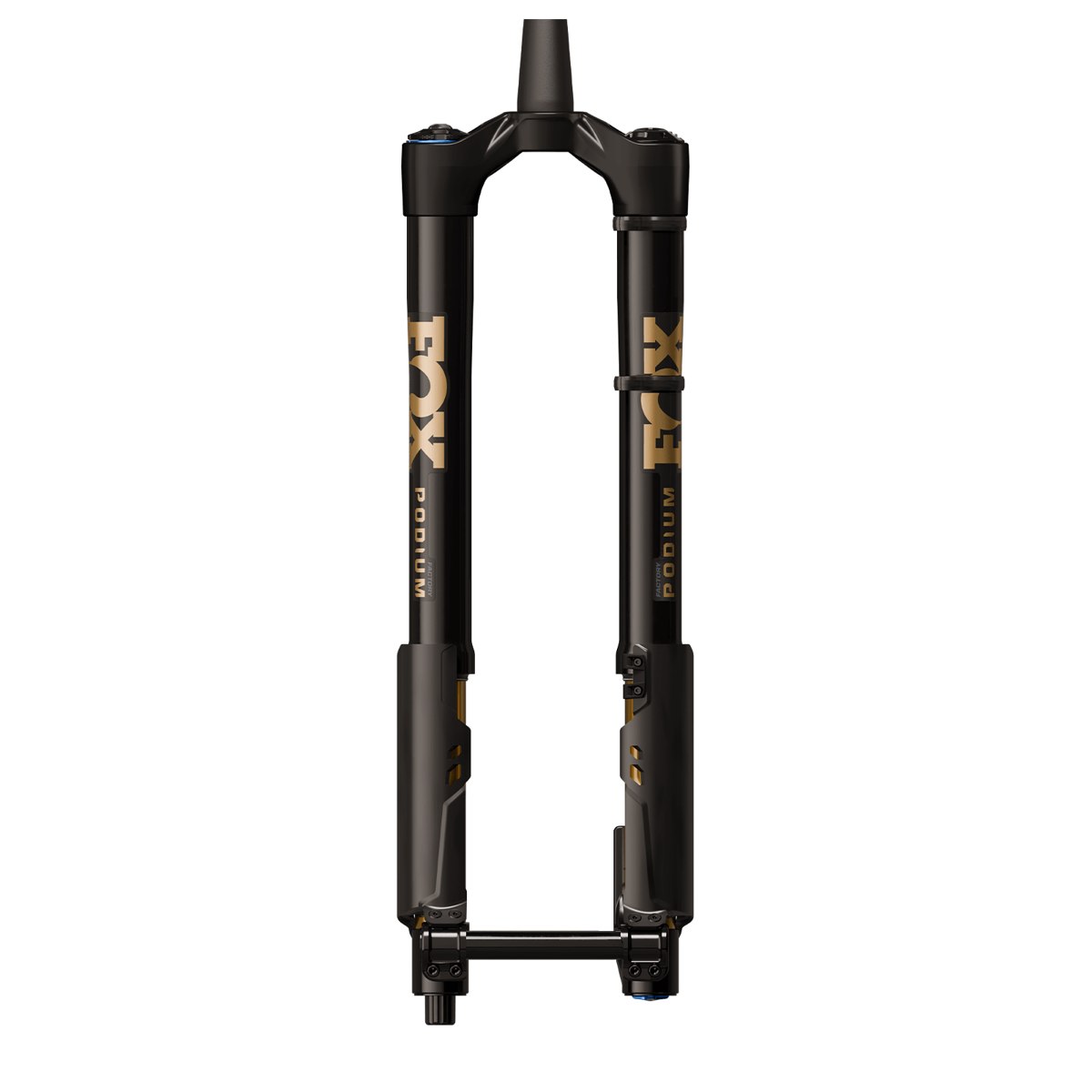
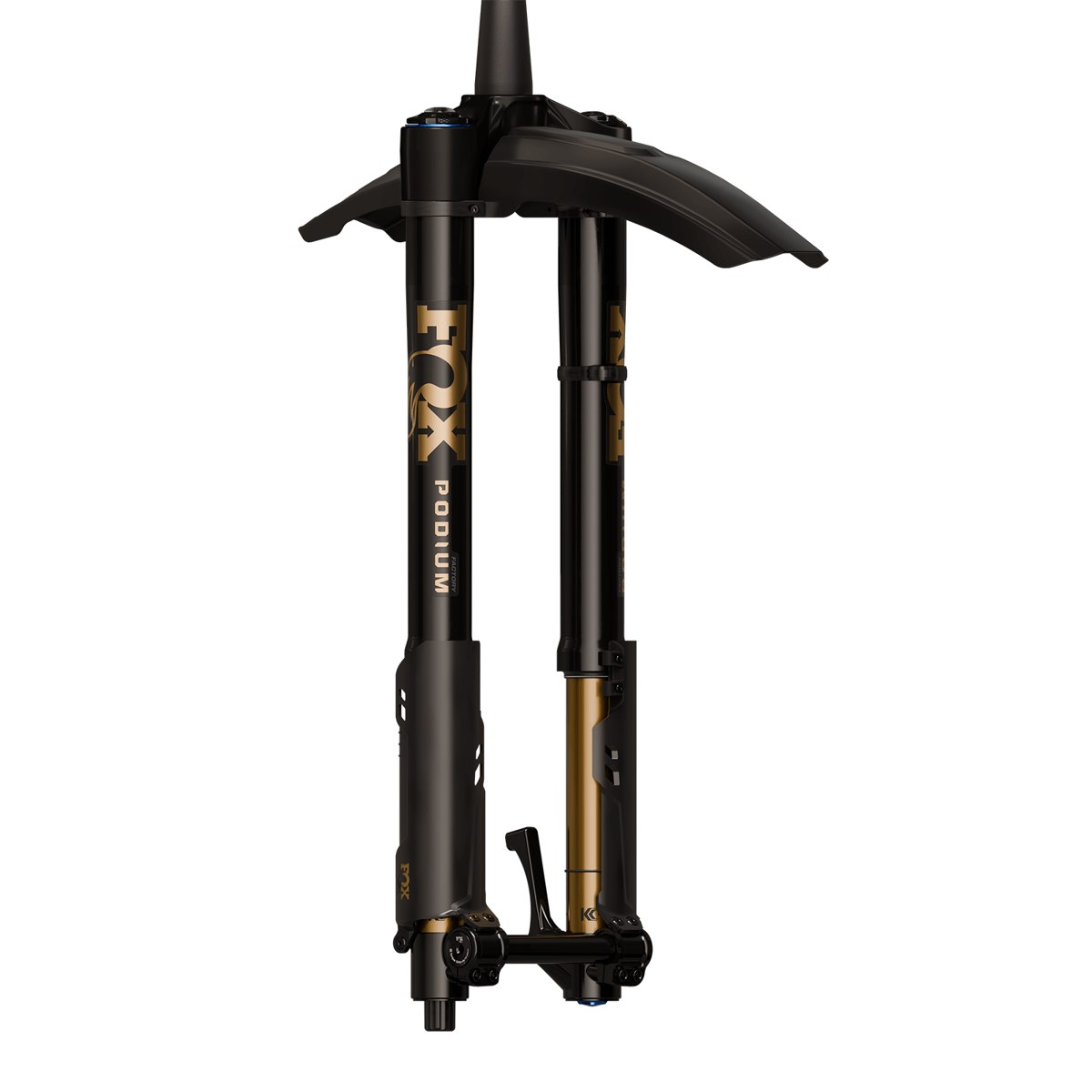
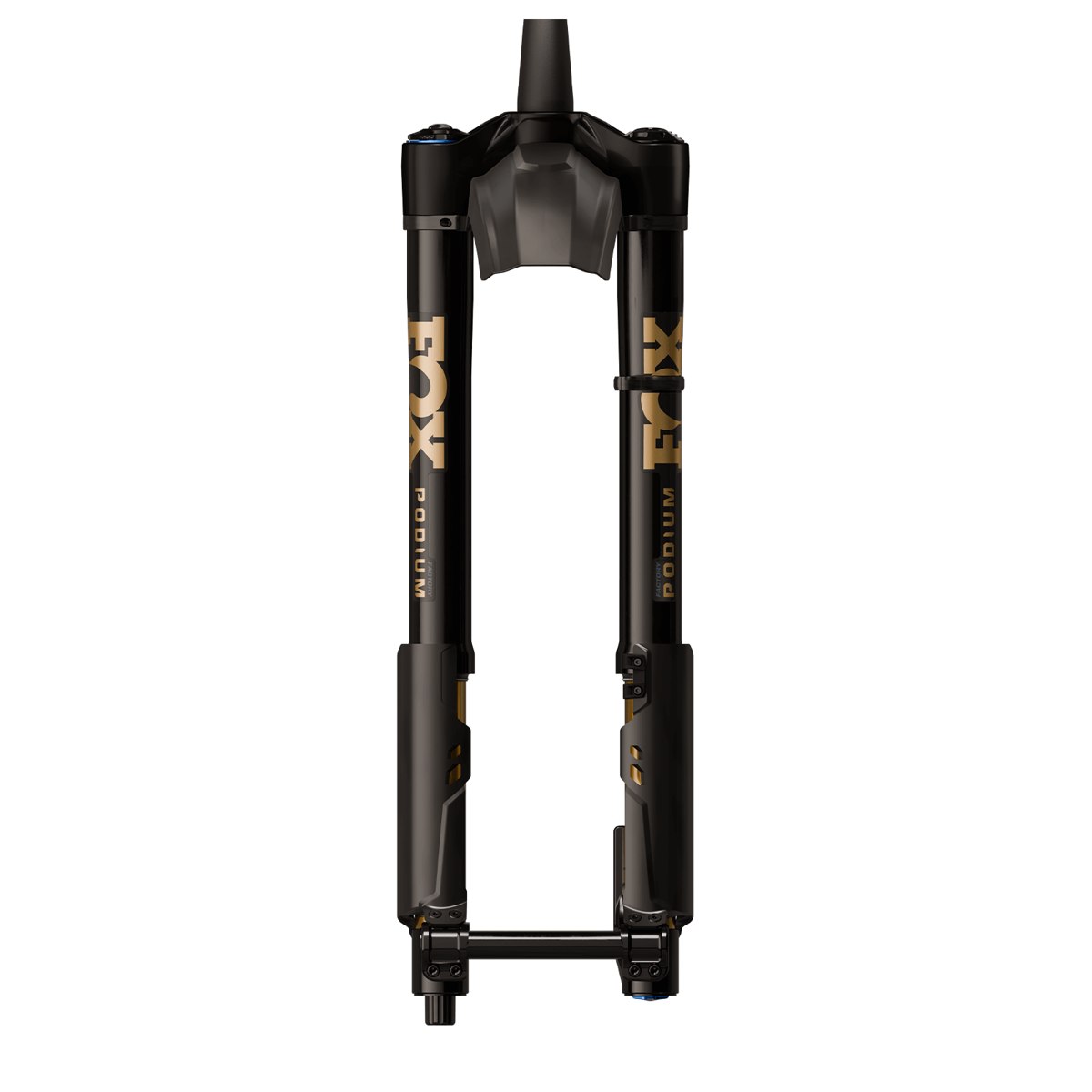
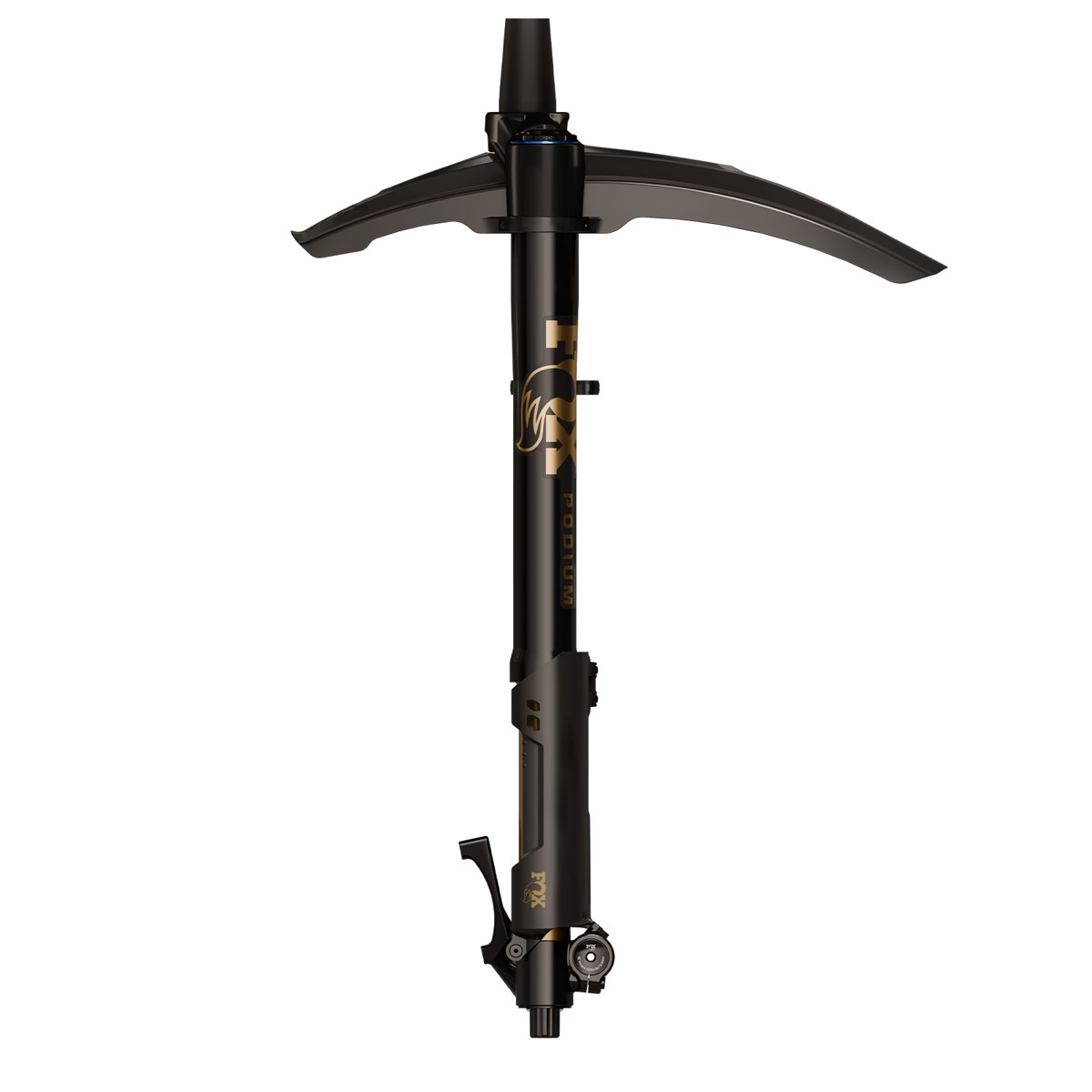
On the Podium, the larger-diameter tubes sit at the top and the sliding stanchions are down by the wheel. The arch joining the lower legs on many conventional forks is absent. FOX combines 47 mm upper tubes, a large crown and a dedicated axle to achieve its stiffness target. It also describes GlideCore as a system that lets the air spring accommodate small deflections under load. These are features and explanations from the official Podium architecture.
Advertisement / sponsored link
Separate two questions: how much the assembly flexes under force, and how easily the suspension begins to move. A fork can aim to resist bending without having to feel harsh. But inverting it alone does not ensure more grip for every rider either. The result depends on the complete system and its setup.
For comparison, imagine braking over small steps. You want predictable steering response and a wheel that can track the ground. Those aims are compatible, but cannot be assessed simply by looking at a tube's diameter. A useful test examines both, with the same wheel and similar conditions.
The specific version matters more than the name
The product page for Podium Factory consulted on 8 September 2026 offers 160 and 170 mm travel, a GRIP X2 damper, a FLOAT EVOL GlideCore air spring and a 1.5-inch tapered steerer. Claimed weight starts at 2,695 g. Its selector distinguishes 58HT and 68HT crowns. Do not choose that variant on visual similarity: ask for confirmation of the correct product reference for your frame.
| Component | Podium Factory specifications consulted | Purchase check |
|---|---|---|
| Travel | 160 or 170 mm | Authorized frame limit |
| Axle | 20 × 110 Boost | Compatible hub and end caps |
| Brake | Direct 200 mm Post Mount | Correct rotor and adapter |
| Weight | Claimed weight from 2,695 g | Compare complete setups |
The Performance Elite also appears in the official range as an option for complete bikes, with black-anodised stanchions. Do not identify a fork by its colour in a photograph and automatically attribute Factory equipment to it. On a stock bike, the specifications for that build and its fork identification take practical priority.
The manual covers other configurations, including E-Bike+. That does not mean every combination in the technical document is available separately in Spain.
The hub can change the entire budget
The 20 × 110 Boost requirement is one of the key points to resolve before paying. If your current wheel uses a different axle, knowing only that it is 110 mm wide does not establish compatibility. Check the exact hub model and the conversions its manufacturer authorises. A verbal assurance that 'it can be adapted' is not enough without the relevant part numbers.
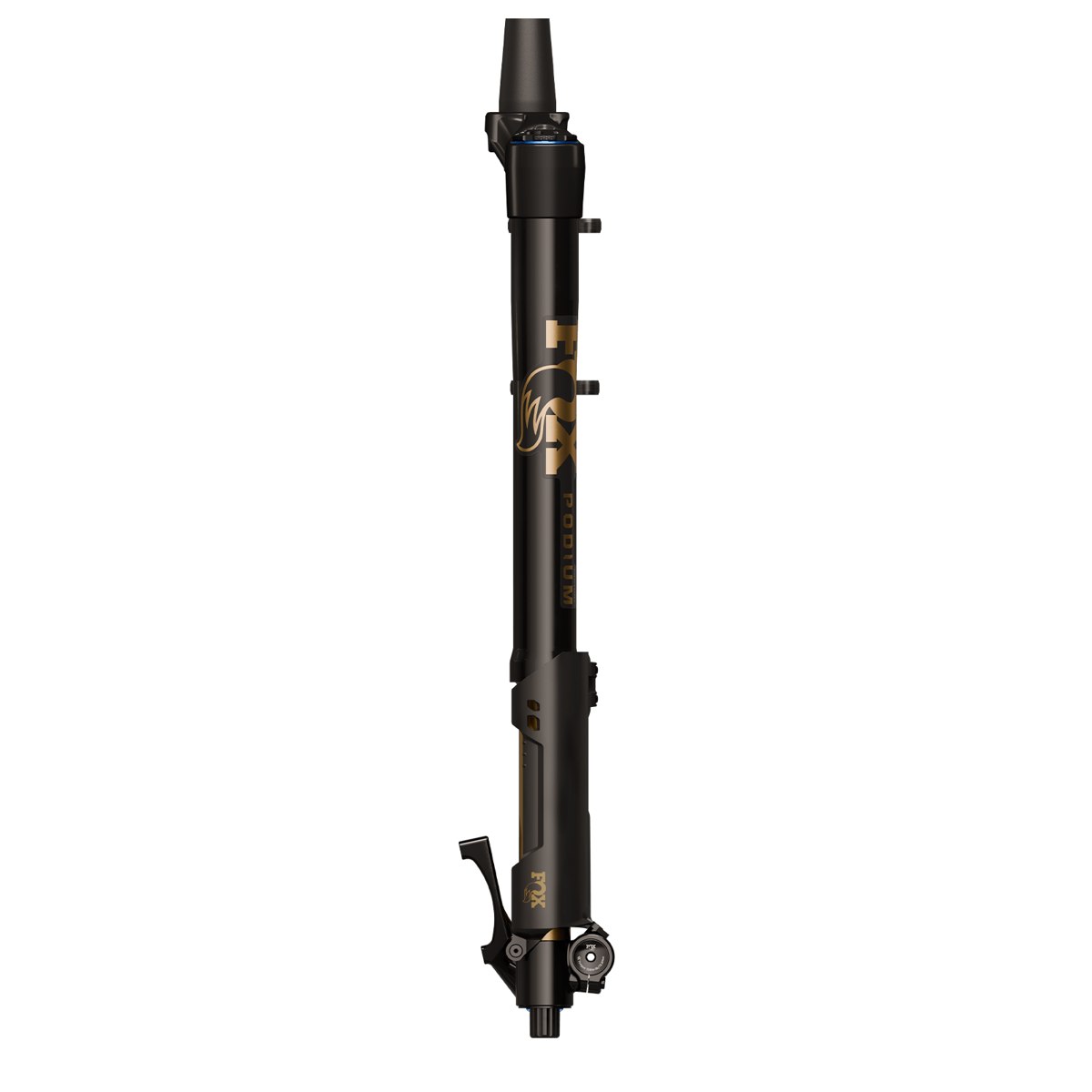
Ask the workshop for two comparable quotes: the fork with your existing wheel and a documented conversion, and the fork with a compatible front wheel. Both should include small parts and labour. If the second option sends the cost soaring, you know you are not simply comparing two forks. You are assessing two complete front-end systems.
Daily logistics also deserves attention. Whoever removes the wheel to put the bike in the car needs to know the procedure and carry the right tools. The Podium manual requires a tightening sequence that includes compressing the fork before tightening the drive-side fasteners. Learn it with the mechanic and keep it accessible rather than improvising every time you fit the wheel.
The brake hose is part of the suspension installation
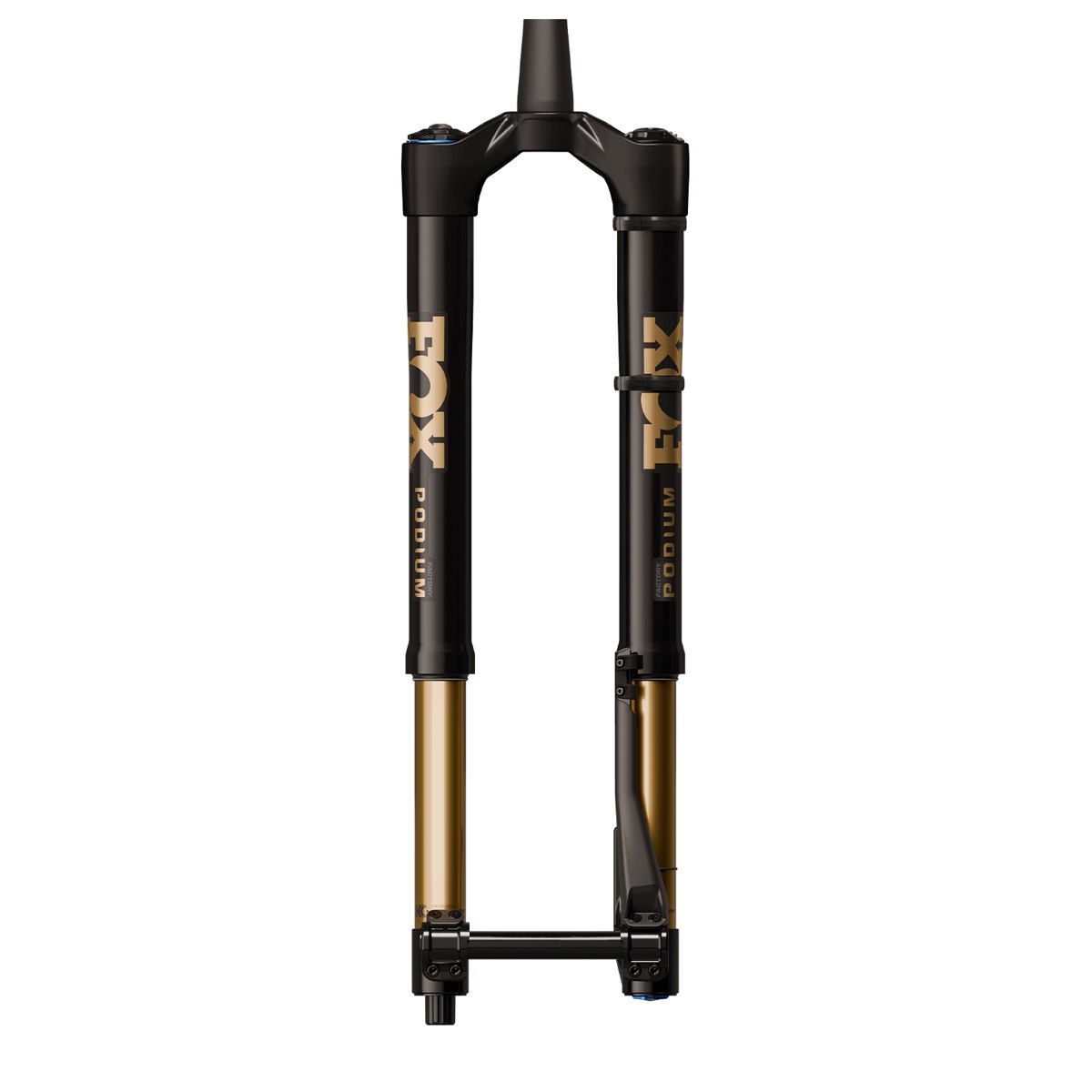
FOX specifies a direct mount for a 200 mm rotor and allows up to 230 mm with the appropriate setup. A 203 mm rotor needs its own adapter: 200 and 203 are not interchangeable designations. The Product information helps you prepare your enquiry, but the final installation must match the fork, caliper, rotor and fasteners.
Advertisement / sponsored link
The manual requires fitting the guards or mast and following the specified brake-hose routing. This is not decoration you can simply remove. Ask to see the bike with the handlebar turned both ways and the fork's travel checked by the workshop. It should be clear where the hose runs and which parts hold it in place.
A good handover includes explaining what to check after transporting the bike, removing the wheel or taking a hit. If the routing moves out of position, do not assume it is acceptable just because the brake still works while stationary. Note how the correct installation looks and keep a reference photo of your own bike. This helps describe a problem without jumping to conclusions.
Advertisement / sponsored link
Travel, frame and tire must work together
An eMTB having a 170 mm fork does not make every 170 mm replacement suitable. Before buying, gather the frame size and year, front wheel details and headset reference. Ask the manufacturer or its technical support to confirm the installation. With a used bike, also find out whether anyone previously changed the travel or headset: comparing against an already modified setup can perpetuate an error.
Checking tire clearance does not end with spinning the wheel on an unloaded bike. FOX requires at least 8.5 mm clearance around the tire during its full-compression test, and that the test be repeated after changing the tire or rim. Leave that procedure to the workshop if you are not confident with depressurisation and installation.
To organise the purchase, record the tire's nominal size and model together. If you later switch tires, this avoids assuming that two identical printed sizes guarantee the same actual clearance. The mudguard must also be included in the configuration being checked, not added afterwards as though it could never affect clearance.
How to establish a repeatable baseline
Setup starts with identifying your exact fork and the corresponding charts. The manual specifies 15–20% sag and a pressure limit of 130 psi; it also requires inverting the fork when adding or removing air and protecting the rotor from oil. This is a detail worth learning before connecting the pump.
On a 170 mm Podium, that percentage range mathematically equates to 25.5–34 mm. This is not an exam passed by hitting a tenth of a millimetre: repeat the measurement with the same clothes, backpack and posture, and check for consistent results. If readings sometimes differ greatly, review the procedure before changing pressure.
Record pressure, damper settings and tire setup in a dated note. Take your first ride on familiar terrain and avoid changing several things at once. For example, if you change tire pressure and rebound together, an apparent improvement will not reveal which change helped. This discipline takes little effort and makes adjustable suspension much more useful.
GRIP X2: use the adjusters with a specific question in mind
FOX equips the Podium with GRIP X2, with independent high- and low-speed compression and rebound adjustment. The brand explains that its specific tune aims to provide support with the chassis's lower friction. That description does not justify copying the click settings from another fork that also uses GRIP X2.
Assess different situations separately. In a braking section, observe whether you can hold your position without constant correction. Through successive obstacles, note whether the response changes from first to last. In a long, loaded turn, record whether steering feels predictable. These observations describe what happens and make it easier to speak with a suspension specialist; 'it feels strange' offers very little starting point.
Then change just one setting within the brand's guidance and return to the same section at a controlled pace. You do not need to chase a time. A setup that lets you repeat a line with fewer corrections may be more useful than one producing one fast run and three uncomfortable ones. If you cannot detect a difference, return to the starting point and keep the record.
Maintenance and running costs before the first ride
The FOX service schedule specifies a full service every 125 hours or annually, whichever comes first, and allows for shorter intervals in demanding conditions. For someone riding five hours a week, 125 hours is about 25 weeks: this is a planning calculation, not an estimate of wear on each fork.
Find out who will perform that service locally, how long it usually takes and what the quote includes. In a season involving travel, workshop turnaround can matter as much as price. Book well ahead if this is your only bike for a holiday, and do not confuse cleaning the exterior with replacing oils and wear parts.
After each ride, useful care means spotting changes: visible damage, different behaviour or parts that have moved. Do not infer an internal fault solely from a superficial mark, but do not ignore an anomaly just because the fork is new. Describe when it happens, include photos with your enquiry and let technical support determine the work required. Keeping a simple history also helps with a future sale.
When to choose it and when to keep your fork
Our editorial recommendation favours the Podium for riders focused on demanding descents, with a suitable frame and the budget for the complete installation. For an eMTB combining tracks, relaxed rides and occasional technical trails, the question changes: servicing your existing suspension, refining tire setup and keeping money for rides may offer more benefit.
Before deciding, get three actual figures from your shop: installation cost, the cost of a service and the cost of maintaining or replacing your current option. Do not treat a US shop's advertised price as a Spanish price. The website consulted sells in dollars, and its sales terms do not automatically describe a purchase in Spain.
Another valid comparison is a bike supplied with a Podium versus converting your existing bike. A factory build can simplify compatibility, but does not replace choosing the right size and intended use. If fitting it requires replacing too many parts that already work well, add everything up and calmly reassess. The most interesting fork does not always make the most sensible upgrade.
Frequently asked questions before ordering
Can I reuse a 15 × 110 mm wheel?
Only if the hub manufacturer documents a valid conversion for this application. Ask for the kit reference and confirmation before ordering the fork. Sharing the width of 110 mm does not show that the set is interchangeable.
Can I use settings found for another FOX fork?
Use it only as a starting point for discussion with the workshop. The chart matching your Podium's identification is the correct reference; then adjust from a recorded baseline, one variable at a time.
Advertisement / sponsored link
Does the inverted appearance guarantee less fatigue?
It cannot guarantee an individual result. We think the architecture merits consideration for demanding use, but comfort also depends on installation and setup. Assess repeatable situations without attributing every sensation to a new part.
What should I get from the workshop?
The installed product reference, compatibility confirmation, initial settings and an explanation of wheel removal and basic care. Keep that information with the receipt and your fork's manual. It will be more useful than a list of clicks without context.
Sources and documentation
Information checked on September 8, 2026. Photographs belong to the identified manufacturers; specifications and availability may vary by market. Editorial analysis, not our own ride test.
Have you used this bike, motor or component?
Join eRIDERSeMTB on Telegram to discuss real experiences with other riders: Bosch, Avinox, Shimano, deals, faults and buying decisions. The community currently speaks Spanish.
Join TelegramAdvertisement / sponsored link
Advertisement / sponsored link
Advertisement / sponsored link