Nukeproof Kilowatt Avinox: 800 Wh and aggressive European pricing
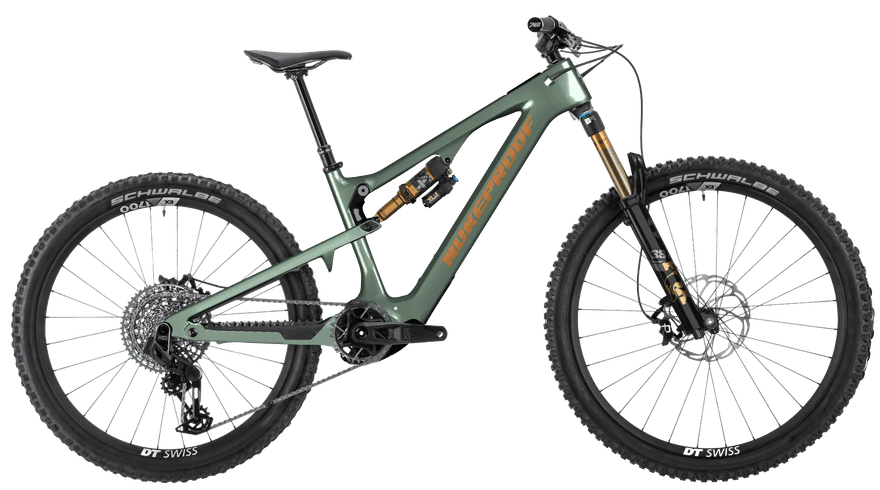
Nukeproof is targeting a sensitive part of the market again: a full-power eMTB with Avinox, 800 Wh and prices from EUR 4,499. The new Kilowatt is not an odd trade-show photograph or a forum rumour. It is an official platform, with aluminium and carbon frames, 160 mm front travel, 150 mm rear travel and four builds aimed squarely at riders who want modern power without an astronomical price tag.
Advertisement / sponsored link
But there are two sides to this. The appealing one: finally, an Avinox eMTB with aggressive pricing, sensible geometry and fairly logical components. The uncomfortable one: a non-removable internal battery, 600 Wh in size S, real availability still unconfirmed and a brand pushing hard again after several unsettled years. We will separate confirmed facts, brand promises and eMTB PRO opinion without copying the brochure.
Advertisement / sponsored link
What is the Nukeproof Kilowatt?
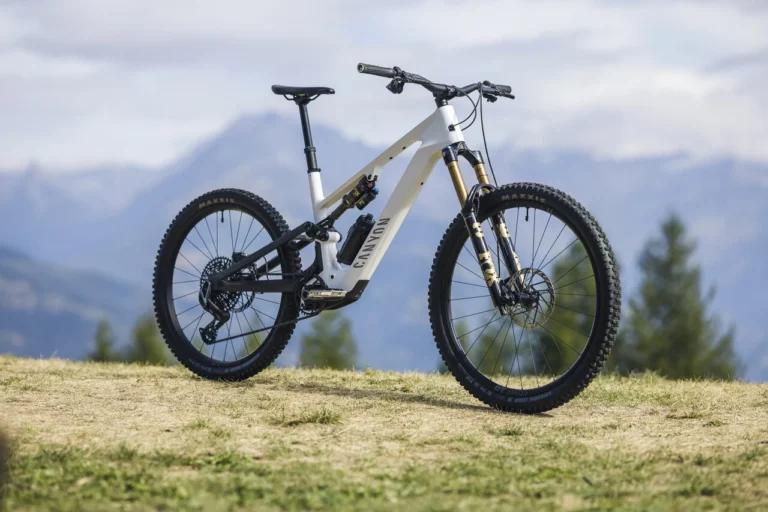
The Kilowatt is Nukeproof's new full-power eMTB built around the Avinox system. It does not directly replace the old Shimano-powered Megawatt as though it were the same bike with a different motor: Nukeproof positions it as a slightly more versatile option, with 150 mm rear travel, 160 mm up front and an all-mountain, do-it-all focus. In other words, a bike for demanding rides, serious descents and everyday trails, not just endless bike-park climbs.
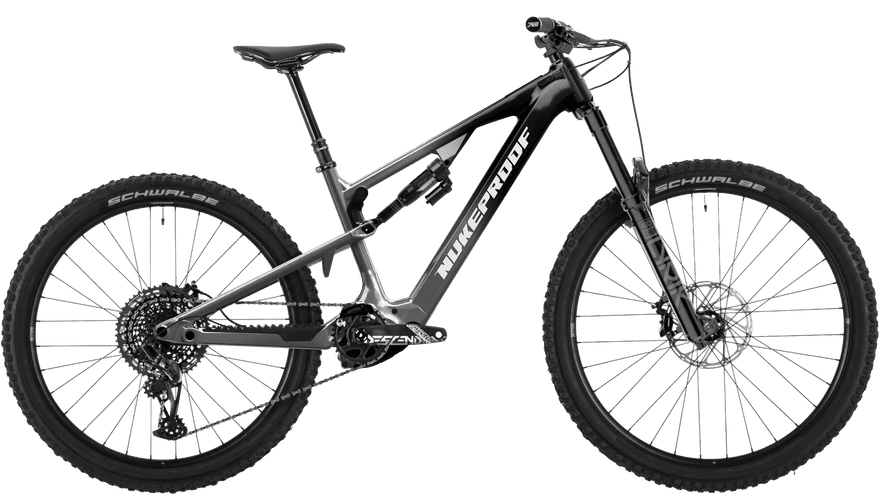
Confirmed by Nukeproof: there are two frame families, Alloy and Carbon. Both share the visual and geometry concept, with tube-in-tube internal routing, room for a bottle and tool ahead of the rear shock, a one-piece suspension linkage and a standard mullet setup that can be converted to a 29-inch rear wheel using a flip chip. Pinkbike summarises the key figures: a 64-degree head angle, a 77.5-degree effective seat angle, 450 mm chainstays and weight from 22.2 kg in size M for the Carbon Factory build.
The easy line would be 'just another Avinox bike'. But the point here is not just the motor. It is the entry price. If the Alloy Comp genuinely reaches European shops at EUR 4,499 with Avinox, 800 Wh in M/L/XL and modern geometry, it enters territory where many aluminium Bosch eMTBs no longer look so cheap.
Confirmed: Avinox M2 and M2S, but the builds are not all alike
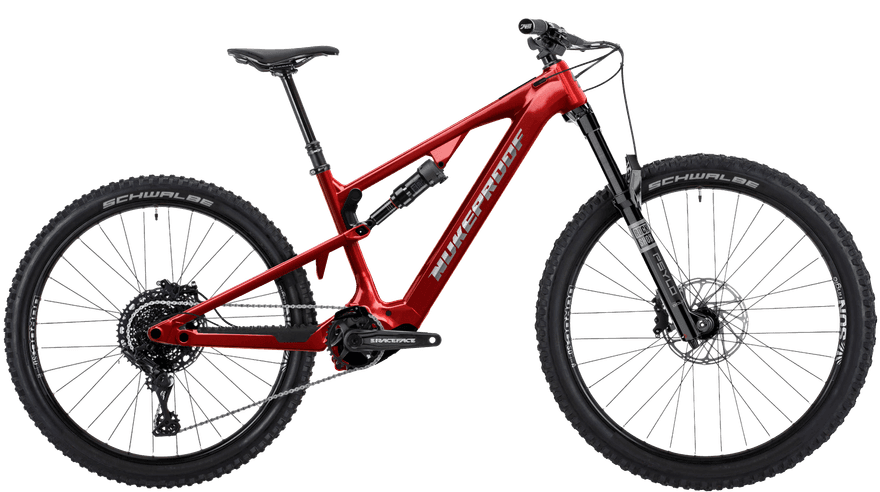
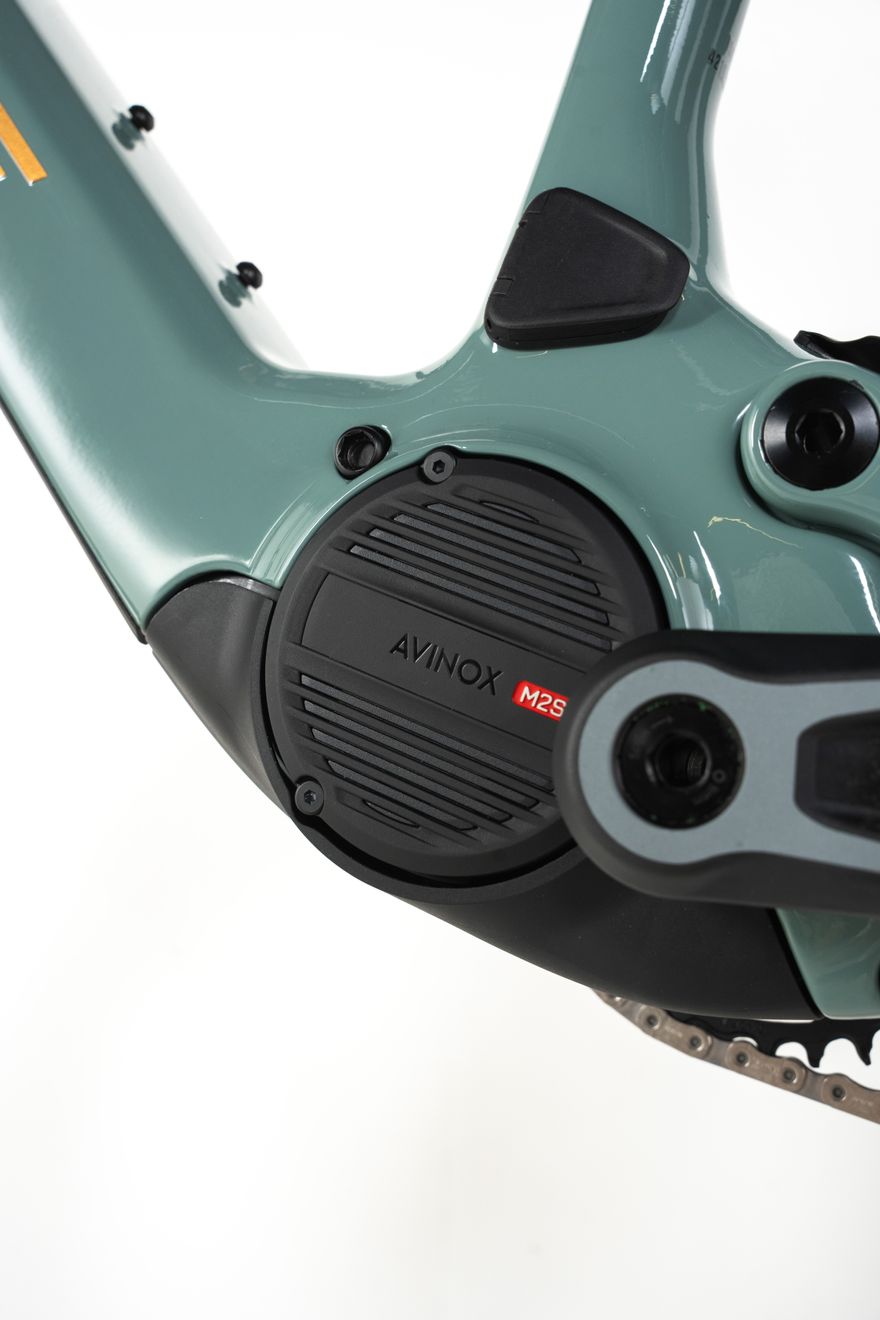
The range does not use the same motor in every version. According to Nukeproof and Pinkbike, the entry-level Alloy Comp uses Avinox M2. The rest of the range uses Avinox M2S. This matters because everything gets grouped under 'Avinox' online, leading to disappointment later. The M2 is still powerful, but the M2S is the stronger version in the current family.
Pinkbike quotes up to 1,100 W for the M2 and up to 1,300 W for the M2S, with 1,500 W peaks in Boost. Avinox's messaging for its M2S ecosystem presents very aggressive figures against traditional European motors. Fine, but here is the practical point: more power does not always mean a better ride. It can help enormously on a rough climb, but can also drain the battery, punish the drivetrain and require finer control to avoid spinning the rear wheel.
The advertised internal battery is 800 Wh across the range, except in size S, where down-tube space limits it to 600 Wh. This matters for smaller riders. It is no minor detail: 600 versus 800 Wh makes a real difference when riding with heavier people on M/L bikes carrying the larger battery.
Advertisement / sponsored link
The table I'd look at before I got excited.
| Model | Motor / battery | Price announced | eMTB PRO's view |
|---|---|---|---|
| Kilowatt 297 Alloy Comp | Avinox M2, 800 Wh except size S, 4 A charger | 4,499 EUR / 3,999 GBP | The headline bargain. Check the DB4 brakes, simpler suspension and actual availability. |
| Kilowatt 297 Alloy Pro | Avinox M2S, 800 Wh except size S, 4 A charger | 5,499 EUR / 4,999 GBP | Probably the sweet spot: M2S, aluminum and more serious components without jumping to 7,500 euros. |
| Kilowatt 297 Carbon Expert | Avinox M2S, 800 Wh except size S, 12 A charger | 7,499 EUR / 6,499 GBP | Now competing with very strong offers from major brands. Makes sense if you want carbon and fast charging. |
| Kilowatt 297 Carbon Factory | Avinox M2S, 800 Wh except size S, 12 A charger | 8,999 EUR / 7,999 GBP | A serious indulgence. It looks good, but here you are no longer buying on price alone: you are paying for desirability and high-end equipment. |
The positives: price, geometry and sensible components
I like that Nukeproof has not tried to sell the Kilowatt as a super-enduro bike in disguise. 160/150 mm is a very useful combination for everyday riders: enough for hard descending without making every normal ride feel like work on a long, heavy, sluggish bike. The 64-degree head angle is modern, the 450 mm chainstays promise stability, and the mullet setup with a 29-inch rear option lets you adjust its character.
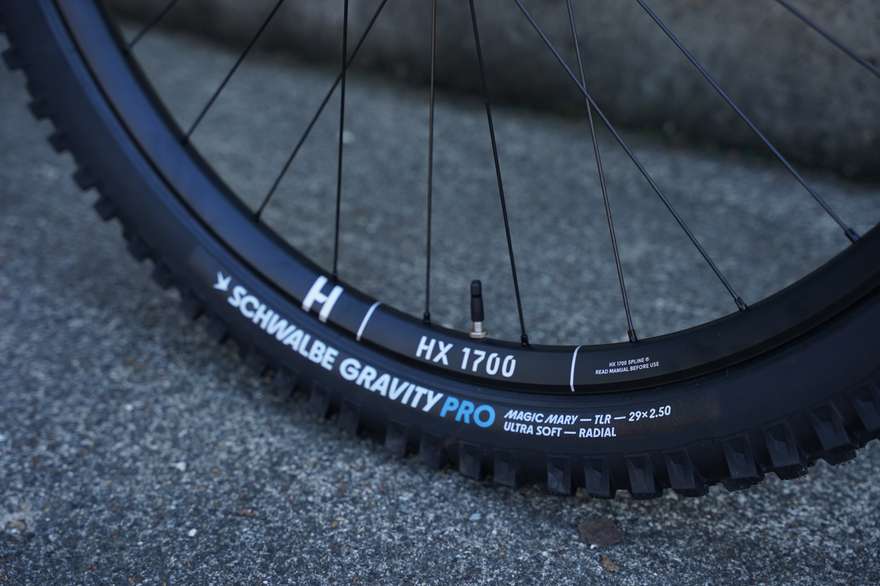
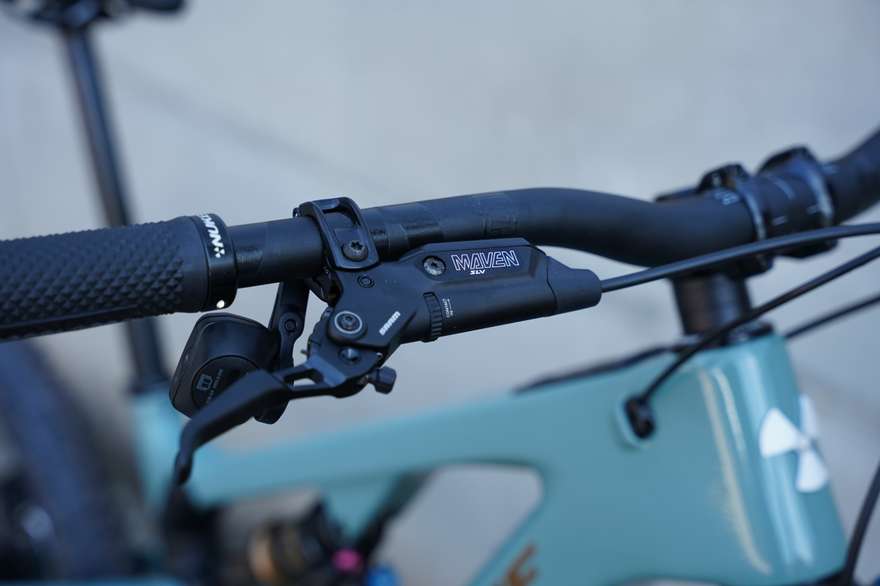
I also like that they have not fitted wheels and tires meant for leisurely riding. Pinkbike highlights Schwalbe Gravity throughout the range and radial tires on the carbon models. On a full-power eMTB, that matters enormously. A bike with a powerful motor, large battery and weak brakes is a bad joke. That is also why it makes sense for several builds to step up to SRAM Maven, although the entry model keeps DB4.
The entry price makes the headline, but the build I would examine most closely is the Alloy Pro. At an advertised EUR 5,499, you get an aluminium frame, Avinox M2S, the larger battery in M/L/XL, RockShox Lyrik RC, Super Deluxe LinearXL, SRAM Eagle 70 and Maven Base. This is not a cheap supermarket bike; with good support, it could take sales from many EUR 6,000 or EUR 7,000 eMTBs whose specifications no longer impress.
The uncomfortable part: internal battery, size S and support
The internal battery has advantages and drawbacks. It allows cleaner integration, a less bulky down tube and a bike that looks more conventional. But it is less convenient if you live in a flat, store the bike without a power socket or do long rides with a second battery. Pinkbike is clear: off-bike charging or battery swaps are not practical. For some riders, that rules it out.
The second point is size S. Its reduction to 600 Wh may be unavoidable because of space, but smaller buyers should not discover that after paying. If you ride with people on M/L bikes with 800 Wh, ask about real-world range, not just whether 'it has Avinox'. A 600 Wh battery can be perfect for short rides and light riders, but it is not the same as 800 Wh on long days.
The third point is support. Nukeproof has a name, history and plenty of affection in MTB, but also comes out of a difficult period in the market. The bike could be excellent, yet it is still worth asking who provides warranty support, which distributor handles Spain and how long it takes to obtain a cover, linkage, axle, hanger or Avinox-specific part. On a modern eMTB, 'we will look into it later' can be very expensive.
eMTB PRO opinion
The Kilowatt looks to me like one of 2026's most interesting Avinox eMTBs, if the actual price holds. Not because it has the biggest wattage figure, but because Nukeproof has understood something simple: many people want modern power, a large battery and current geometry without taking on a huge financial burden for a bike they use two days a week.
Advertisement / sponsored link
My theoretical choice would be the Alloy Pro, not the Carbon Factory. The Factory is beautiful, but at EUR 8,999 it is already a premium indulgence. With good equipment and clear warranty terms, the Alloy Pro could be the one that really challenges competitors. The Alloy Comp is attractive too, but I would check the brakes, suspension and intended use: if you are heavy, descend hard or ride long technical trails, the initial saving may disappear into upgrades.
One more thing: let us not confuse Kilowatt with Megawatt. At eMTB-PRO we had already covered the discussion around Nukeproof and Avinox, but this article concerns the official Kilowatt launch, with a specific name, range and prices. That changes the conversation.
What to check before buying
- Battery by size: confirm whether your size has 800 Wh or 600 Wh. Do not accept 'I think so'.
- Charging at home: if you cannot plug the bike in where it is stored, the internal battery could be a serious problem.
- Exact motor: M2 in Alloy Comp, M2S in the rest. Don't buy thinking they're all the same.
- Charger: according to Pinkbike, carbon models have a 12 A charger and aluminium models a 4 A charger. This matters for two-ride days.
- Brakes: DB4 on the entry model, Maven on several others. With Avinox power and eMTB weight, I would prioritise strong brakes.
- Nukeproof spare parts: ask about the linkage, bearings, hanger, covers, lower frame guard and realistic lead times.
- Avinox service: shop, diagnostics, updates, battery warranty and parts availability.
- Fit check: relatively low stack according to Pinkbike; if you are tall, check the stem, spacers and handlebar.
Real-world test that we would do
A useful test would be simple and demanding: the same route on the Alloy Pro, a similarly priced Bosch CX bike and a lightweight carbon Avinox bike. It would need 1,300 or 1,600 m of climbing, a rough ascent, a slow trail testing traction, a long descent with repeated braking and a fast section revealing whether the compact geometry helps or feels nervous.
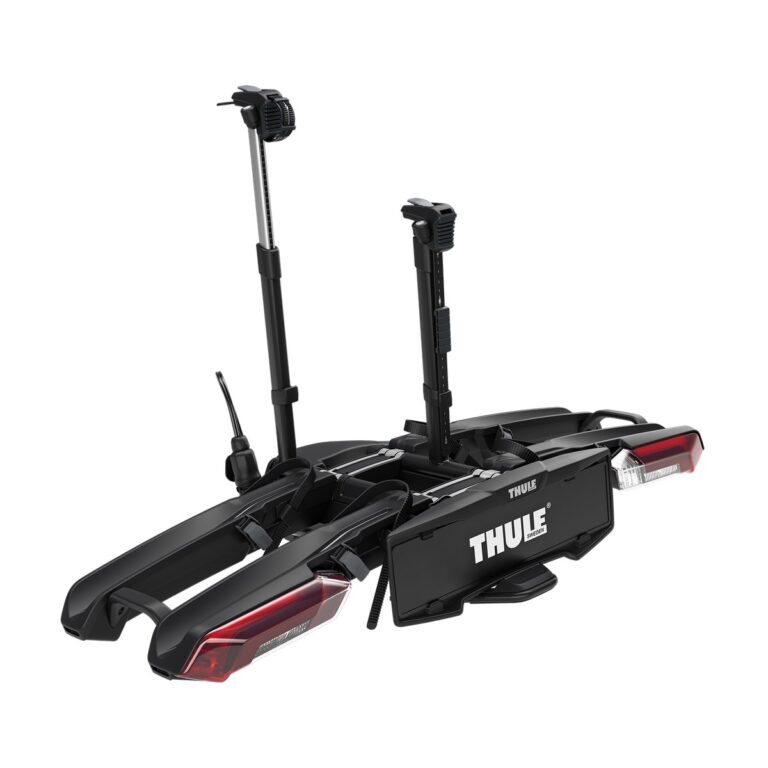
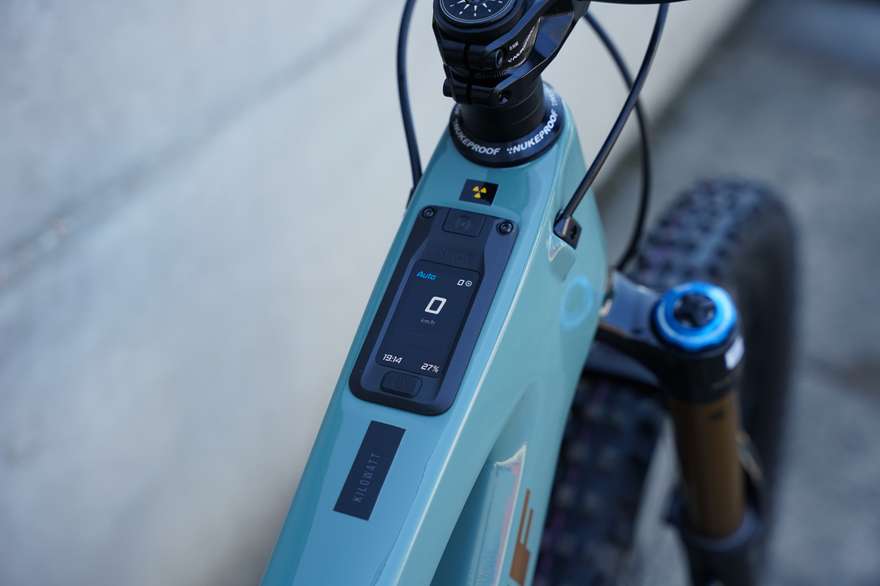
I would measure actual energy use in equivalent trail/eMTB modes, brake temperature, frame noise, play after several descents and ease of charging at home. I would also test ordinary ownership tasks: loading it onto a bike rack, washing it without laboratory-level care, checking for water ingress or noises around the cover and motor, and seeing whether the cockpit makes sense without half an hour in the app.
I would test a size S too, if possible. That is one of the key questions: with 600 Wh, does the smaller rider get a genuinely equivalent bike, or a reduced version that only looks the same in a photograph?
Sources: confirmed facts versus opinion
Confirmed data: new Nukeproof Kilowatt range, Alloy and Carbon frames, 160/150 mm travel, mullet setup with flip-chip conversion to a 29-inch rear wheel, 800 Wh battery except size S, Avinox M2 on Alloy Comp and M2S on the other builds, European prices from EUR 4,499 to EUR 8,999. Brand promise: clean integration, a feel close to an unassisted MTB, aluminium toughness with advanced casting processes and strong value for money. eMTB PRO opinion: the Alloy Pro looks like the smartest choice, but the internal battery and local support are the two checks to make before buying.
- Nukeproof: official Kilowatt launch with Avinox
- Pinkbike: Nukeproof Kilowatt first look
- BikeRadar: new Nukeproof Kilowatt 2026
- E-MOUNTAINBIKE: Avinox at Eurobike 2026
- Avinox: Eurobike 2026 context and new MG Concept platform
Want us to let you know when actual Spanish prices or the first bikes appear? Join the eMTB PRO Telegram group and share which version you would buy: Alloy Comp, Alloy Pro or carbon. It quickly reveals who buys on practical grounds and who goes straight for the showroom appeal.
Have you used this bike, motor or component?
Join eRIDERSeMTB on Telegram to discuss real experiences with other riders: Bosch, Avinox, Shimano, deals, faults and buying decisions. The community currently speaks Spanish.
Join TelegramAdvertisement / sponsored link
Advertisement / sponsored link
Advertisement / sponsored link