SRAM S100, S200, and S500 for eMTBs: Which Eagle Rear Derailleur Should You Buy?
Technical guide · eMTB PRO
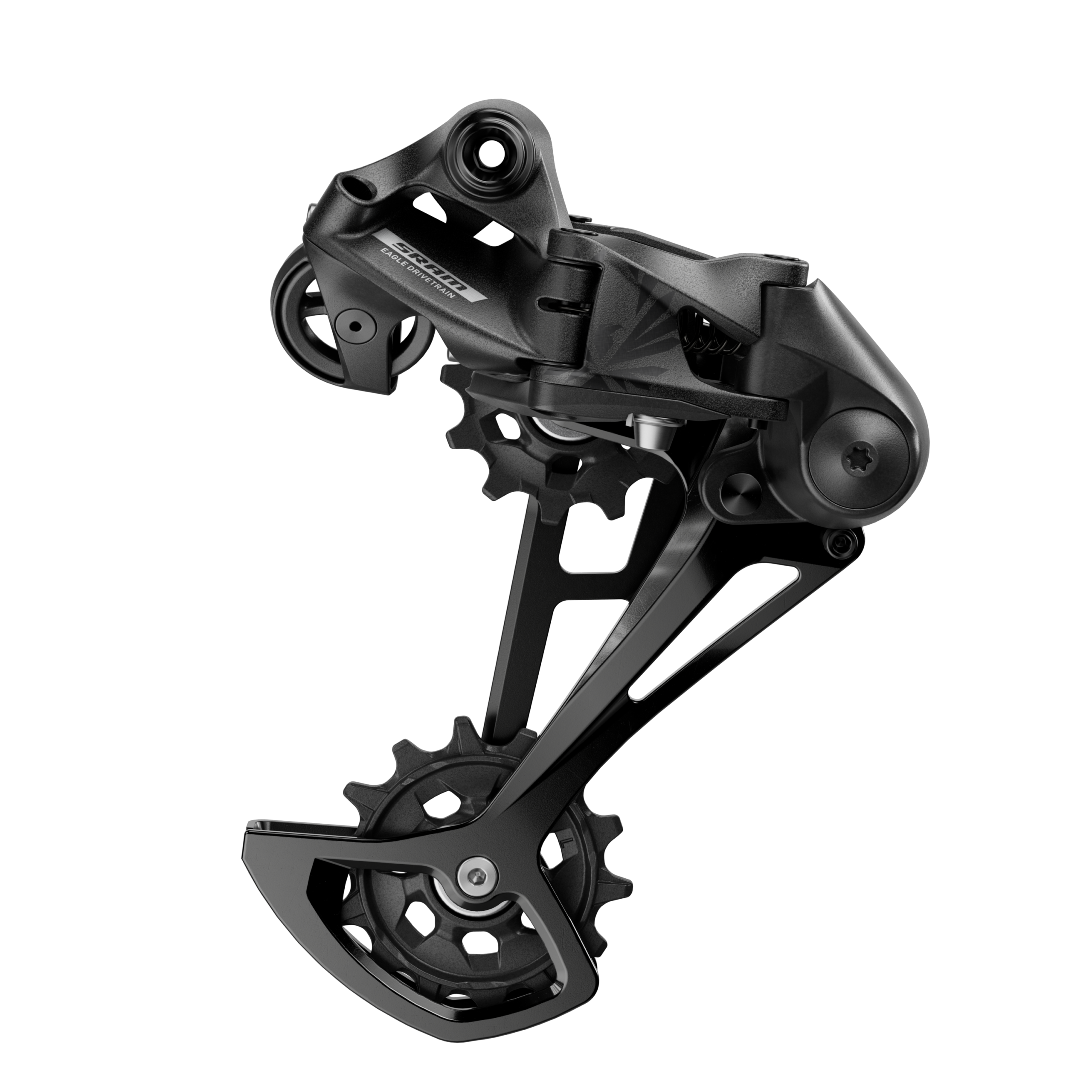
S100 for repairs with a 50-tooth cassette; S200 to stay with cable actuation and accommodate 52T; S500 if you want AXS. Before spending, identify the derailleur hanger, cassette, driver/freehub body, and shifter. These are not S1000 or Transmission models.
Advertisement / sponsored link
S100 for repairs; S200 for an upgrade; S500 if you want AXS
If your eMTB has a hanger-mounted twelve-speed Eagle drivetrain, the arrival of S100, S200, and S500 does not mean you need to replace the entire drivetrain. First, identify the cassette and rear derailleur already installed. Then decide whether you want an affordable replacement, a mechanical rear derailleur that accommodates a wider gearing range, or a switch to electronic shifting. That sequence avoids buying a rear derailleur that cannot handle the largest cog on your wheel.
My starting choices would be S100 for a limited repair with a 50-tooth cassette; S200 to stay with cable actuation and keep or fit a 52-tooth cassette; S500 for riders who genuinely want Eagle AXS. I would not move up a tier just because the bike has a powerful motor. A new name does not guarantee longer life, and electronics will not fix a bent derailleur hanger, a worn chain, or damaged housing.
There is one crucial distinction: The S100 is not the S1000, and the S500 is not a budget Transmission. The S-Series belongs to Eagle Drivetrain, the hanger-mounted family. Transmission is a different system. Just because two parts have twelve speeds, a battery, or the same bird logo does not mean you can mix and match them.
| Rear derailleur | Why I would consider it |
|---|---|
| S100 mechanical rear derailleur RD-S100-B1 | Limited repair; 50-tooth maximum; check the shifter and cassette. |
| S200 mechanical rear derailleur RD-S200-B1 | Stay with cable actuation; Eagle 50/52T and X-Actuation. |
| S500 AXS RD-S500-E-B1 | Switch to or stay with hanger-mounted wireless Eagle; budget for electronics and accessories. |
What S100, S200, and S500 are, without mixing up the families
SRAM is reorganizing its earlier Eagle lineup into three tiers. It is not presenting these parts as a reason to retire every working GX, NX, or X01. Its replacement matrix is designed precisely to help you find replacement parts within an ecosystem that still makes sense. This is a buying and maintenance guide, not an announcement of a launch happening today.
Within that reorganization, the S100 and S200 are mechanical X-Actuation rear derailleurs: they are cable-actuated. The S500 uses wireless AXS and retains a derailleur hanger mount. An S200 mechanical shifter does not become an AXS controller just because it shares a product family with the S500. Changing how the derailleur is actuated also changes what you need on the handlebar.
I would not turn the replacement matrix into a ranking of absolute superiority, either. A model taking another's place in the lineup does not prove it weighs the same, shifts better under load, or withstands more impacts. When buying a replacement, the full model code and compatibility matter; comparing how they feel would require testing them on the same bike.
Five checks before ordering a replacement
Take a photo of the rear derailleur's model code, count the speeds, and identify the cassette markings. Add photos of the frame mounting interface and the shifter. With that information, a shop can check a specific combination. Asking for "a twelve-speed GX" without specifying the generation leaves too many possibilities open.
Next, check the largest cog. The S100 RD-S100-B1 has a 50-tooth maximum; the S200 and S500 are listed as compatible with Eagle cassettes with a 50- or 52-tooth largest cog. This is not something you can solve by adding cable tension. If you have 52T and buy the S100 to save money, you have chosen a model outside its published limit.
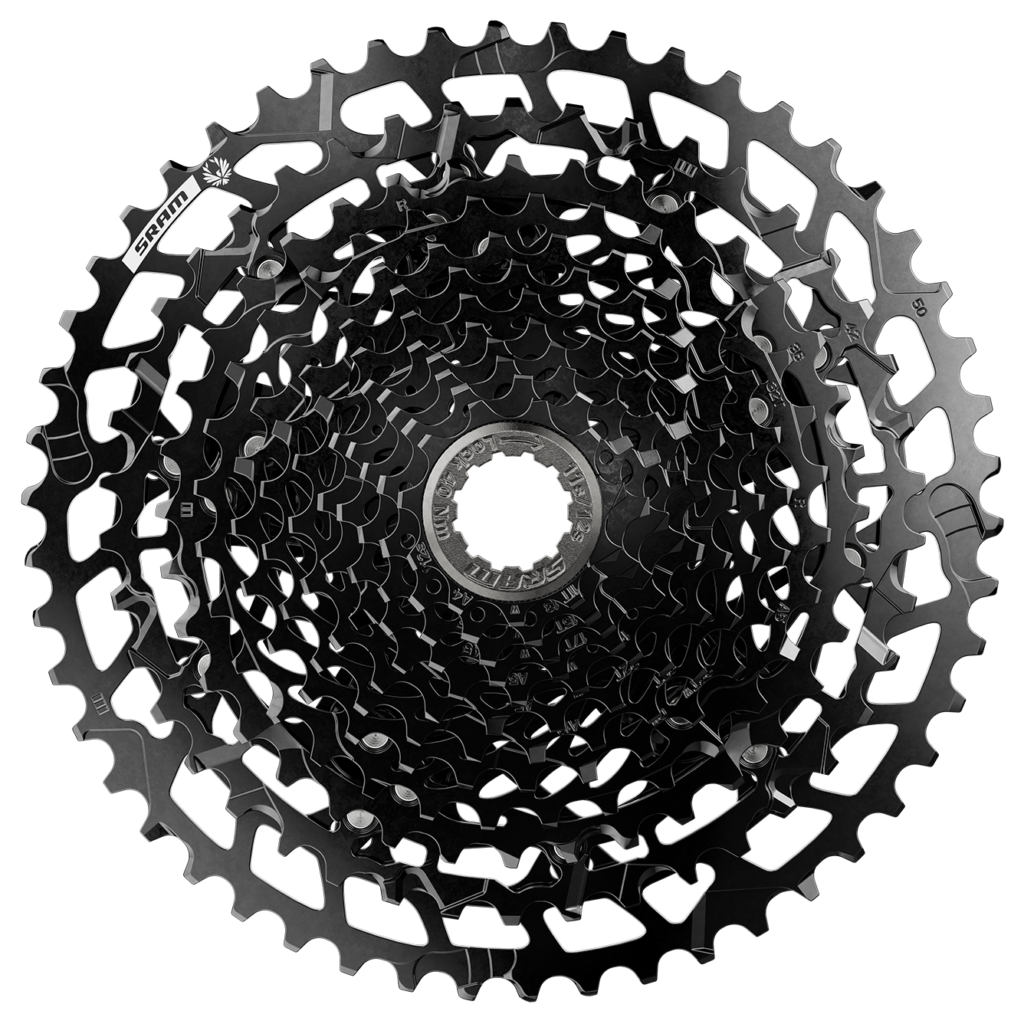
The third check is the driver/freehub body: tooth counts alone do not determine which cassette to buy. The PG-1210 B1 uses a splined driver/freehub body; the XG-1275 C1 uses an XD driver. Identify what your wheel has before pricing a cassette upgrade. Changing the driver/freehub body may be an option if the hub manufacturer offers the right one, but it is not universally possible or necessarily where you want to spend your money.
The other two checks are the chain and the shifter. Look for the exact family, not just a "12-speed" label. Chain length also needs to suit the bike and gearing. I would not copy the chain length from a drivetrain that was already working poorly without checking it. The manual for the specific model and a mechanic's inspection are worth more than generic installation advice.
| What you find | What it means for your purchase |
|---|---|
| 52T cassette | Rule out the S100; verify a 52T-compatible option within Eagle. |
| PG-1210 B1 11–50 | Splined driver/freehub body. Do not buy an XD cassette without checking the hub. |
| XG-1275 C1 | XD driver; confirm whether the cassette is 10–50 or 10–52. |
| Mechanical rear derailleur with cable actuation | Compatible Eagle X-Actuation shifter; dedicated Single Click version for eMTB use. |
| Hangerless Full Mount rear derailleur | Transmission system: do not replace directly with S100/S200/S500. |
S100: the savings come with a clear 50-tooth limit
The S100 is the option I would consider when the priority is getting the bike rolling again without turning a breakdown into a full overhaul. Its specifications list twelve speeds, X-Actuation, a steel cage, and the Drag Spring chain-control system. SRAM positions it for high-torque use, but that does not give us a service-life distance or a guarantee that it will survive every impact.
The appeal is not simply that it is the least expensive of the three, but that it lets you consider a limited repair. If the cassette, chain, chainring, shifter, and cable/housing are in good condition and compatible, I would not replace them just for a matching look. If they are worn, keeping them at all costs can undermine the new rear derailleur's performance. A sensible estimate separates damaged parts from parts that are simply older.
I would not buy the S100 to keep a 10–52 cassette. Nor would I assume it replaces any twelve-speed rear derailleur from another brand. The foundation is Eagle Drivetrain and its matching shifter. It is a specific option for a specific drivetrain, not a universal part that fits because its mounting bolt looks similar.
S200: stay with cable actuation without giving up 52T
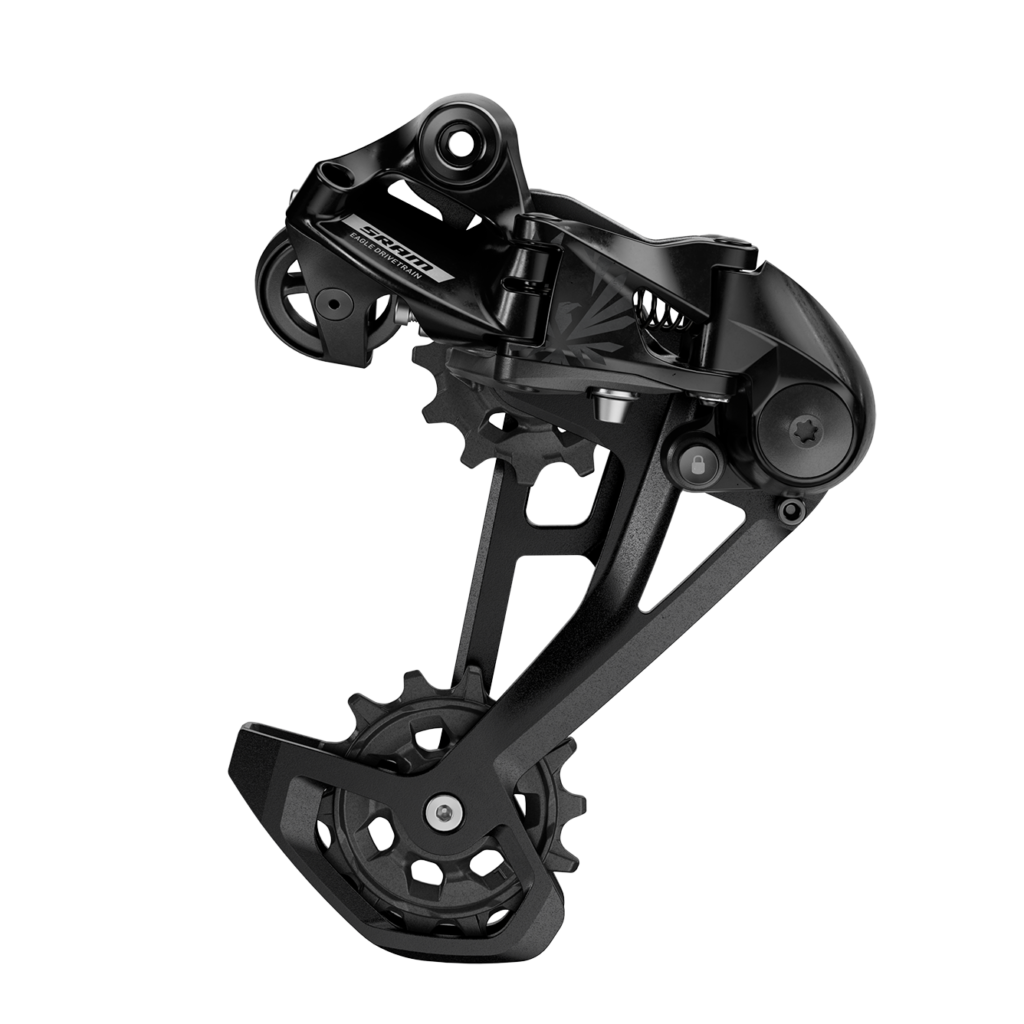
The S200 is my starting point for someone who wants a mechanical rear derailleur and intends to keep using cable actuation. SRAM lists compatibility with Eagle 10–50 and 10–52 cassettes, X-Actuation, and a Type 3 clutch. Compared with the S100, the most directly useful buying specification is the cassette limit, not a supposed improvement in shift feel that we have not measured here.
I would choose the S200 over starting an AXS conversion if I valued servicing the cable/housing with standard tools and did not want another battery in my routine. That does not make a cable immune to water or wear. Damaged housing can hurt the performance of the entire setup and should be part of the diagnosis, especially after months of mud and washing.
If your current mechanical GX works well, I would not replace it for the S200 name. I would wait for a reason: play, damage, or a gearing requirement your exact model cannot meet. Before swapping a 50 for a 52, I would also ask whether that small increase really solves the problem, or whether you need to review the chainring and how you use assistance.
Advertisement / sponsored link
Advertisement / sponsored link
S500 AXS: electronic shifting, not a Transmission conversion
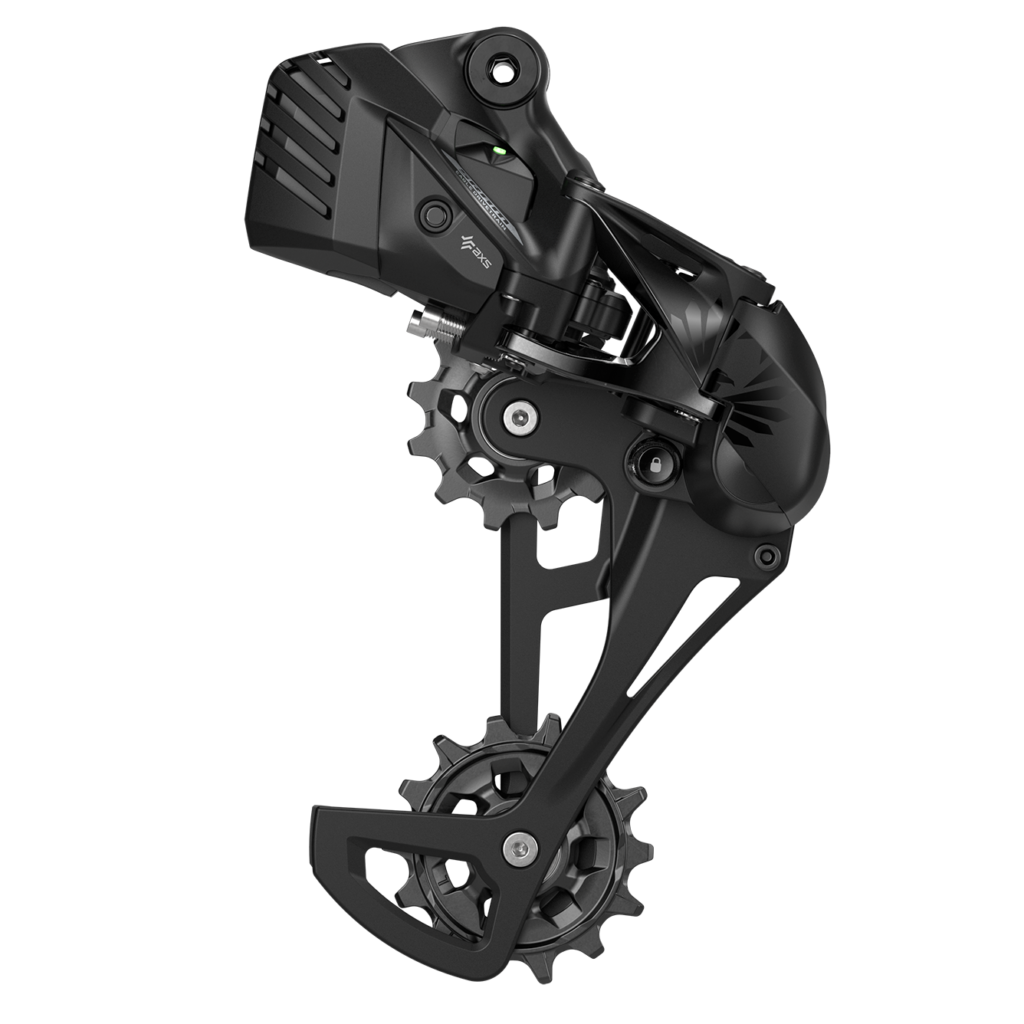
The S500 brings wireless actuation and AXS setup to hanger-mounted Eagle. Its product page lists compatibility with Eagle 10–50 and 10–52 cassettes and Overload Clutch protection. That protection lets the mechanism yield under certain impacts; I would not treat it as permission to keep pedaling if the rear derailleur is touching the spokes.
The budget question is what the product you are buying actually includes. Ask for an estimate that identifies the rear derailleur, controller, battery, charger, and required mounts. A photo with a battery cover does not prove that every accessory is included in a particular retail package. If you already have AXS components, check which ones you can reuse by model code and documentation, rather than buying a complete kit out of habit.
I would choose it if wireless operation were a genuine preference, or if replacing several parts made the switch reasonable. I would not choose it to increase the eMTB's battery range, get automatic shifting, or eliminate maintenance. AXS connectivity and motor assistance are not the same thing. I would not budget for power from the bike's main battery without a specifically compatible, documented setup, either.
A derailleur hanger, Half Mount, and Full Mount are not the same thing
A conventional derailleur hanger connects the rear derailleur to the frame. UDH standardizes that hanger interface, but it is still a derailleur hanger. A UDH-compatible frame lets you consider certain Full Mount options; it does not automatically turn your current rear derailleur into a Full Mount model.
The S100 adds another option: its mounting bolt is designed for Half Mount with UDH and the matching plate. According to SRAM, this setup strengthens the mounting against side impacts. It is not the Full Mount interface used by Transmission, does not eliminate every part of a derailleur hanger, and does not make it compatible with T-Type cassettes. I would not assume the plate comes in the derailleur box, either.
For a limited repair, I would first confirm whether the frame uses UDH, a proprietary derailleur hanger, or already has a hangerless Full Mount rear derailleur. If the hanger is proprietary, note its brand and replacement model code. If you want Half Mount, ask for the exact combination your frame requires. If you already have Transmission, find the replacement within that family: these three rear derailleurs do not directly replace its mounting system.
At this point, I would not improvise torque settings or adapters. The official explanation of UDH and Full Mount helps identify the design; the component and frame instructions govern installation. Misidentifying the mounting system can cost much more than the price difference between two rear derailleurs.
The cassette affects the bill: splined driver/freehub body or XD driver
The PG-1210 B1 featured in this guide is a twelve-speed 11–50 cassette for a splined driver/freehub body. Its product page includes a useful detail for eMTBs: the 11-, 13-, and 15-tooth cogs are replaceable. Before buying an entire cassette, I would ask about those replacement parts if that is where the wear is concentrated. That does not mean every part of the cassette can be repaired in any way you choose, or that the remaining cogs are in good condition.
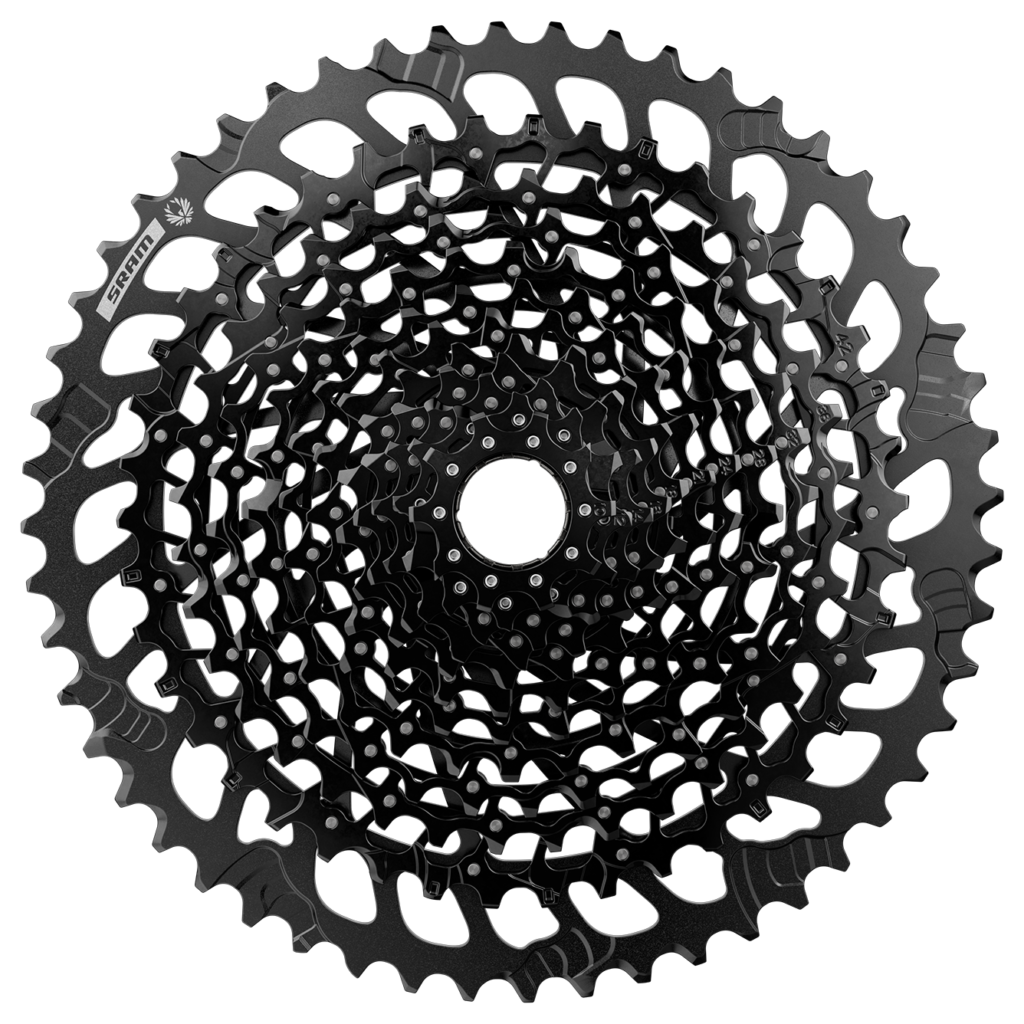
The XG-1275 C1 is available in 10–50 or 10–52 and requires an XD driver. The photo shows the 10–52 version. If you buy by the photo rather than the model specification, you could end up with the wrong gearing or mounting interface. An 11-tooth smallest cog and a 10-tooth smallest cog are not equivalent, either: they affect the highest gear, while the largest cog affects the lowest gear.
I would separate the goal of more gear range from the goal of smoother shifting. Range describes the ratio between the cassette's two extremes; it does not measure shift quality, durability, or how easy a particular climb will be. That also depends on the chainring, wheel, cadence, your legs, and assistance. Buying more teeth without identifying what is missing is an easy way to increase the bill without solving the original problem.
Advertisement / sponsored link
For an eMTB, ask for Single Click and check the clamp
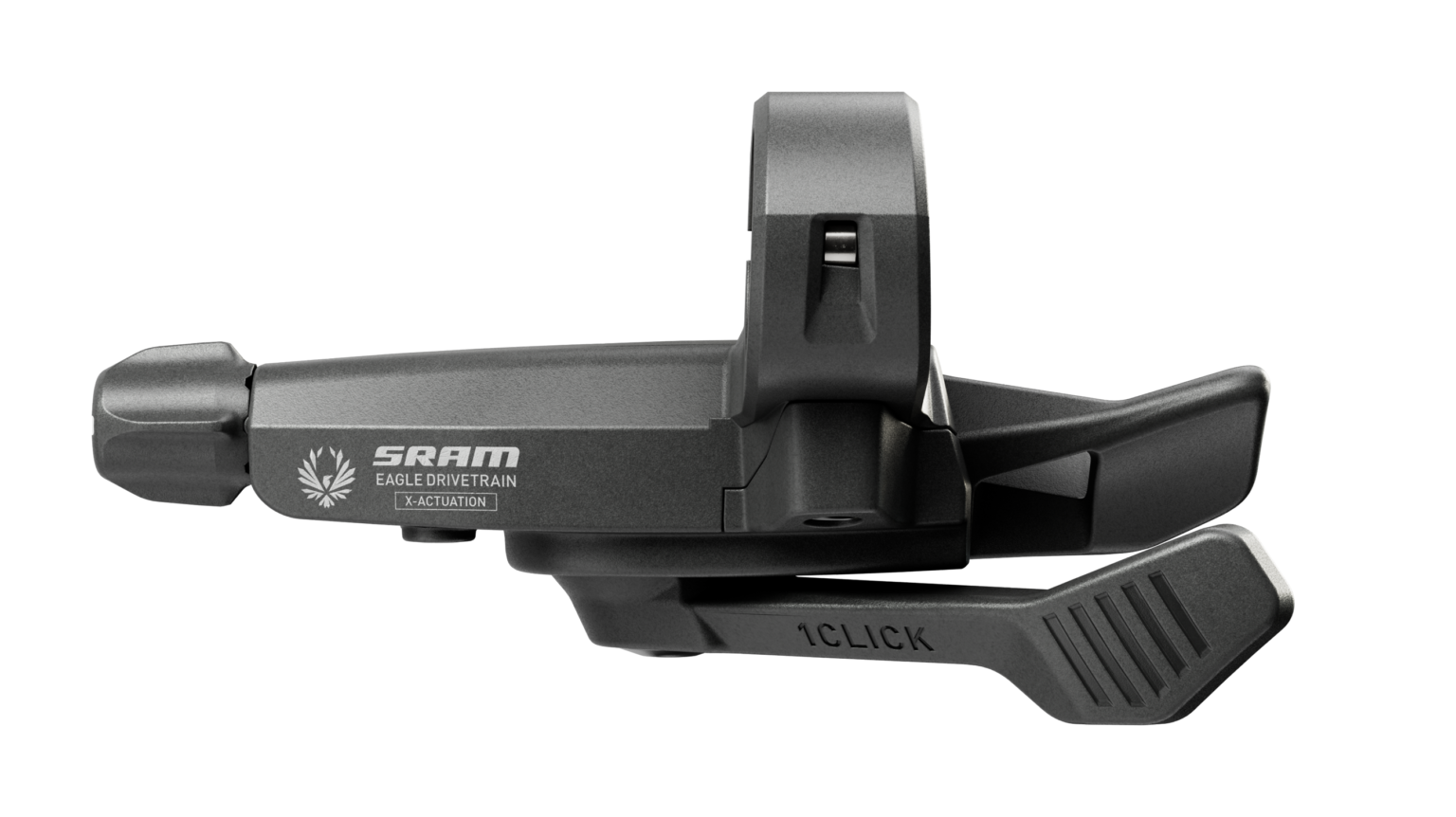
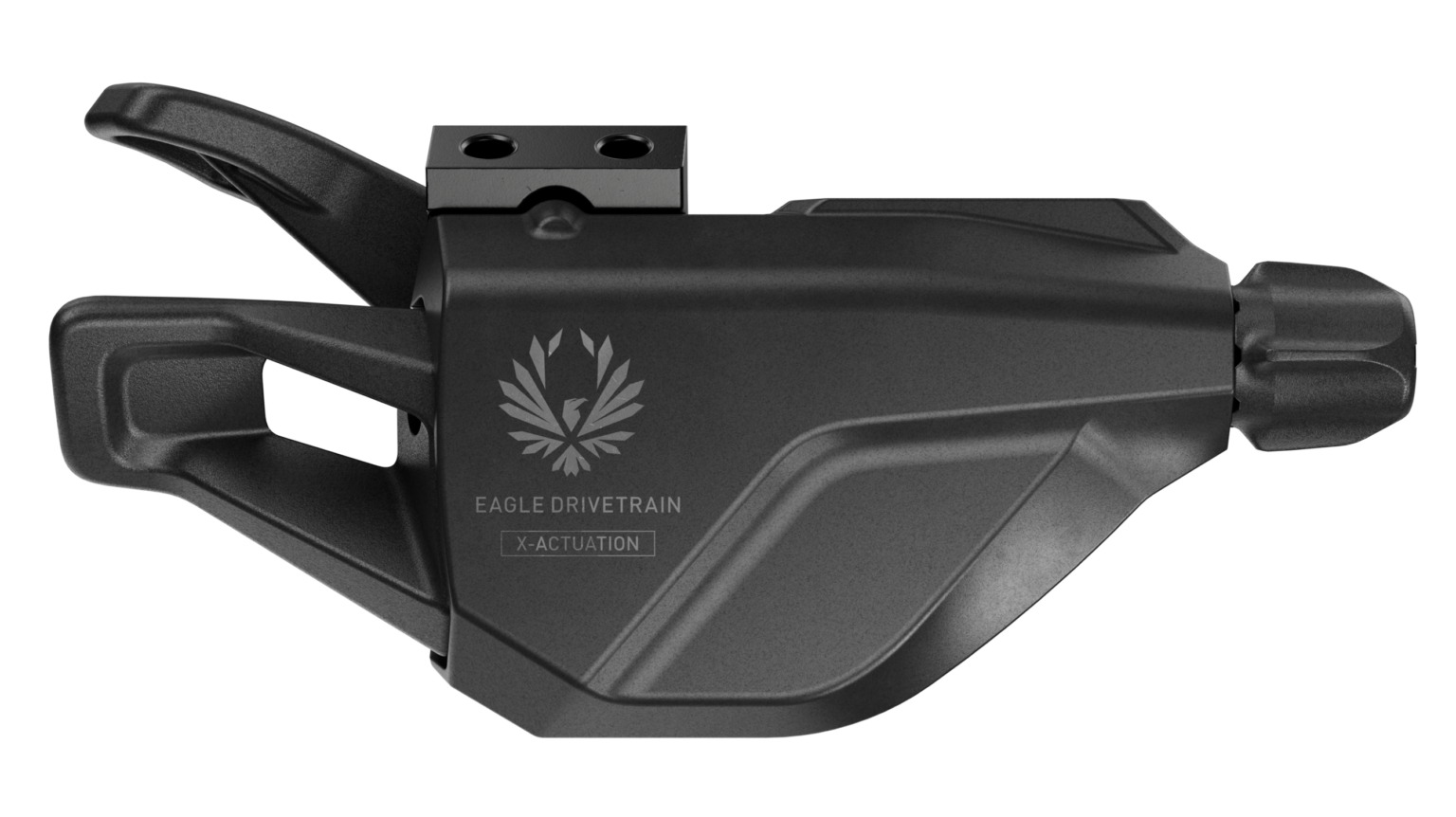
SRAM requires the dedicated Single Click version of the S100 and S200 shifters for eMTB use. One press shifts one gear. I would not choose based on a photo of a similar-looking shifter from another generation: ask for the model code and version. Beyond the number of speeds, X-Actuation matters because it is the actuation ratio specified for these mechanical systems.
The S100 has an integrated clamp. The S200 shifter product page contains a contradiction: the description mentions clamp or MatchMaker X options, but its specifications table says "Matchmaker compatible: No". I would not treat that discrepancy as resolved: before buying, ask SRAM or the retailer to confirm the exact model code, included mount, and compatibility with your brake. Sharing the Stealth name, or looking as though the controls fit together, does not mean any bolt will work. I would not change brakes just to solve a mounting issue if a simpler, correct solution exists.
Single Click does not make the chain indestructible or remove the need to ease pedal pressure when shifting. If you are used to shifting several gears under heavy load, useful improvements also start with how you shift. The mechanical-versus-electronic shifter debate is no substitute for correct adjustment and appropriate use of the whole system.
What I would pay for and keep in each repair
The prices below are European MSRP reference figures published by SRAM when the product pages were checked, not a retailer's offer or an installation quote. They are not US prices converted to euros, and they do not indicate US pricing or stock. They serve to compare tiers; your final decision requires the full parts and labor total for your bike.
| Reference | SRAM European MSRP and what else to check |
|---|---|
| S100 RD-S100-B1 | €75. Check the cable/housing, shifter, cassette condition, and whether a separate Half Mount kit is needed. |
| S200 RD-S200-B1 | €145. Check whether a shifter/mount and cable/housing are needed; there is no need to replace every compatible part. |
| S500 RD-S500-E-B1 | €425. Confirm the exact kit contents, controller, battery, charger, and mounts. |
For an eMTB with NX Eagle and 11–50 gearing where only the rear derailleur has broken, I would start by identifying the damage and a compatible mechanical replacement. If wear is widespread, I would ask for two estimates: the necessary repair and a broader overhaul. The useful comparison is between two bikes ready to ride, not the price of one loose part versus an uninstalled groupset.
With a 10–52 mechanical GX setup, the S100 is not my shortcut to saving money: its published limit is 50T. I would look at a compatible mechanical model, or an S500 if I wanted to pay for AXS. With an older Eagle AXS setup, I would first check whether the entire rear derailleur really needs replacing, which replacement parts are available, and which electronic components I can keep.
Advertisement / sponsored link
I would also do a little math before getting excited about a complete groupset. Adding the published reference prices for the rear derailleur and shifter, the S100 comes to 75 plus 35: €110. The equivalent S200 combination adds up to 145 plus 45: €190. The price difference between those two pairings is €80, excluding the chain, cassette, cable/housing, mounts, and installation. If your existing shifter is suitable and works properly, you may not even need that new pairing.
At these reference prices, the S500 rear derailleur alone costs €280 more than the S200. That €280 is not a fixed conversion price: you still need to check what you already have and what is in the box. Asking for that breakdown avoids comparing an incomplete electronic system with a mechanical one ready to install. I would not pair a new chain with a heavily worn cassette without checking how they work together, either; apparent savings can turn into a second trip to the shop.
If you are considering moving from 50 to 52, put the number in context: that is two more teeth, a 4% increase over the 50-tooth cog. That calculation does not promise a 4% improvement in climbing or battery savings. With the same chainring and wheel, it changes the lowest gear ratio; what you notice depends on where and how you pedal. If the issue occurs throughout the ride, I would first describe when you run out of gears before replacing several parts.
I would have the estimate list the cassette and rear derailleur model codes, the shifter type, and the parts being kept. If a shop also proposes changing the driver/freehub body, I would ask why, and request an alternative total that retains the current one. This is not about distrusting every upgrade: it is about choosing deliberately and knowing exactly which problem you are paying to solve.
My bottom line: do not buy the highest tier; buy the complete repair that solves your problem. Sometimes a derailleur hanger, cable, housing, or adjustment is the right thing to spend money on. Other cases call for replacing worn parts together. Ask for a diagnosis before turning a small problem into a big purchase.
Answers that help you avoid the wrong purchase
Is S100 the same as S1000?
No. The S100 belongs to mechanical Eagle Drivetrain; the S1000 is an electronic Eagle Transmission model. Check the mounting interface and the entire drivetrain rather than treating the extra zero as a simple upgrade.
Can I keep my Eagle chain when switching to the S500?
The S500 belongs to the Eagle Drivetrain ecosystem. The chain must match the system, be in good condition, and be the correct length. Do not switch to a T-Type chain just because the new rear derailleur is electronic.
Do I need another eMTB to use AXS?
Not necessarily. Identify the frame, derailleur hanger, drivetrain, and compatible controller before considering a conversion. Just because it might be possible does not mean it is the best purchase for a bike with other worn parts that need attention.
For a different mechanical option, our Eagle 90 guide covers Transmission: it is not the same replacement path. If wear is the main issue, first check chain, cassette and chainring. A sensible repair starts with identifying what you have, not buying the latest logo.
Sources and documentation
Information checked on November 6, 2026. This editorial guide is based on official documentation, not our own trail testing. Equipment and availability may vary by market.
- SRAM: Eagle S-Series and replacement matrix
- SRAM: S100 RD-S100-B1
- SRAM: S200 RD-S200-B1
- SRAM: S500 AXS RD-S500-E-B1
- SRAM: S100 Single Click
- SRAM: S200 Single Click
- SRAM: PG-1210 B1, 11–50
- SRAM: XG-1275 C1, XD driver
- SRAM: S200 chain and Eagle compatibility
- SRAM: UDH, Half Mount, and Full Mount
- SRAM: AXS compatibility matrix, Eagle and T-Type families
Have you used this bike, motor or component?
Join eRIDERSeMTB on Telegram to discuss real experiences with other riders: Bosch, Avinox, Shimano, deals, faults and buying decisions. The community currently speaks Spanish.
Join TelegramAdvertisement / sponsored link
Advertisement / sponsored link
Advertisement / sponsored link