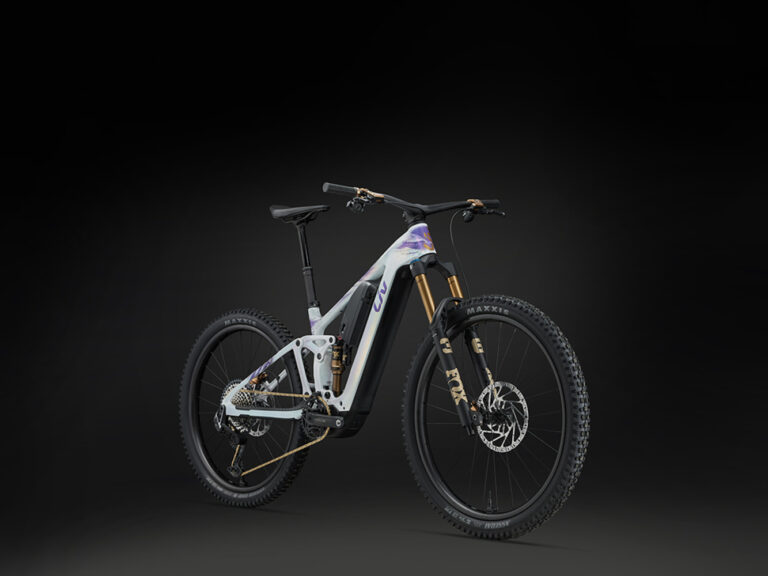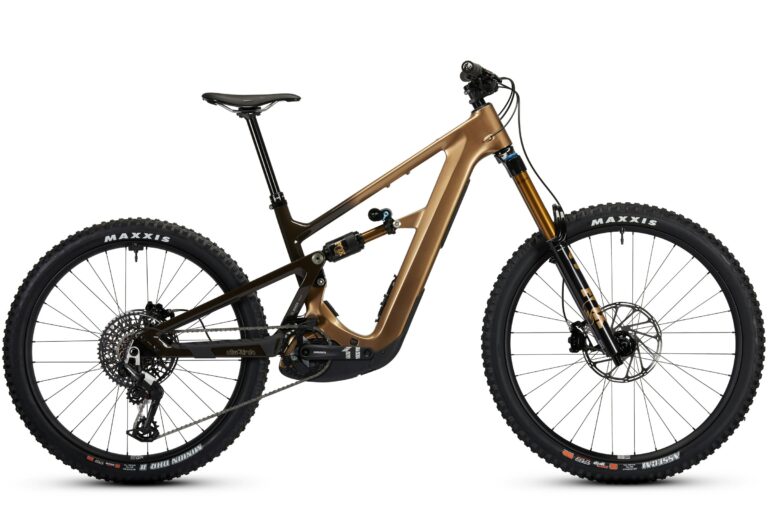
Crussis e-Full AX CARB 9.12 REM: Avinox M2 or M2S and a removable battery for 2027
Buying guide · eMTB PRO
Four configurations with Avinox and a removable battery: we compare M2, M2S, 600 and 800 Wh, their German prices and what to confirm before buying in Spain.
Advertisement / sponsored link
The useful update lies in the letters REM
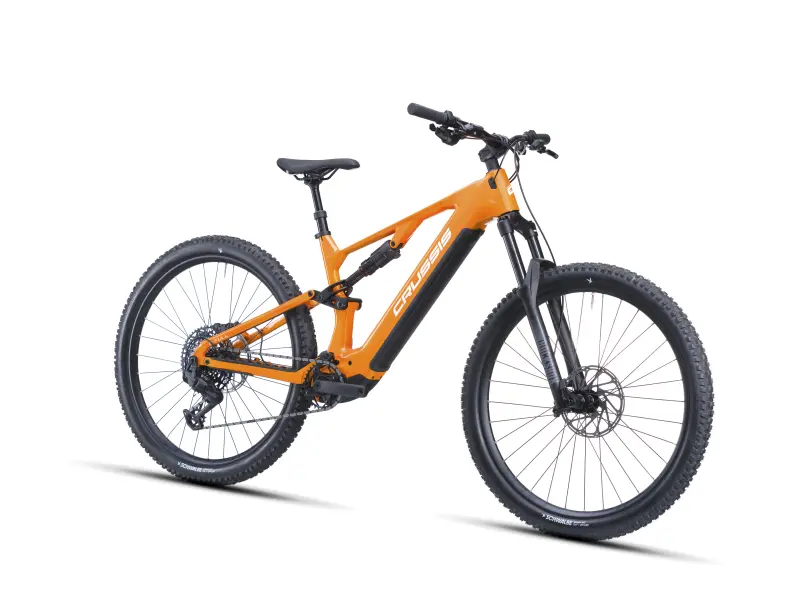
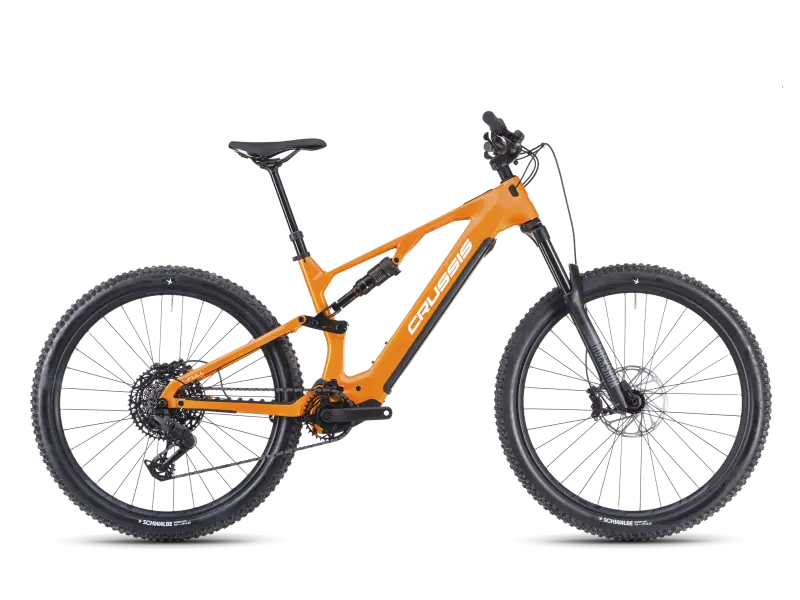
An eMTB can have a very powerful motor yet be inconvenient every time it needs charging. If there is no socket in your garage, carrying the whole bike upstairs can weigh more heavily in your decision than a catalogue figure. The 2027 Crussis e-Full AX CARB 9.12 REM is interesting precisely because it combines a carbon frame, Avinox and a removable battery without sitting at the most expensive end of the brand's range.
REM identifies the removable-battery variant here. Reading e-Full, CARB or Avinox is not enough: check the full name. This article focuses on the 9.12 REM, not the previous season's e-Full 11.11 or PRO versions with different components.
We have consulted the official Crussis catalogue and individual product pages on 19 October 2026. This is an original guide based on documentation, not a trail test or a launch happening today. We have not measured range, complete-bike weight, noise or operating temperature.
Advertisement / sponsored link
Four configurations: the price of choosing a different motor or battery
These are the models published on the manufacturer's German website. They are catalogue prices for that market, not a Spanish offer, a stock reservation or a final quote including transport and services. Each link leads to the exact configuration, avoiding a starting price paired with a photograph of a higher-end build.
| 9.12 REM configuration | Battery | German Catalogue |
|---|---|---|
| Avinox M2 | 600 Wh | €4,199 |
| Avinox M2 | 800 Wh | €4,599 |
| Avinox M2S | 600 Wh | €4,399 |
| Avinox M2S | 800 Wh | €4,799 |
The price differences help with the decision: moving from M2 to M2S with the same capacity adds €200. Going from 600 to 800 Wh with the same motor adds €400. The two extremes differ by €600, but this is not simply buying more power: it involves two separate choices.
If you already have ample assistance, the battery upgrade may solve more than the motor upgrade. For someone riding short routes with demanding climbs, priorities may differ. Before comparing a local offer, match generation, size, battery, charger and specification; a retailer's abbreviated name does not always identify the whole build.
M2 versus M2S: distinguish normal operation from Boost
The M2 product page states 110 Nm and up to 125 Nm in Boost, with a claimed maximum power of 1,100 W. The M2S states 130 Nm and up to 150 Nm in Boost, with a claimed maximum of 1,500 W. These are manufacturer figures, not eMTB PRO test-bench results.
A product listing's headline may show only the maximum value. That does not mean peak output is always available in every gear, temperature, cadence or state of charge. Nor should maximum power be treated as constant consumption: a motor does not draw that figure throughout the ride.
Think of a specific situation when choosing: starting on a steep slope, maintaining cadence on a track or accelerating after a slow corner. Testing with comparable tires and settings tells you more than ranking motors by their largest number. More available assistance cannot fix poor grip or a badly chosen gear.
The M2S costs relatively little extra within this family, but purchase price is not the only criterion. We have not established that it is more efficient, quieter or more pleasant to use. Our guide to Nm, peak watts and assistance helps to distinguish those magnitudes without converting them into an automatic ranking.
600 or 800 Wh: the question is what routes you want to repeat
800 Wh is approximately 33% more nominal energy than 600 Wh. That does not guarantee 33% more kilometres: elevation gain, assistance, temperature, tires and pace still matter. The catalogue's figures of up to 117 or 157 km are neither our measurements nor a promise for a mountain ride.
Start by reviewing recent rides: duration, elevation gain and remaining battery. If you regularly need to shorten routes, extra capacity deserves consideration. If you return with plenty in reserve and value handling the bike without assistance, the smaller-capacity option may be worth considering.
Crussis lists these removable batteries at 2.96 kg for 600 Wh and 4 kg for 800 Wh. The claimed 1.04 kg difference refers to the battery, not two complete bikes weighed under identical conditions. Do not use it to infer a total bike weight we have not verified.
It also changes what you carry to the socket. Check whether you can hold it comfortably, where you will store it and what your charging routine will involve. Larger capacity is useful when it meets a real need; paying for energy you never need also has a cost. Our method is explained further in the guide to Wh, elevation gain and real-world kilometres.
Removable does not mean interchangeable with every Avinox battery
Removability is a feature of the bike-and-battery combination. It does not establish that another Avinox-equipped brand's battery fits this frame, or that the 600 and 800 Wh batteries can be swapped without checking part numbers, mounts and manufacturer approval. Nor do we confirm conversion from a Crussis with a fixed battery.
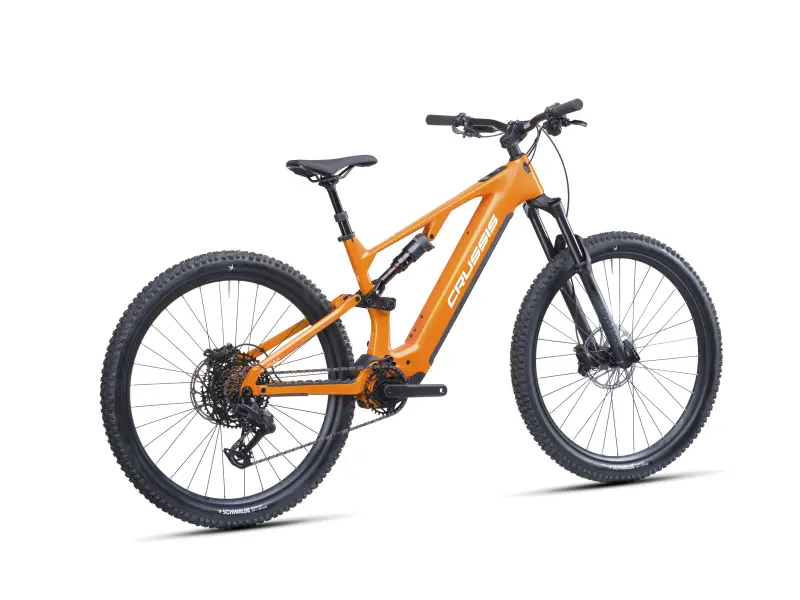
The gallery shows the cover in the down tube, but a photograph alone does not explain removal. Ask for a demonstration on the bike you will buy: switching off, opening, supporting, removing and closing correctly. Do not infer tools or tightening torques from an image.
Advertisement / sponsored link
Check this before paying if off-bike charging is your main reason for buying. The space needed, the weight you support and closing it without trapping anything all matter. Also ask about spare covers and retaining parts; these are more practical concerns than timing an ideal demonstration.
Follow the manual for the exact battery when transporting or storing it. If you find damage, deteriorated contacts or a closure that does not retain it correctly, stop using it and consult technical support. Access to the battery does not make internal repairs a home task.
The included charger deserves a line in the budget
One detail is easy to miss when focusing only on the motor: the 600 Wh product pages list an included 4 A charger, while the 800 Wh pages list 12 A. Confirm this in writing for the bike offered; not every Avinox purchase automatically includes the same charging equipment.
The page also describes fast-charging capabilities in its general system explanation. That does not justify applying the shortest advertised time to every battery or charger. To compare routines, request the times and conditions for the combination you will actually receive.
A mid-trip charge can be useful, but account for socket availability, the accommodation's permission, temperature and stopping time. If you charge only overnight, speed may not be your priority. A home garage and a weekend of back-to-back rides do not call for the same solution.
Check the charger's part number, included accessories and compatibility with the seller before adding another to your purchase. Do not infer electrical equivalence from amperage or connector shape alone. The quote should unambiguously identify the bike, battery and charger.
Advertisement / sponsored link
Carbon and Avinox, but still a series 9 build
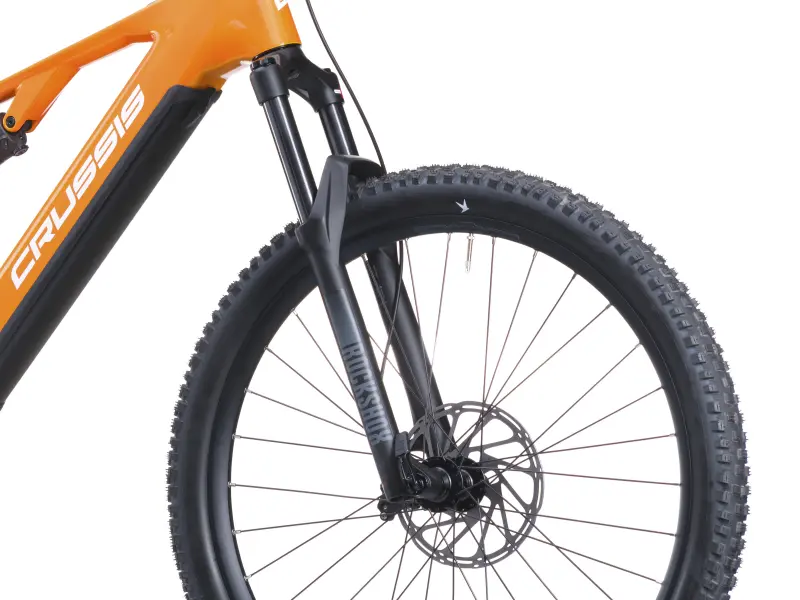
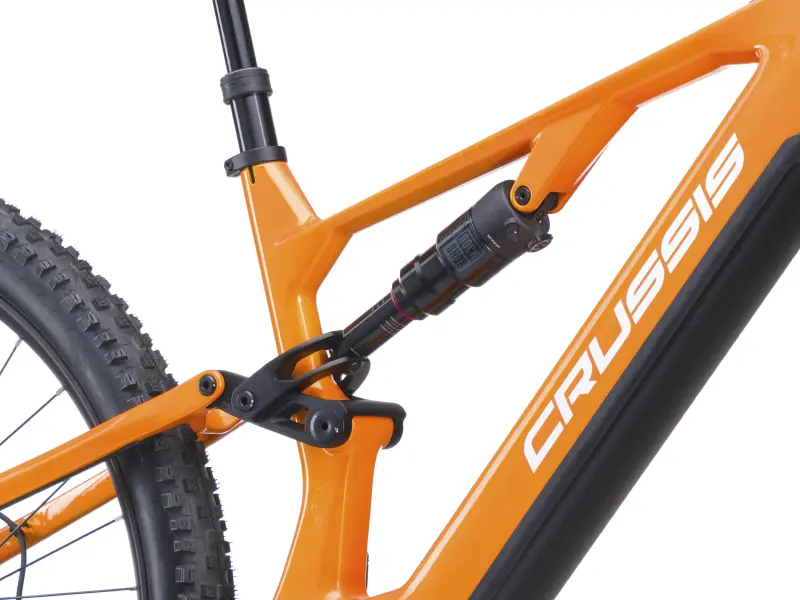
According to the specifications, the 9.12 REM has a carbon frame, 29-inch wheels, a 150 mm-travel RockShox Recon Silver RL fork and a Deluxe Select R rear shock. Do not assume it has a Crussis PRO's suspension because it shares a motor or a search first shows a more expensive version.
Fork travel alone does not establish rear-wheel travel. A shock dimension such as 210 × 55 mm is not that figure. We avoid filling gaps with assumptions: confirm the geometry and specifications for the exact size with the dealer.
The choice depends on your routes and setup, not just frame material. For repeated hard descents, assess the suspension, wheels, brakes and service together. We do not present this 9.12 as equivalent to a race build simply because M2S is an option.
Before replacing components, request a baseline setup for your fully equipped weight and check which adjustments each component offers. Our sag, rebound and compression guide sets out the process. It does not give universal pressures for this bike or replace its manufacturers' recommendations.
The drivetrain and brakes are also part of the price
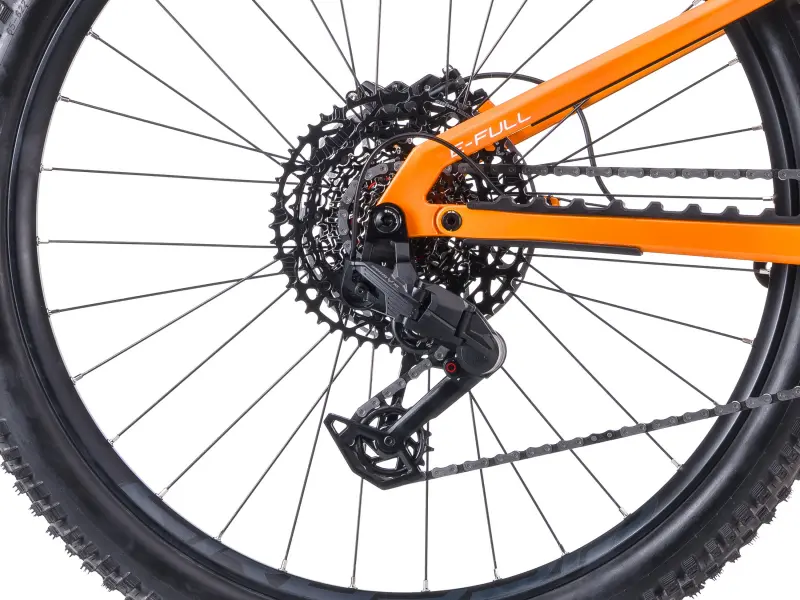
The specifications identify a twelve-speed SRAM S100 Eagle drivetrain, an 11–50 cassette and four-piston SRAM DB4 hydraulic brakes with 200 mm rotors front and rear. These describe the 9.12 build, not every Crussis REM, and are not our own measured durability assessment.
This avoids a common mistake: spending all your time comparing motors, then discovering you expected a different derailleur, wheels or brakes. Ask the seller for a component list for the available bike, especially for an offer involving a specific model year.
During a test, check brake lever reach, shift precision and riding position without turning a few minutes' use into a verdict on wear resistance. Before upgrading a part, verify compatibility and the full cost. SRAM or Eagle printed on two boxes does not guarantee a direct swap.
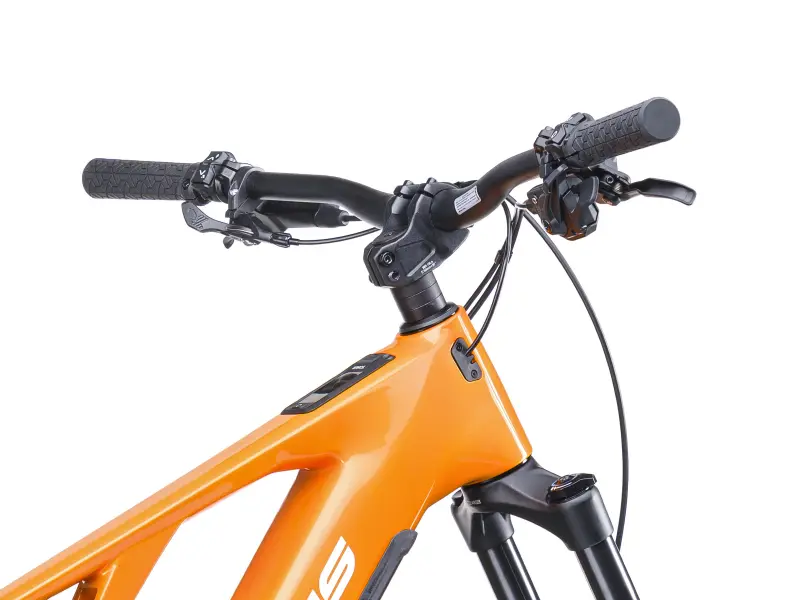
The 29 × 2.60 Nobby Nic tires and X-Fusion Manic LC dropper post complete Crussis's published build specification. Also request the exact tire casing and compound. Correct pressure depends on the setup and use; copying a figure from another eMTB may conceal more problems than it solves.
What to confirm for a purchase from Spain
A German product page priced in euros does not establish stock, delivery or support in Spain. Before reserving, confirm the seller, lead time, transport, assembly, documentation and who would handle a fault. This article does not announce new Spanish distribution or availability we have not verified.
Sizing needs checking independently of a height-based selector. The specifications list dropper travel by size: 125, 150, 170 and 190 mm from S to XL. Your choice must accommodate your saddle height and a comfortable position; longer travel is not better if you cannot use it.
Advertisement / sponsored link
Crussis lists 120 kg under load/permitted total weight. Ask for the applicable definition in your bike's manual rather than automatically treating this as rider weight. Bike, luggage and accessories may affect how a limit is calculated; clarify this before delivery, not afterwards.
Also ask about updates, Avinox diagnostics and frame- and battery-specific spares. A nearby shop familiar with the system may be more useful than a small saving on a purchase that is difficult to support. Keep the itemised quote and full reference for your chosen build.
Our choice: first the usage routine, then the peak power
We would start with M2 and 600 Wh if the aim is the lowest-cost route to REM among the four variants and your usual rides need no more energy. We would consider M2 with 800 Wh if the real limitation is finishing long rides with a reserve, not having more maximum assistance.
M2S with 600 Wh makes sense as a candidate if you value its claimed assistance headroom and keep rides relatively short. M2S with 800 Wh combines both options, but does not automatically make this series 9 the best buy: size, specification and service still need assessment.
The removable battery is the most tangible benefit for anyone unable to charge beside the bike. If that is not a problem for you, compare alternatives without assuming you need a new eMTB. A good purchase addresses a specific use, not merely three improved numbers on a spec sheet.
Does the €4,199 include M2S and 800 Wh?
No. That German catalogue price is for M2 with 600 Wh. M2S with 800 Wh is listed at €4,799; neither is a confirmed Spanish price.
Is the battery removable on every Crussis e-Full?
Do not assume so. This guide specifically covers the 9.12 REM versions and their product pages specifying removable batteries.
Can I apply the fast-charging times to every version?
No. The 600 and 800 Wh product pages specify different chargers. Confirm the battery, charger and charging conditions for the bike purchased.
Is this a test performed by eMTB PRO?
No. It is an original analysis based on documentation with seven official photographs, without our own measurements of behaviour or range.
Sources and documentation
Information checked on 19/10/2026. Original article based on official documentation, not our own trail test. Equipment and availability may vary by market.
Have you used this bike, motor or component?
Join eRIDERSeMTB on Telegram to discuss real experiences with other riders: Bosch, Avinox, Shimano, deals, faults and buying decisions. The community currently speaks Spanish.
Join TelegramAdvertisement / sponsored link
Advertisement / sponsored link
Advertisement / sponsored link