Whyte Karve EVO with Avinox M2S: what to check before buying a 180 mm eMTB
Technical guide · September 2026
A bike built for repeated descents needs more scrutiny than its power figure: the fixed battery, geometry, servicing and transport all matter.
Advertisement / sponsored link
A purchase to repeat demanding descents
The Whyte Karve EVO deserves attention if you plan rides around descents. Think of repeated runs down the same descent, linked by climbing tracks, or a mountain route where staying precise as fatigue builds is the challenge. There, the bike's appeal depends on what the complete package enables, not winning a motor debate.
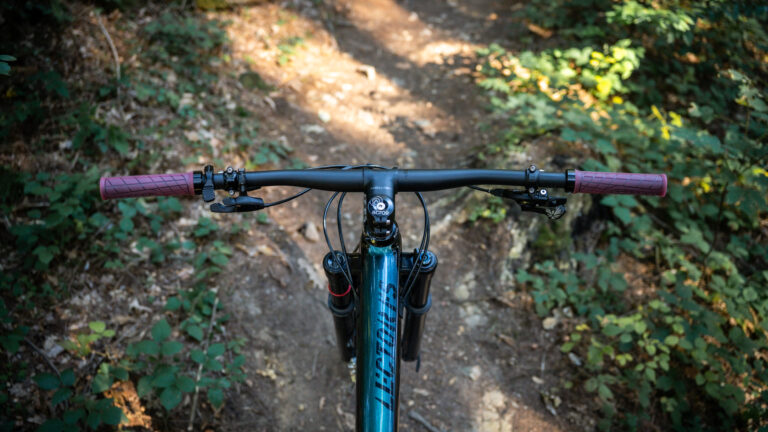
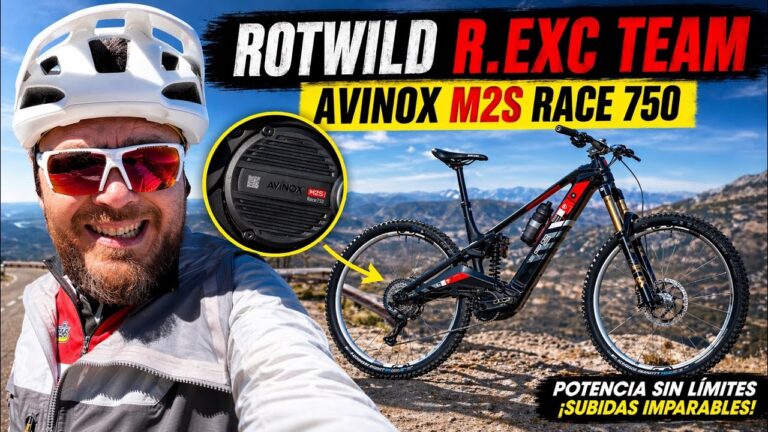
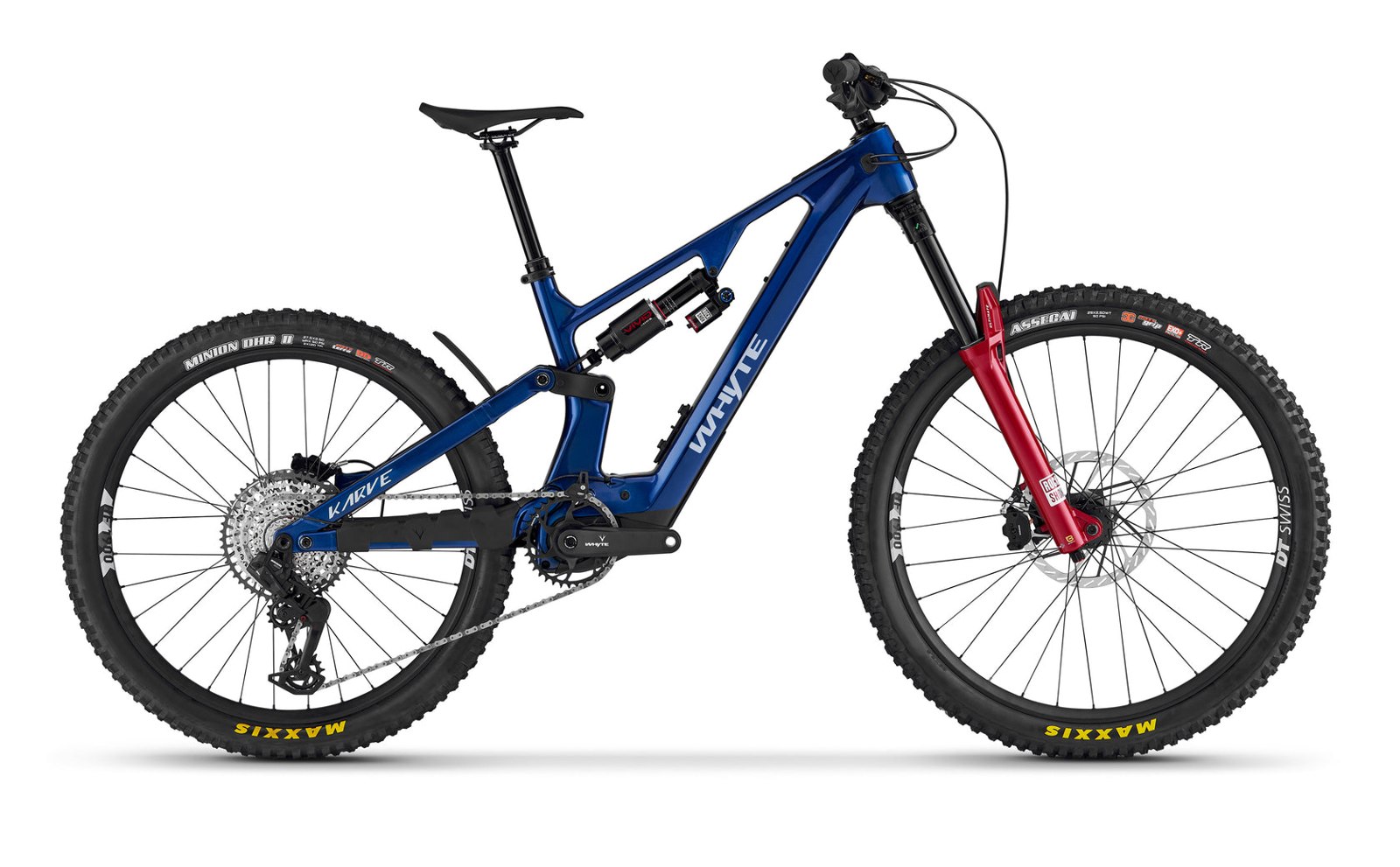
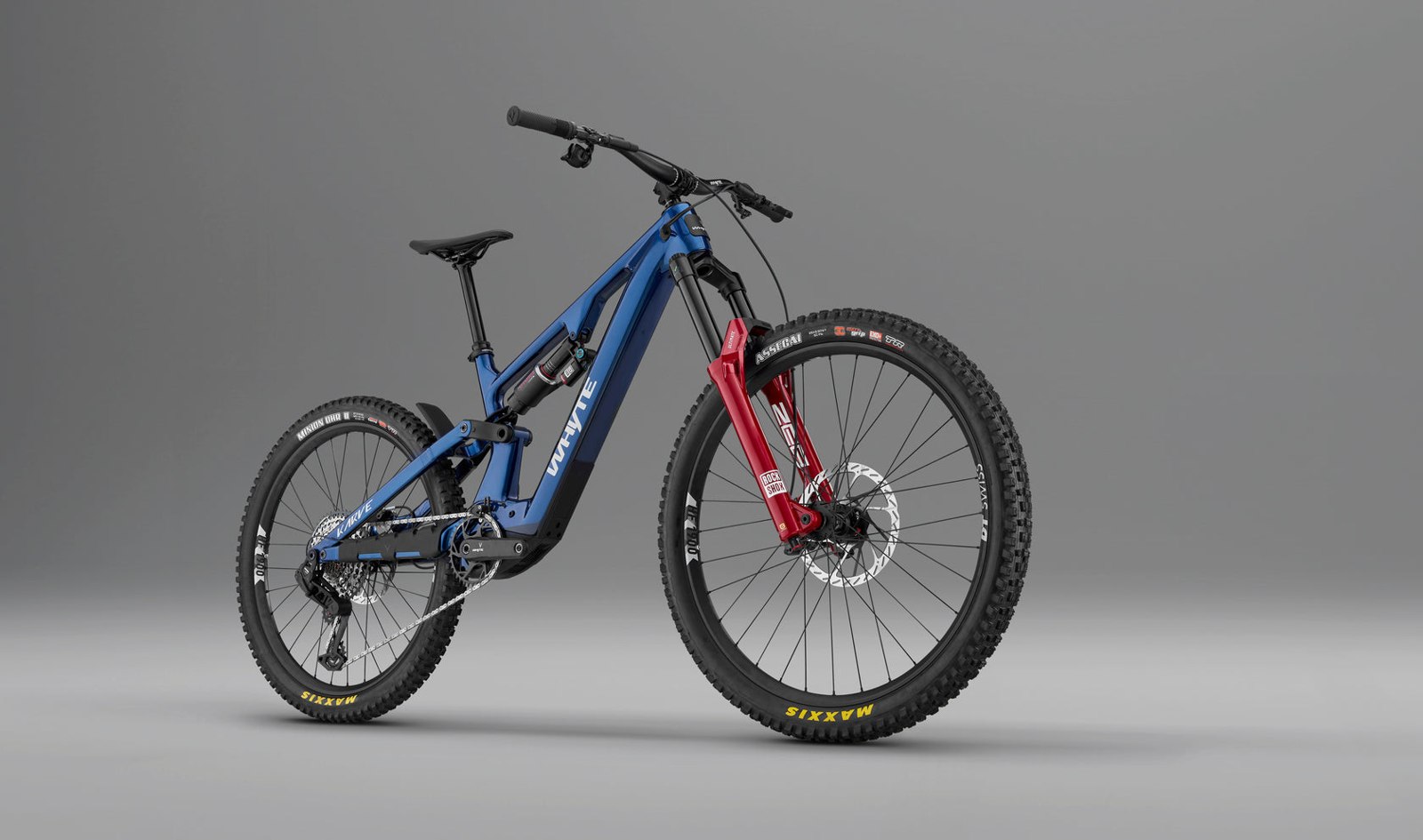
Whyte presents the Karve EVO as an eMTB with 180 mm of travel front and rear, Avinox M2S and an internal 800 Wh battery. Do not confuse it with the 160 mm Karve. This guide's photographs show the blue EVO RSX; conclusions about use are editorial interpretations of the documentation, not claims of our own ride test.
The first buying question is specific: will you repeat enough difficult descents to justify this kind of bike? If you need a long, relaxed ride between villages, also compare other travel options and types of assistance before deciding.
M2S, 1,300 W and 150 Nm: check Whyte's configuration
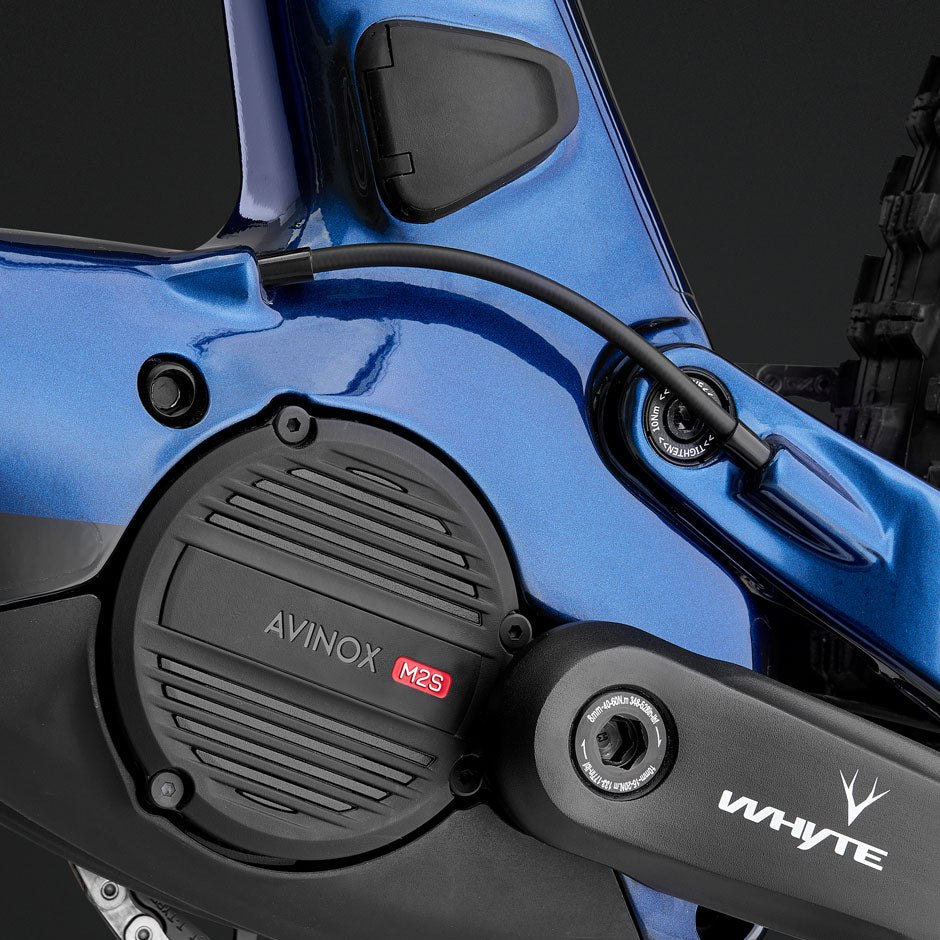
Whyte's specifications and FAQs rate this M2S and FS800 combination at up to 1,300 W peak power and 150 Nm. The brand explains that you cannot simply swap in the FP700 battery from other builds to obtain a different power figure, and it does not recommend its external 600 Wh range extender for the Karve. These restrictions apply to this bike, not general statements about all brands that use Avinox.
The specification table also states 150 Nm, despite one isolated paragraph mentioning 155. Rated power is listed as 250 W. Confirm the configuration of the bike being offered.
In practice, I would test the response on a climb where you need to start, turn and resume pedalling. Look for predictable power delivery. The mode with the highest figure will not necessarily give you the best control over wheel placement. How you use the assistance should support the line you want to take.
Advertisement / sponsored link
The fixed battery determines where you can charge
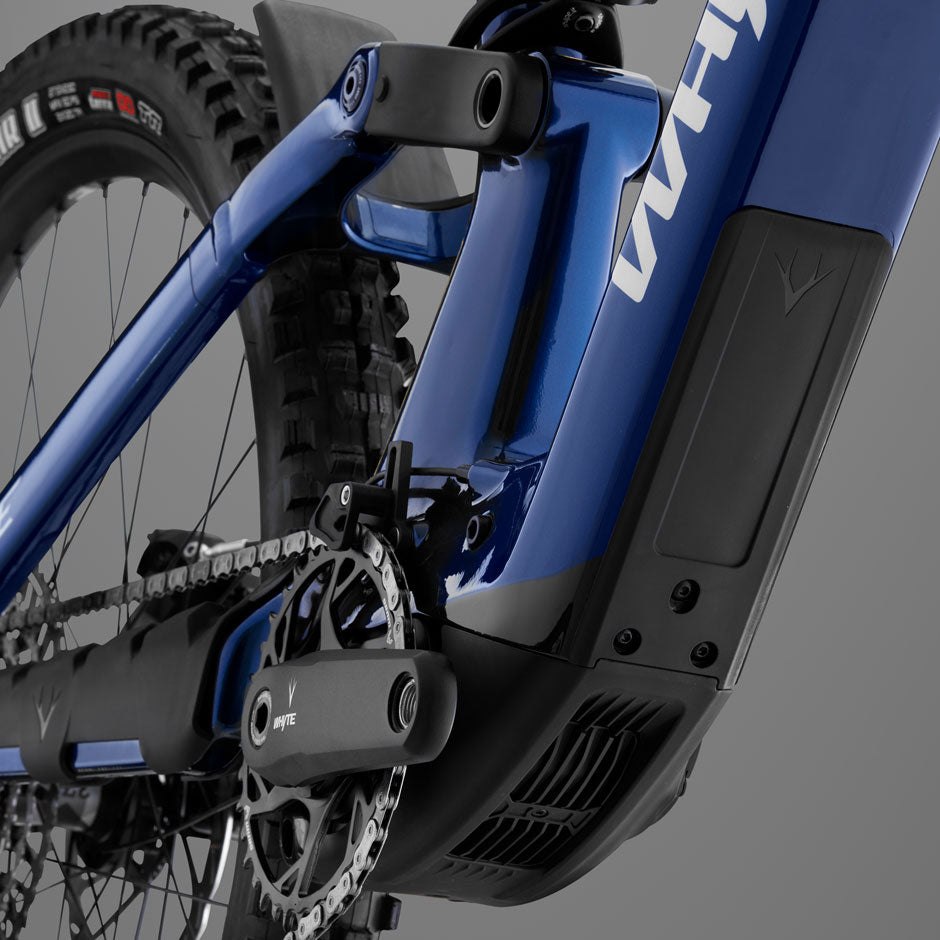
The RSX datasheet states that removing the battery for maintenance requires removing the motor. I would therefore not treat it as a battery to remove daily and carry up to your flat. This is an important distinction if you keep the bike in a garage without a power socket.
Before ordering, map out your charging arrangements: where the bike will stand, where you will plug in the charger and whether you can do so without running the cable across a walkway. When booking accommodation, check in advance whether bikes can be charged in a suitable space. Discovering on arrival that you can only plug in a removed battery could complicate the whole weekend.
Plan an alternative for consecutive riding days too. You do not need to buy accessories immediately: first confirm which solution the bike actually supports and what facilities you will have. Access to power between rides can matter more than saving a few minutes on a climb. If your home setup requires removing the battery every night, give this feature considerable weight in your decision.
Plan repeated runs around energy and fatigue
A loop with pedal-powered climbs makes it easier to measure energy use, but does not guarantee that every lap will use the same amount. You may change modes, stop more often or encounter different ground conditions. We therefore suggest keeping a simple record: battery level at the start, at the top and on your return, along with the time and a note on how hard you were riding.
An arithmetic example, not a test result: if one lap uses 18 percentage points, four similar laps would use approximately 72 points. I would not automatically plan a fifth simply because the calculation seems to allow it. Keep a reserve for detours, an extra climb or a less favourable reading near the end.
Add a second condition for continuing: how well you are descending. If you start braking too late or struggle to hold your riding position, a break may be worth more than using every remaining percentage point of battery. Buying a bike for repeated descents should go hand in hand with a sensible way to end the session. The final descent need not become an obligation to justify the battery capacity you bought.
A long frame size also needs manoeuvring space
The RSX geometry table lists reach figures of 457, 482 and 507 mm for M, L and XL, with chainstays of 445, 455 and 465 mm respectively. This size-specific variation is worth noting when comparing dimensions. It does not mean you can simply choose your usual size letter from another brand.
Test it with the saddle at the right height and the dropper post lowered when appropriate. Check whether you can move around on the bike without feeling too far back, and reach the handlebar without locking your arms. The assessment should include a slow corner and a change of direction, not just riding straight at a comfortable speed.
If you are between two sizes, distinguish the room you need for pedalling from the space you want to move around while standing. Ask for help interpreting the dimensions and try both sizes where possible. Avoid trying to fix a clearly uncomfortable choice with a succession of new components. A different handlebar can change your position; it cannot turn the wrong frame size into the right one. Record your impressions precisely so the comparison is useful.
Advertisement / sponsored link
Advertisement / sponsored link
MX, 29 inches and geometry adjustment
The Whyte FAQ describe the MX setup, with a 29-inch front wheel and a 27.5-inch rear, and its conversion to dual 29-inch wheels using Shape.It WAMLINK06 and a category 4 wheel with an eBike-compatible hub. Size S is excluded. The conversion requires checking the complete configuration.
Before buying with an immediate conversion in mind, ask about availability, cost and the final configuration. My approach would be to test the supplied setup first and write down what you want to change: how easily you can move the rear end, how it rolls over bumps or how much room you feel you have. If you cannot yet describe the problem, I would postpone the conversion.
Take the same methodical approach to the high and low geometry settings. Ask the workshop to document the starting position and explain where you usually strike your pedals. Do not change wheels, geometry and suspension simultaneously. To assess a change, you need a known baseline and a repeatable section of trail. The best setting is not necessarily the most extreme, but the one that lets you ride your routes with fewer corrections.
Making 180 mm work starts with setup
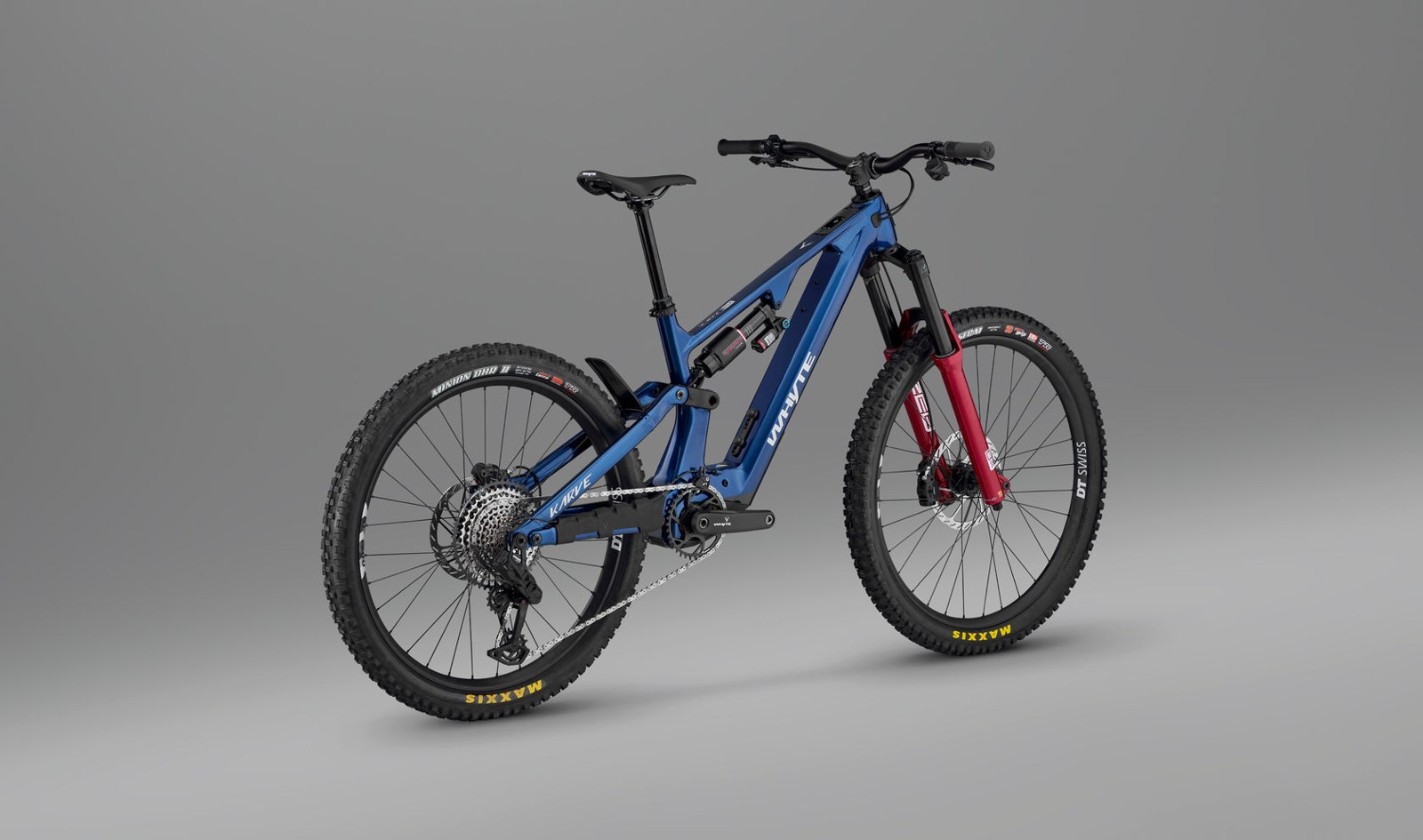
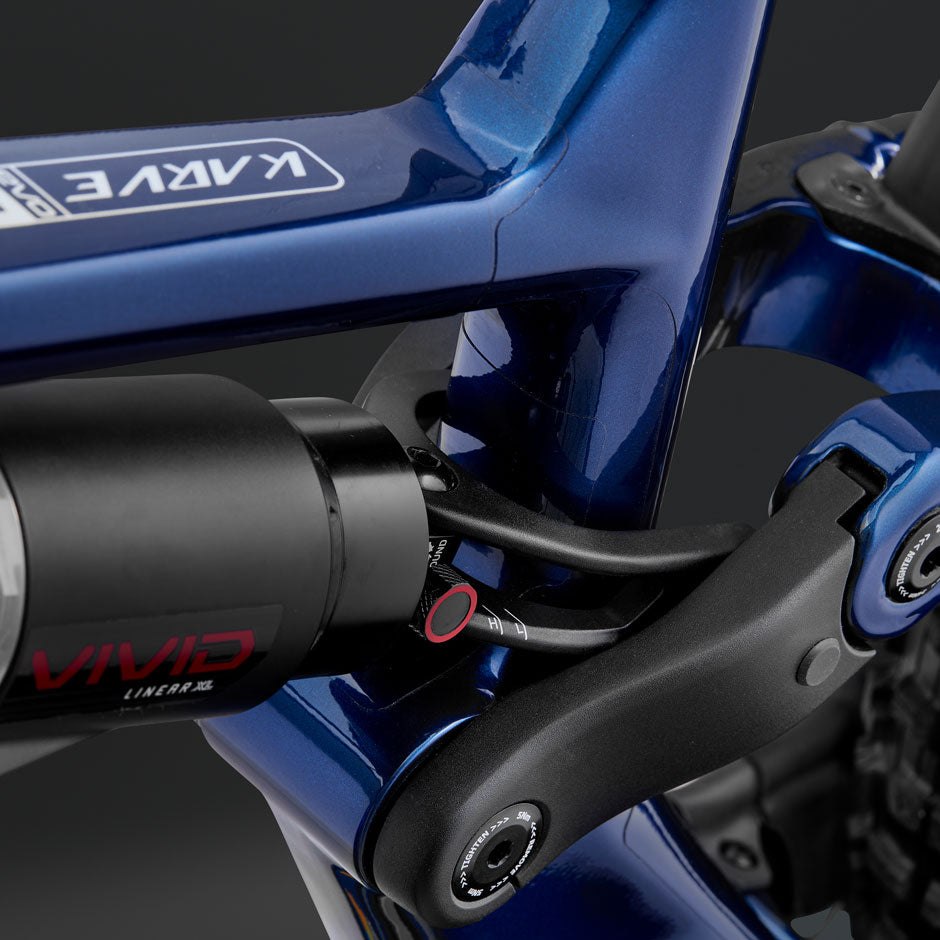
The RSX build includes a RockShox ZEB Ultimate and a Vivid Ultimate tuned for Whyte. Their presence alone does not guarantee a perfect response for every rider. Before your first ride, request an initial setup for your weight with riding kit and an explanation of the adjusters you will use.
Split the learning process into two sessions. In the first, get to know your position on the bike and keep the agreed settings. In the second, choose a repeatable challenge and focus on one specific observation. For example, explain whether you struggle to regain your position after several impacts or use travel too quickly when entering a compression. The technician can consider different causes without you needing to arrive with a made-up diagnosis.
Make a note of pressures and adjuster positions. After servicing or lending the bike to someone, it will be easier to restore your baseline. Also distinguish what changes with speed from what happens even when riding slowly. This helps avoid attributing every sensation to a single dial. More travel expands the possibilities; learning to use it remains part of the job.
The cost of a day does not end when you buy a bicycle
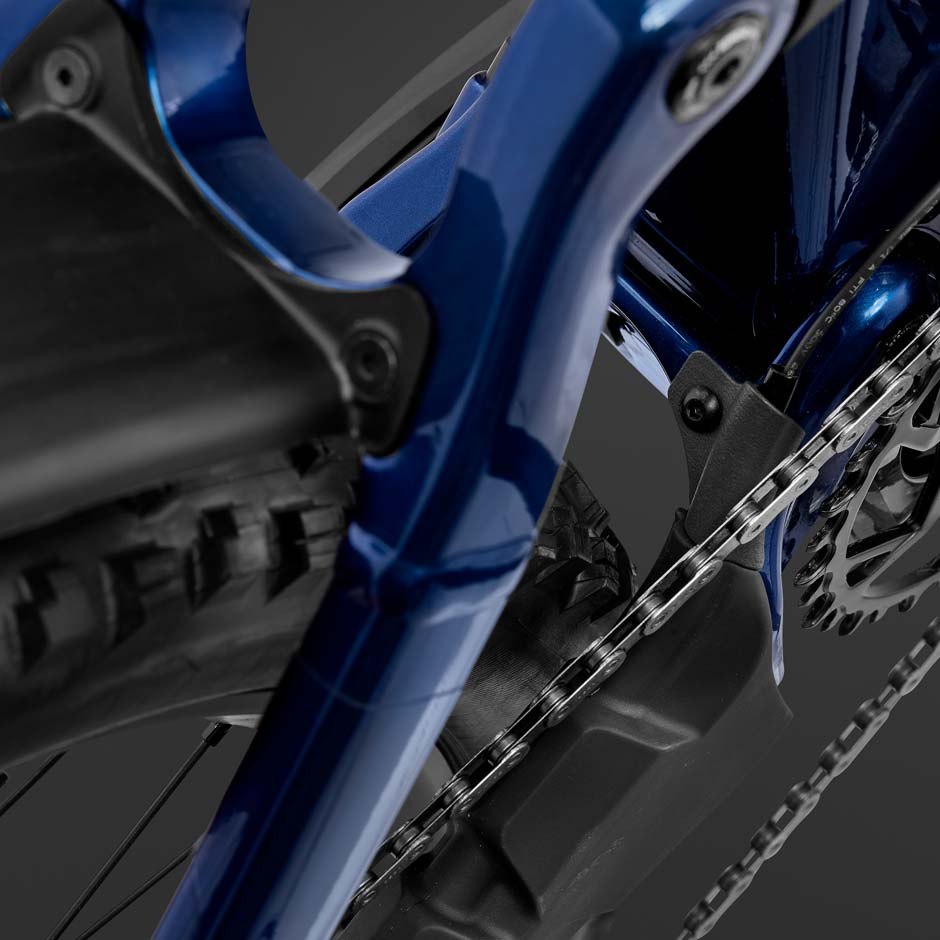
Anyone planning repeated descents should budget for running costs as carefully as for the purchase itself. Find out what consumables cost for the specific build and where you can get them. It is worth knowing the cost of replacement brake pads, an equivalent rear tire and suspension servicing, even if you cannot predict exactly how often they will be needed.
I suggest separating three amounts: purchase, initial setup changes and maintenance. The second should include only changes needed for your riding position or an already identified use. Initially, leave out replacements prompted by a photograph or by comparing your bike with someone else's. You will then know how much money remains to keep riding throughout the season.
After each riding day, spend a few minutes checking the visible condition of the wheels, brakes and fasteners, following their instructions. If a noise appears or the feel changes, note when it happens and request an inspection if it persists. Not every problem has the same cause. A useful description for the workshop is worth more than arriving convinced that a particular part has failed simply because you read about a similar case.
Check the car before your first Karve ride
The published wheelbase reaches 1,341.7 mm in XL. Check that dimension against the bike rack you already own. A tire fitting into a tray is not enough: you must verify how the bike is supported and secured, along with all the transport system's limits.
Measure the actual bike and consult your rack's manual. Include any accessories that will remain fitted and weigh the bike in its transport configuration. If the battery is not intended for routine removal, do not count on taking it out to solve an excess-load problem. A calculation that only works after a workshop procedure is not a convenient solution for every Saturday.
The most revealing test may be loading and unloading it with help at the shop, following the bike rack's instructions. Check whether you can handle it when tired and have room to secure it without rubbing or damage. Access to the car, storage room and charging location should be resolved before committing to a purchase of this value. These are practical requirements, not minor details.
Availability and service from Spain
The Whyte specification pages consulted target the UK market and show prices in pounds. We do not present them as Spanish prices or convert them in a way that obscures delivery terms. Request a local quote detailing the bike, charger, size availability and who will deal with any problems.
Ask specifically about service for the Avinox system and frame-specific spare parts. A useful answer names a shop and a procedure; a vague promise that everything is handled online leaves too many questions. It is also worth knowing where suspension servicing will take place and what happens if you need a part while travelling.
Keep the serial number, invoice and sales terms. Before paying, check whether any registration is needed to activate additional coverage and who must complete it. Do not assume that a general advertisement covers every circumstance of an international sale. You need information applicable to your bike and place of residence, with an identifiable contact for subsequent enquiries.
The questions that really change the choice
Can the Karve EVO replace a downhill bike?
Do not decide on suspension travel alone. Check the intended-use category, the manufacturer's conditions and the tracks you want to ride. Being able to pedal back up is useful, but it does not make every build suitable for every jump or facility.
Would you buy the motor first or the frame first?
I would choose the complete bike that suits my routes, fits me and works with my charging arrangements. Then I would check whether the assistance meets my climbing needs. A powerful system cannot compensate for an uncomfortable bike or a battery you cannot charge where you store it.
Advertisement / sponsored link
Is it worth it for just one ride a week?
It can be, if that ride includes the terrain you want to enjoy and the maintenance budget works for you. Frequency alone is not decisive. What I would avoid is buying it for a type of riding you rarely have access to.
We think it is worth considering for enduro and days of repeated descents, with three prerequisites: a suitable riding position, workable charging arrangements and accessible service. A test focused on those needs tells you more than spending five minutes looking for the most powerful mode.
Sources and documentation
Information checked on September 8, 2026. Photographs belong to the identified manufacturers; specifications and availability may vary by market. Editorial analysis, not our own ride test.
Have you used this bike, motor or component?
Join eRIDERSeMTB on Telegram to discuss real experiences with other riders: Bosch, Avinox, Shimano, deals, faults and buying decisions. The community currently speaks Spanish.
Join TelegramAdvertisement / sponsored link
Advertisement / sponsored link
Advertisement / sponsored link