Haibike ALLMTN TRN/IQ: Pinion, belt drive and choosing between CF 10 and CF 11
Technical guide · eMTB PRO
An eMTB without a rear derailleur or cassette, but not without important decisions. We examine the ALLMTN CF TRN/IQ: Pinion drivetrain, removable battery, automatic functions, builds and the questions to take to the shop.
Advertisement / sponsored link
A different purchase, not another power war.
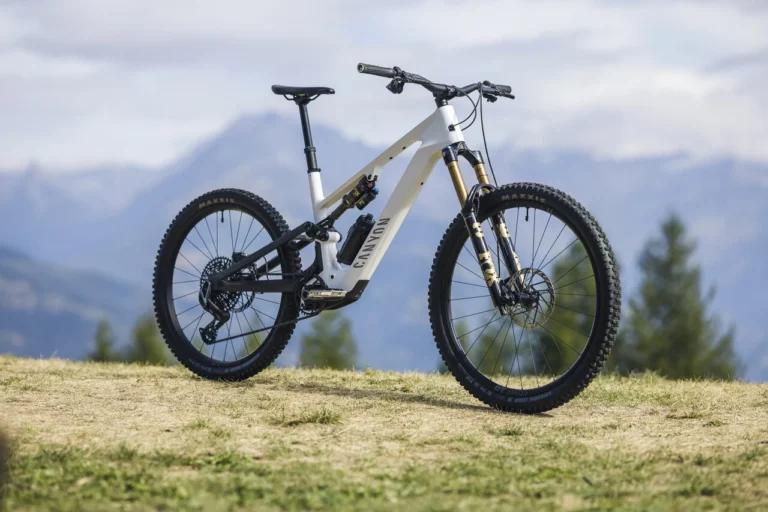
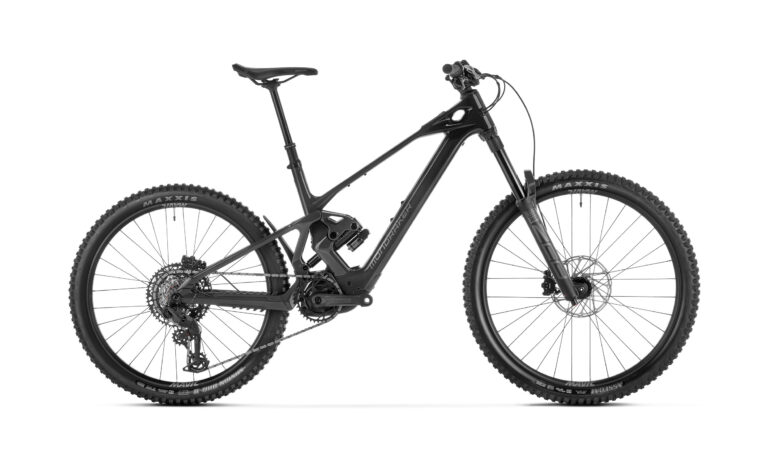
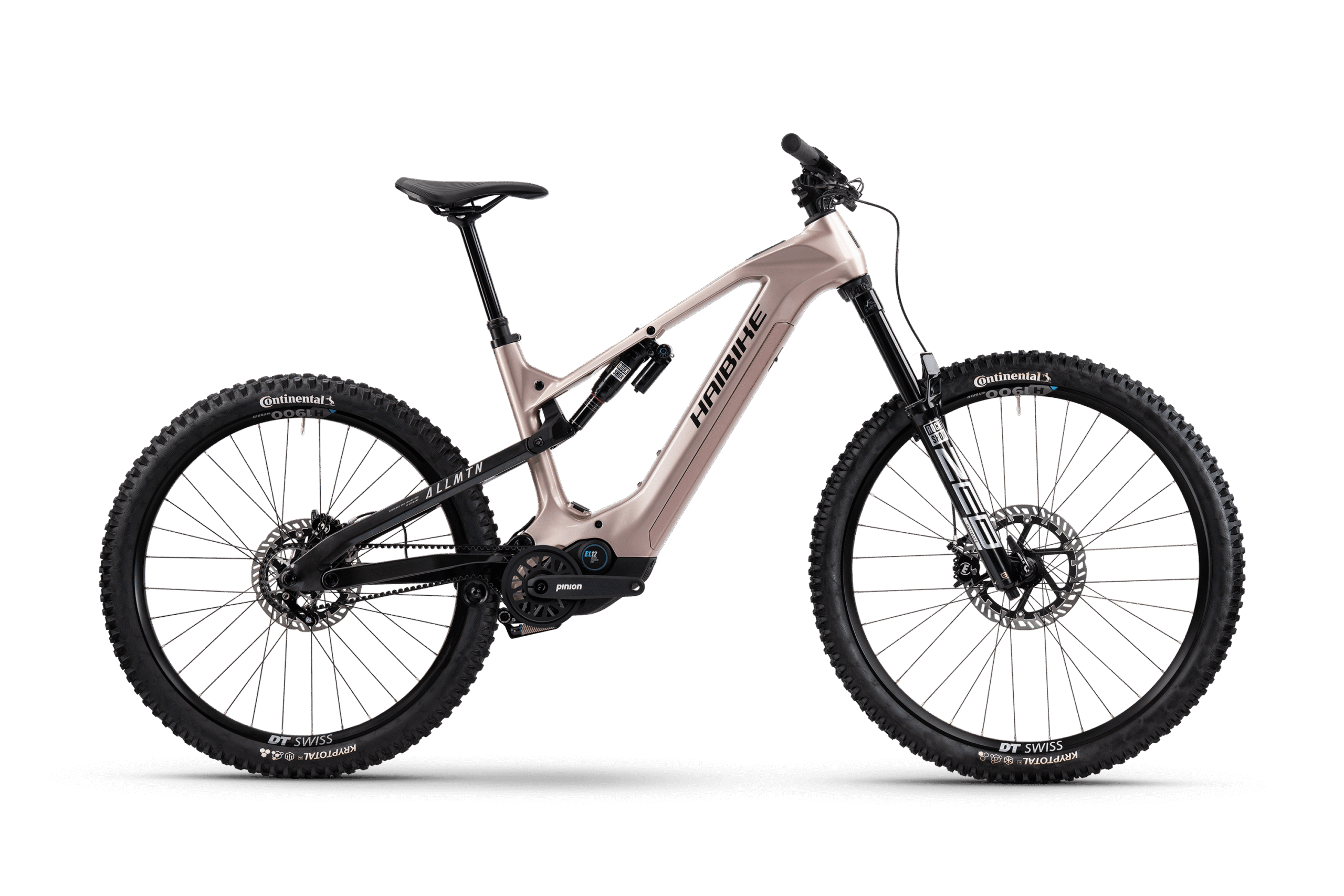
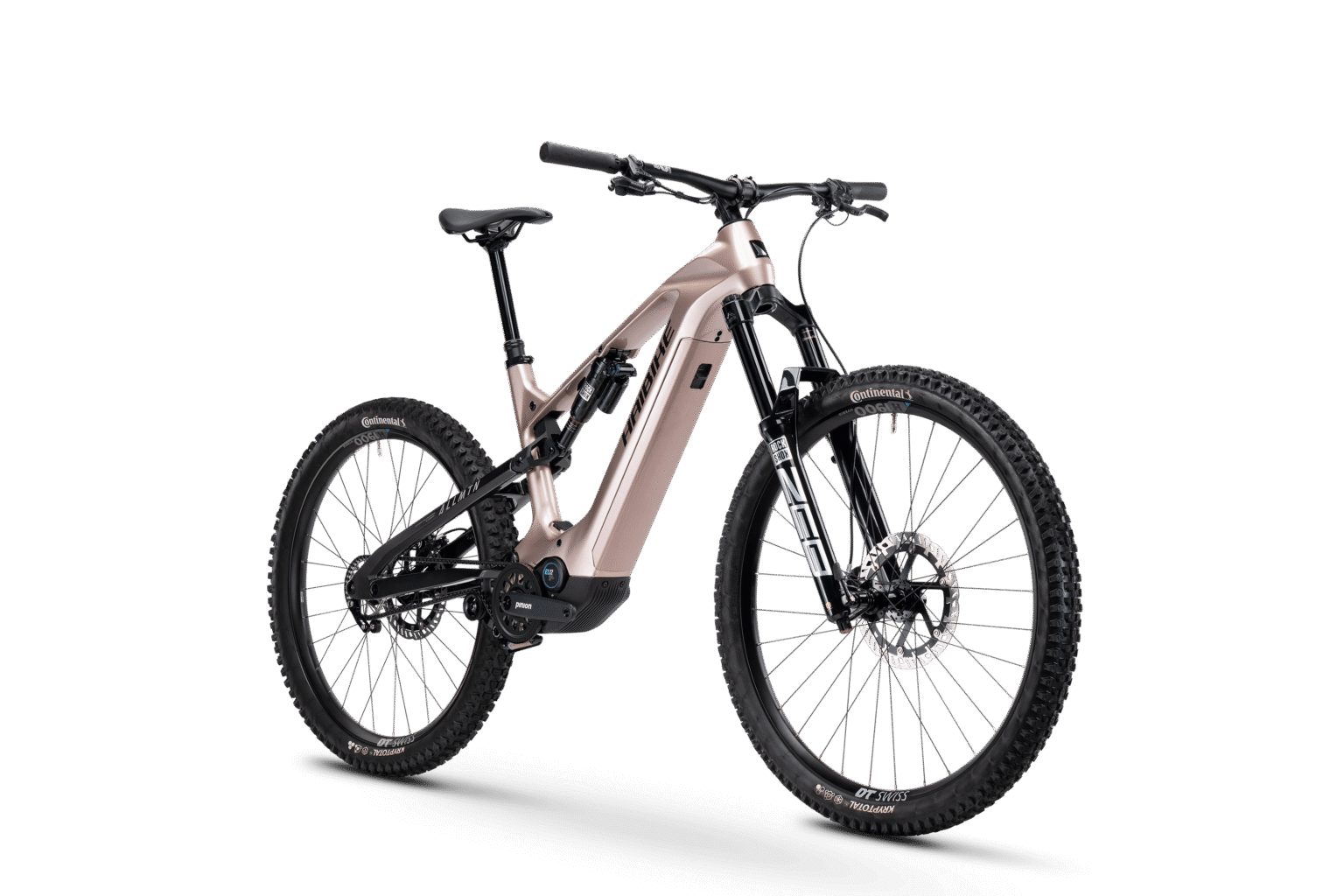
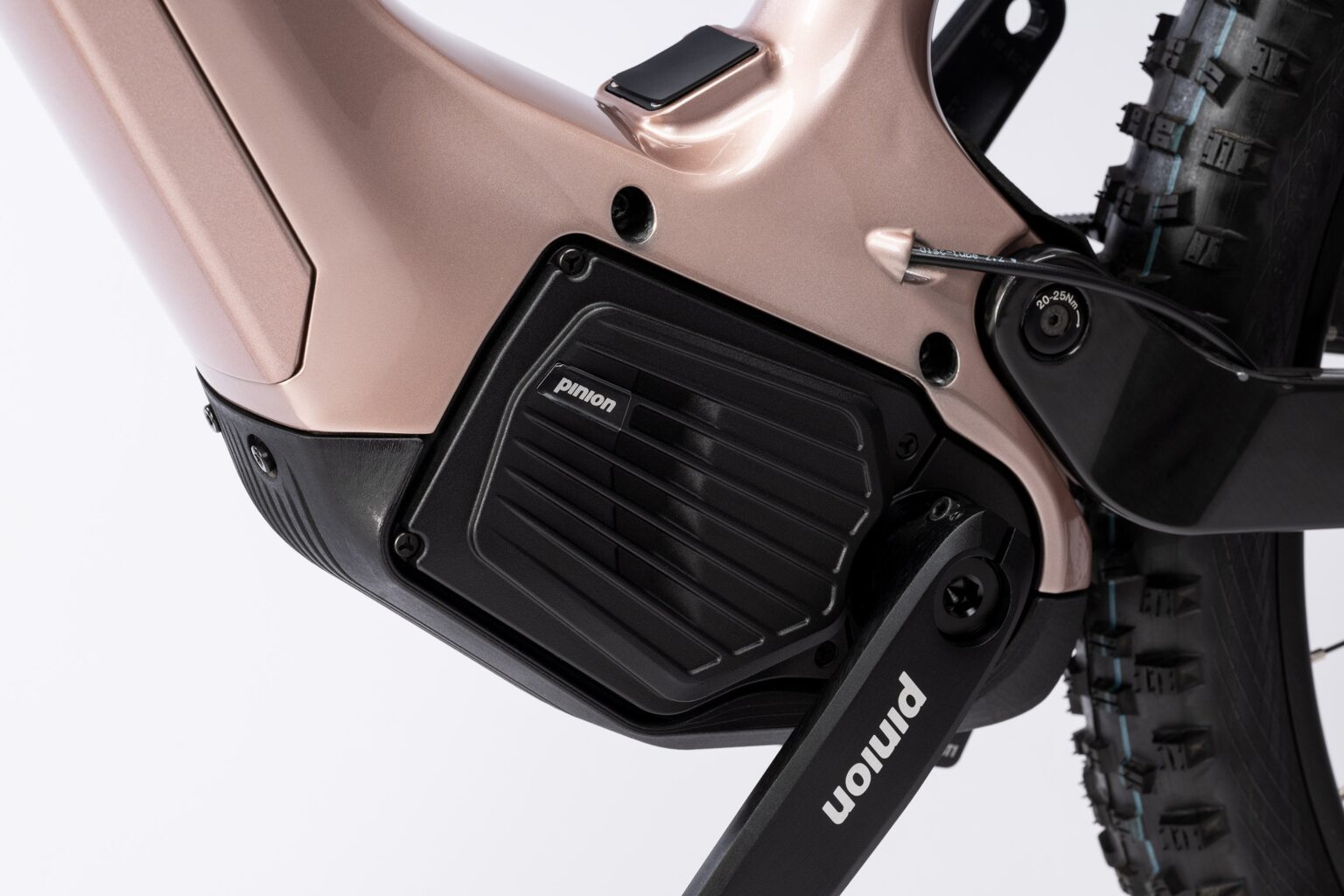
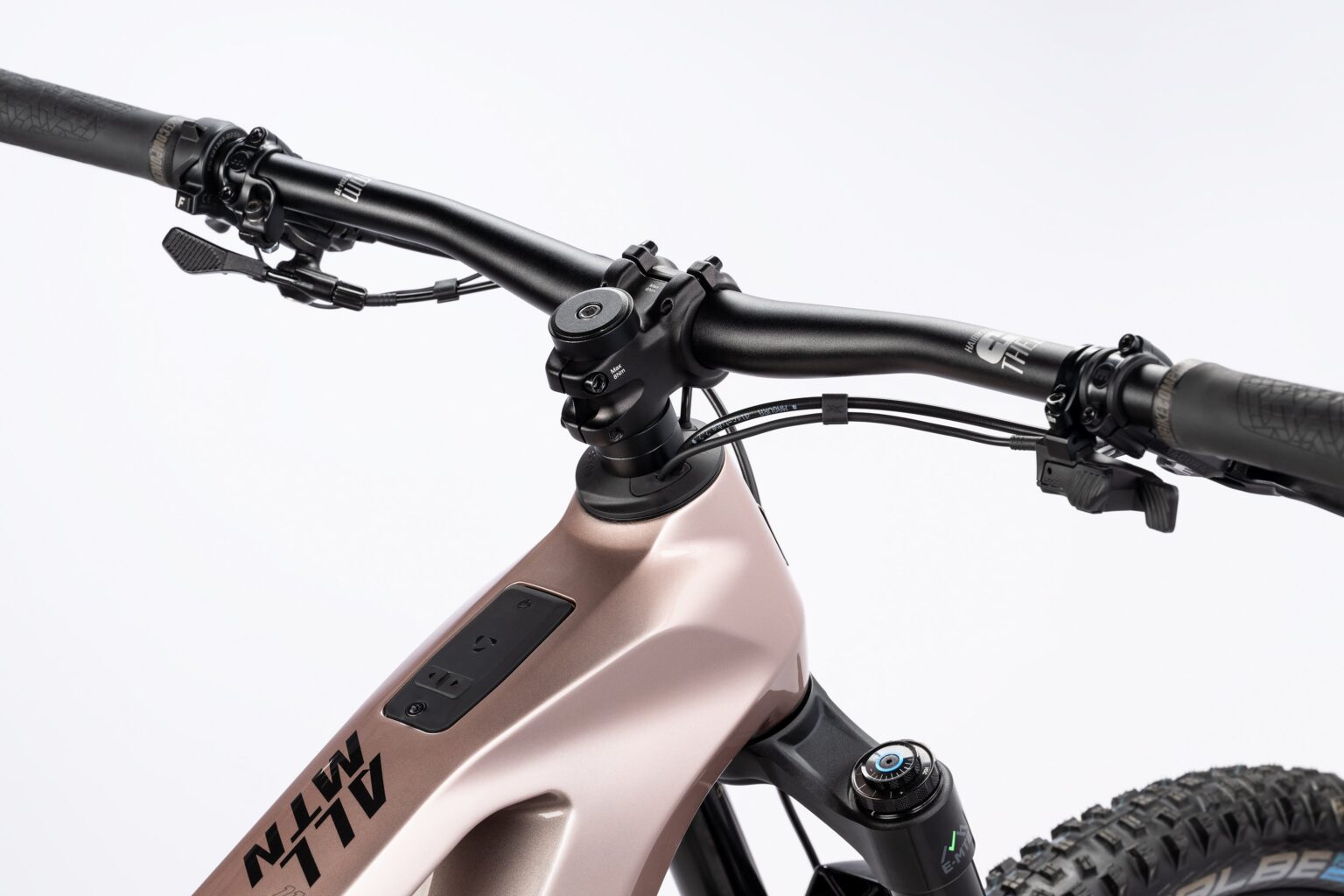
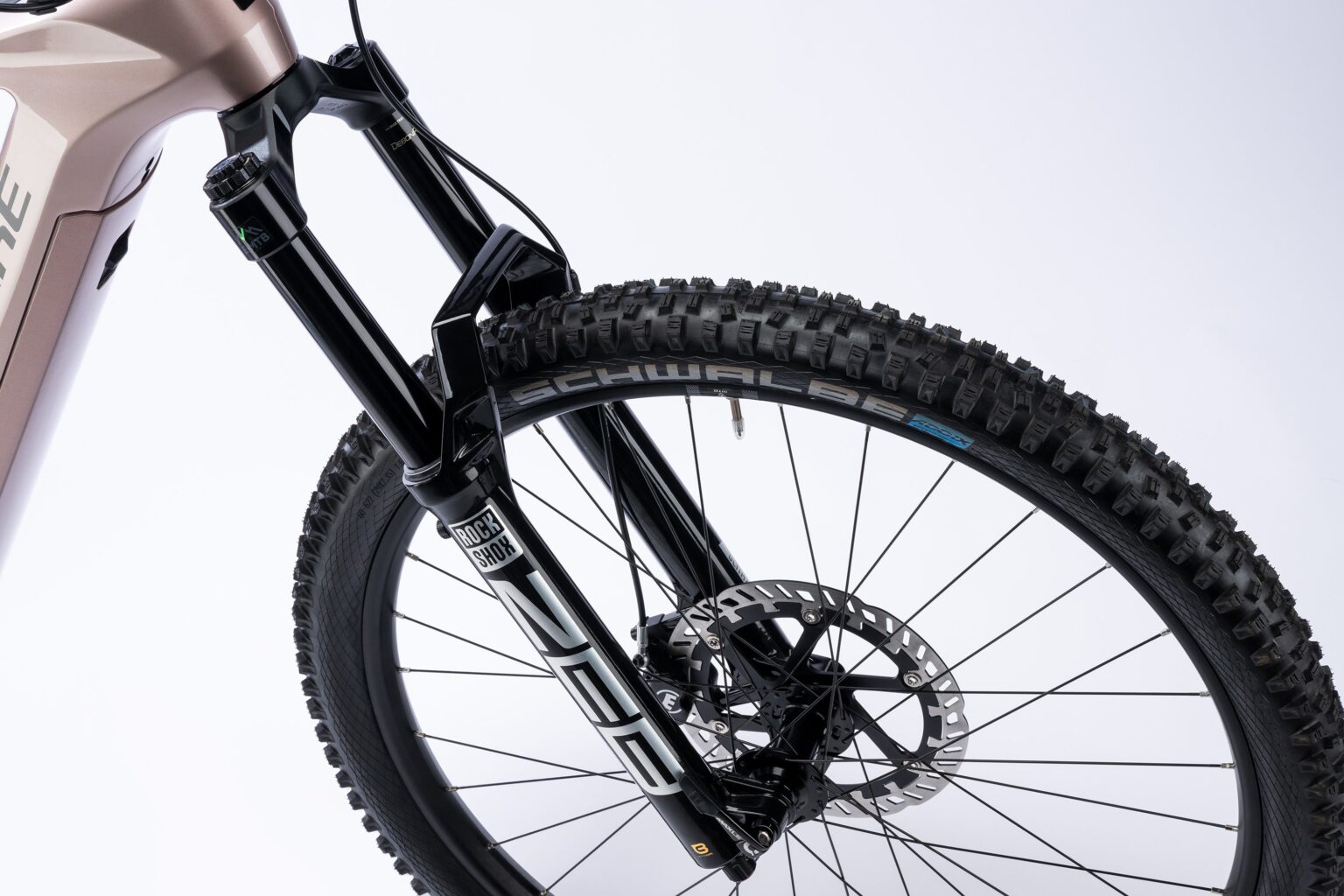
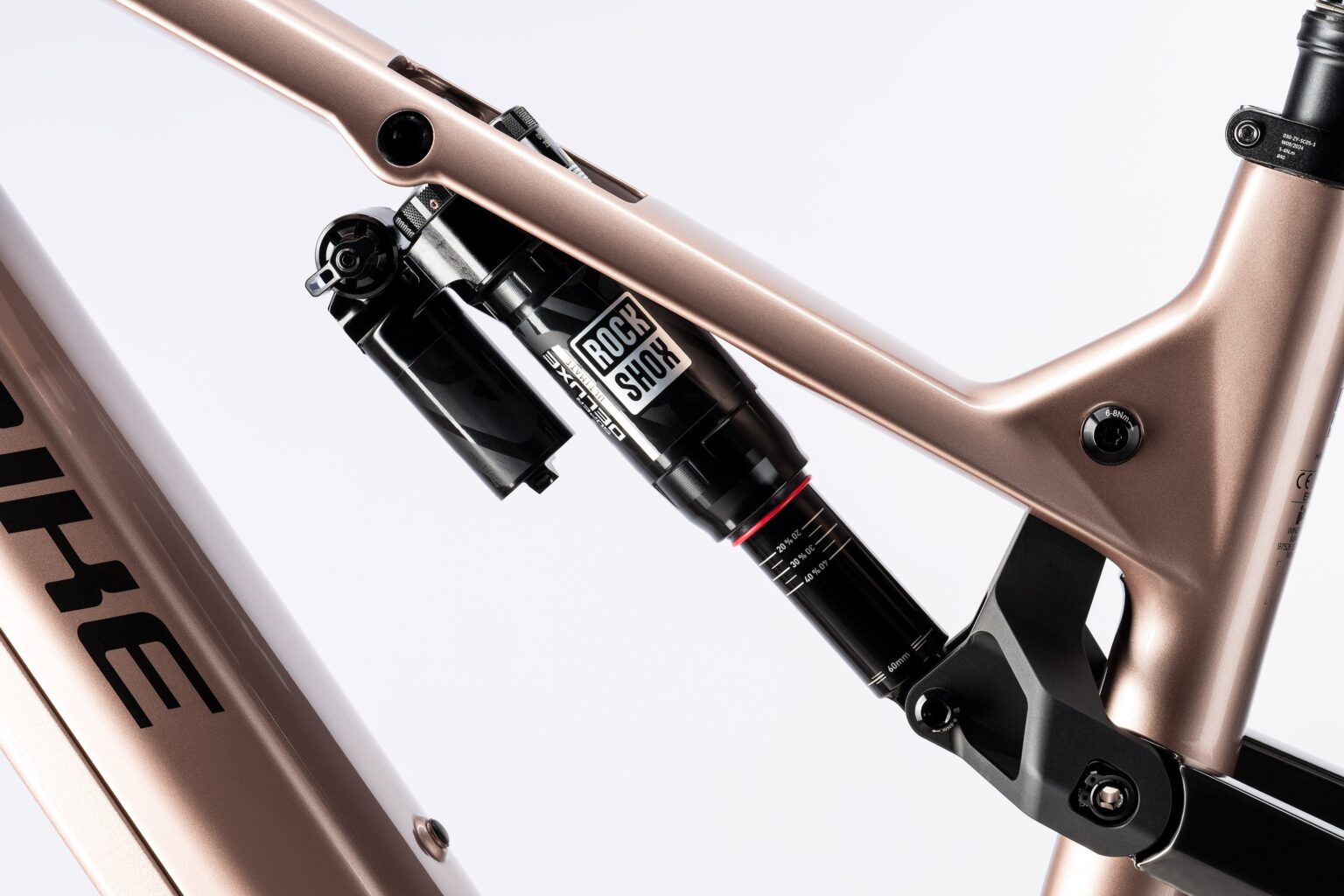
Cover and photographs: official Haibike ALLMTN CF 11 TRN/IQ gallery. Detail shots may show different components from the full-bike views; check the build of the bike on offer.
The ALLMTN CF TRN/IQ raises a practical question: would you rather replace the rear derailleur and cassette with an integrated drivetrain, even if it means relying on a different service ecosystem? For anyone who rides frequently, often cleans the drivetrain or has hit a derailleur, that question deserves more attention than a wattage ranking.
This is a editorial buying guide, with information checked in September 2026. We are not announcing a new launch today and have not measured this bike on a ride. We will distinguish manufacturer documentation from our assessment of what to check. Nor will we generalise to all Haibikes: TRN/IQ identifies a specific configuration within a family using other motors too.
The official presentation of the range describes a carbon frame, a removable 800 Wh battery, a 29-inch front wheel and 27.5-inch rear wheel, and 160 mm of suspension travel at both ends. This is a serious all-mountain platform, not a city bike with mountain-bike looks. Whether it suits you depends on terrain, size, handling and after-sales support, not just the absence of a rear derailleur.
Advertisement / sponsored link
Motor and twelve gears: what really changes
Pinion combines an electric motor and gearbox in the MGU. The E1.12 has twelve ratios and a 600% gear range, according to the E-Line family documentation. This percentage describes the spread of gear ratios, not pedalling assistance. Confusing the two figures means comparing unrelated things.
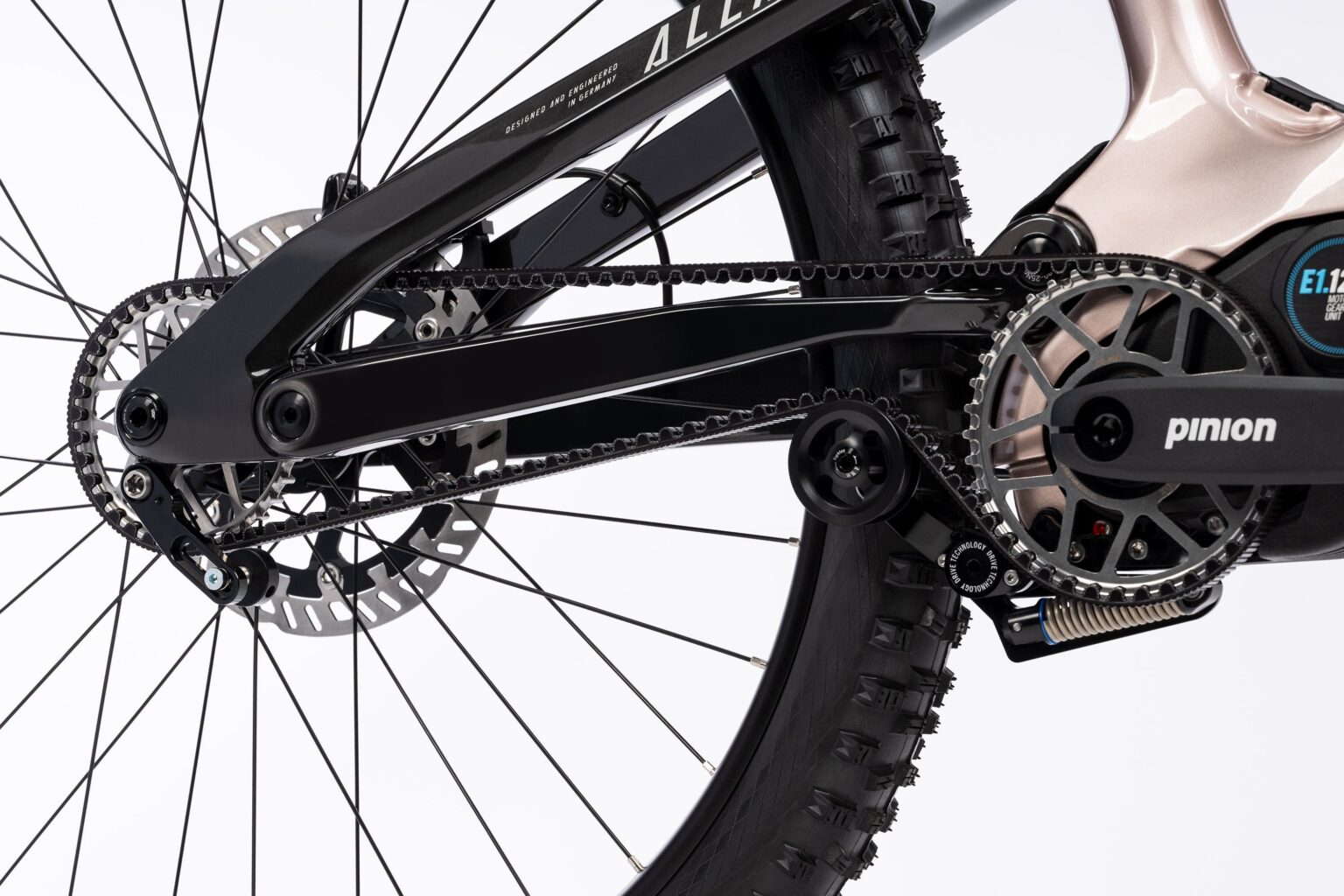
The architectural change matters more than counting sprockets. The shifting mechanism no longer hangs beside the wheel, but there is still an external drivetrain, tensioning, bearings and exposed parts. The absence of a derailleur removes that specific component; it does not make the bike immune to impacts or guarantee cheaper repairs across the board.
Why not rank motors by Nm?
The specification sheet uses 85 Nm as a reference. Pinion explains that this is an approximate equivalence: with an integrated gearbox, output torque depends on the gear ratio and cannot be compared directly with a conventional mid-drive motor. We therefore do not claim that it climbs better or worse than Bosch or Avinox based on that figure.
Our proposed test is simple: a familiar climb, controlled starts and a slow section where you normally shift gears. Observe how far ahead you need to plan and whether you can maintain your rhythm. That tells you more than comparing maximum figures without matching terrain, load and protocol.
Auto.Shift helps, but does not read the path for you
In the Smart.Shift functions, Pinion distinguishes several behaviours. Auto.Shift adapts the gear ratio to speed and cadence; Auto.Shift.Pro allows manual intervention during automatic operation. Pre.Select prepares a gear while coasting and Start.Select chooses a starting gear when you stop. These are not four names for the same thing.
Ask for a demonstration of the functions available on the actual bike with its software version. An explanation at the counter does not replace feeling when shifts happen. Start on easy terrain with plenty of space: set a comfortable cadence, shift manually and check how to return to your chosen mode. Learn the controls before tackling a demanding climb.
There is an important limitation acknowledged by the Pinion documentation: automation responds to parameters; it does not anticipate what you can see. A rock, a step or a corner may call for your own decision. That does not invalidate automatic shifting; it lets you use it where it adds convenience without attributing riding judgement to it.
On a ride linking tracks, it can reduce repetitive decisions. On a technical trail, our recommendation is to compare manual mode too. Do not buy the system expecting to dispense with riding technique: controlling the bike remains your responsibility.
Advertisement / sponsored link
Gates belt: less work, not zero maintenance
The build uses Gates Carbon Drive CDX. The Tern's technical guide to Gates belts notes that they must not be lubricated and that tension matters. We cite this general guidance, not a Tern setting applicable to the Haibike. Do not transfer your chain's oil or wax routine: ask the workshop for this bike's exact procedure and do not set tension by feel.
The everyday benefit is easy to assess: less work lubricating a chain. The financial decision is less straightforward. Ask about the price and availability of the belt, pulleys and tensioning parts, plus labour. Without those details, nobody can promise savings per season or a universal service life; use and conditions affect the outcome.
The Maintenance FAQ of the MGU specifies an oil change every 10,000 km. That is an interval for the unit, not permission to ignore brakes, suspension, wheels or inspections. Follow the applicable manual and check with technical support whether your unit has additional requirements because of its age or use.
Advertisement / sponsored link
In addition, Pinion requires manufacturer approval to convert between chain and belt drive. MGU bikes existing with both systems does not make their drivetrains interchangeable. Nor does it mean you can install this unit in a conventional eMTB frame.
Removable 800 Wh battery: choose around your charging routine
The removable battery lets you charge without taking the whole bike to a socket. Before buying, ask for a demonstration of removal, locking and refitting in your chosen frame size. Check the space required, connector access and whether you can handle it comfortably. A seemingly small action will be repeated many times over the bike's life.
Watt-hours do not guarantee kilometres. To plan your rides, use our range planning guide and keep a reserve for climbing, terrain and detours. Without comparable measurements, there is no basis for claiming this Haibike goes further than every other eMTB with the same nominal capacity.
What if assistance runs out?
Pinion states there is a reserve for approximately one thousand gear changes when the main battery stops powering the motor. This is a backup for selecting gears, not additional assistance energy or a promise of distance. Do not use it as your planned reserve for getting home.
If transporting the bike by car, also check the rack's load limit against the actual weight of the complete setup. Removing the battery may make handling easier, but does not replace checking each limit or following the manufacturer's transport and protection instructions.
CF 10 or CF 11: what makes the buying decision different
When checked on the Spanish website, the CF 10 was listed at EUR 8,000 and the CF 11 at EUR 9,000, including taxes. These are prices shown by the brand on that date, not offers or confirmation of stock. Request an updated quote specifying size, product reference, components and delivery terms.
| Component | CF 10 TRN/IQ | CF 11 TRN/IQ |
|---|---|---|
| Fork | RockShox Psylo Gold RC | RockShox ZEB Ultimate Charger 3.1 RC2 |
| Rear shock listed for the range | RockShox Deluxe Select | RockShox Super Deluxe Ultimate |
| Listed brakes | TRP Slate EVO, four-piston | Magura MT5, four-piston |
| Listed rotors | 203 mm front and back | 203 mm front and back |
Sources: Spanish specification sheets CF 10, CF 11 and range presentation. The photographs in this guide show the CF 11.
Our assessment: start by asking what problem the higher-spec build solves for you. If your main interest is the integrated drivetrain, the CF 10 already provides that architecture. If your rides justify more suspension tuning, compare the CF 11's premium with changing components later. Do not declare one version the winner for having a different brake brand: test feel, lever reach and control.
Set aside money for setup and servicing. A purchase well matched to your terrain is usually more useful than spending the entire budget on components you will not make use of.
Size and maximum load: two checks I would not skip
The published CF 11 geometry lists reach figures of 425, 455, 485 and 515 mm for S, M, L and XL, with a 64° head angle. These are comparison points, not an automatic height-based size selector. Bring measurements from a bike you find comfortable and check your standing position, clearance with the saddle lowered and freedom to move over the frame.
If between sizes, test a slow turn and a change of body position, not just seated pedalling along a straight street. We recommend checking freedom of movement first, then stability. Choosing the larger size because it seems faster could leave you with a bike that is hard to handle on your trails.
An official discrepancy to be resolved
When we reviewed the sources, the Spanish CF 10 and CF 11 specification sheets showed 135 kg maximum permissible weight, while the introductory page advertised 150 kg maximum system weight. We do not choose the more favourable figure or assume both texts use exactly the same definition. Request written confirmation from Haibike or the dealer for your specific product reference before deciding the purchase is suitable.
Pinion notes that the bicycle's limit depends on its manufacturer and that total mass includes bike, rider and luggage. A component's approval does not itself increase the permitted load for the whole bike. This check is especially important when riding with a heavy backpack or accessories.
The test I would request and what I would get in writing
Without our own test, it would not be honest to claim the suspension works better or the system is quieter than rivals. We can, however, suggest a useful plan for your demonstration. Choose a familiar, permitted route, have shop staff accompany you if necessary and avoid trying new functions for the first time on a risky section.
- Start and stop: confirm that you understand the starting gear and controls.
- Steady climb: compare automatic and manual modes without changing several settings at once.
- Coasting: check how the gearing responds when you start pedalling again.
- Slow maneuver: check size, brake control, and space to move.
- After the test: Write down what you liked, what you didn't like, and what requires explanation.
Sound also deserves context. Pinion documents changes in operating speed between groups of gears; in the twelve-speed version, the 4/5 and 8/9 transitions are indicated. A change of tone does not in itself prove a breakdown. Conversely, don't attribute any noise to normal operation: ask for a diagnosis if anything abnormal appears.
At handover, I would have the bike's product reference, software version, charger, keys, manuals, load limits and available service support identified. I would add initial suspension setup and a brake check. You can bring our eMTB handover checklist so as not to depend on memory.
When does it make sense and when would I look at another option?
The TRN/IQ is worth testing if removing the derailleur and reducing drivetrain tasks matter greatly to you, you ride all-mountain routes and you have reasonable access to a service provider familiar with the system. Before signing, I would ask who handles faults, where diagnostics take place and how replacement parts are obtained. Pinion channels MGU support through FIT distributors; check actual access from your area.
Advertisement / sponsored link
I would consider other options if your budget calls for a simpler build, you prefer doing almost all drivetrain maintenance yourself or the right workshop is too far away. Not because the architecture is worse, but because ownership costs also include travel, learning and time without the bike.
The final criterion of eMTB PRO is this: buy a riding experience you can maintain, not a promise of completely carefree ownership. The Haibike offers a specific, documented alternative. To assess it fairly, separate three decisions: whether you like the bike, whether its shifting convinces you and whether keeping it for years is practical for you.
Quick questions before visiting the store
Do all ALLMTN bikes have Pinion?
Do not assume so. Check the full TRN/IQ name, product reference and specification sheet. The family name alone does not identify this system.
Is this a review based on a ride test?
No. It is an editorial guide based on official documentation and buying questions. We do not publish riding impressions, measured ranges or performance comparisons we have not obtained ourselves.
Can I forget about maintenance?
No. Drivetrain tasks change; bicycle inspections and servicing remain. Ask for the schedule applicable to the bike you will receive.
What version would you buy without testing it?
I would not make the final decision from the catalogue alone. I would request quotes for both, a shifting demonstration and confirmation of size and load limits. Then I would choose the build that meets my actual needs.
Sources and documentation
Information checked on 28 September 2026. Editorial guide based on official documentation, not our own ride test. Equipment and availability may vary by market.
- Haibike Spain: ALLMTN CF 10 TRN/IQ
- Haibike Spain: ALLMTN CF 11 TRN/IQ
- Haibike: presentation and equipment of the TRN/IQ range
- Pinion: differences between E1.9 and E1.12
- Pinion: why torque depends on the gear ratio
- Pinion: Smart.Shift and automatic functions
- Pinion: limits of automatic shifting
- Tern: general guidelines for Gates belt care
- Pinion: MGU maintenance
- Pinion: converting between chain and belt drivetrains
- Pinion: energy reserve for shifting without assistance
- Pinion: total permissible mass and manufacturer's limits
- Pinion: sound according to the selected ratio
- Pinion: MGU and FIT service network
Have you used this bike, motor or component?
Join eRIDERSeMTB on Telegram to discuss real experiences with other riders: Bosch, Avinox, Shimano, deals, faults and buying decisions. The community currently speaks Spanish.
Join TelegramAdvertisement / sponsored link
Advertisement / sponsored link
Advertisement / sponsored link