eMTB flat pedals: OneUp Composite vs DMR V11 vs Chester
Technical guide · eMTB PRO
Size, shape, pins and spare parts: compare three composite flat pedals without inventing a grip test.
Advertisement / sponsored link
What matters when comparing flat pedals
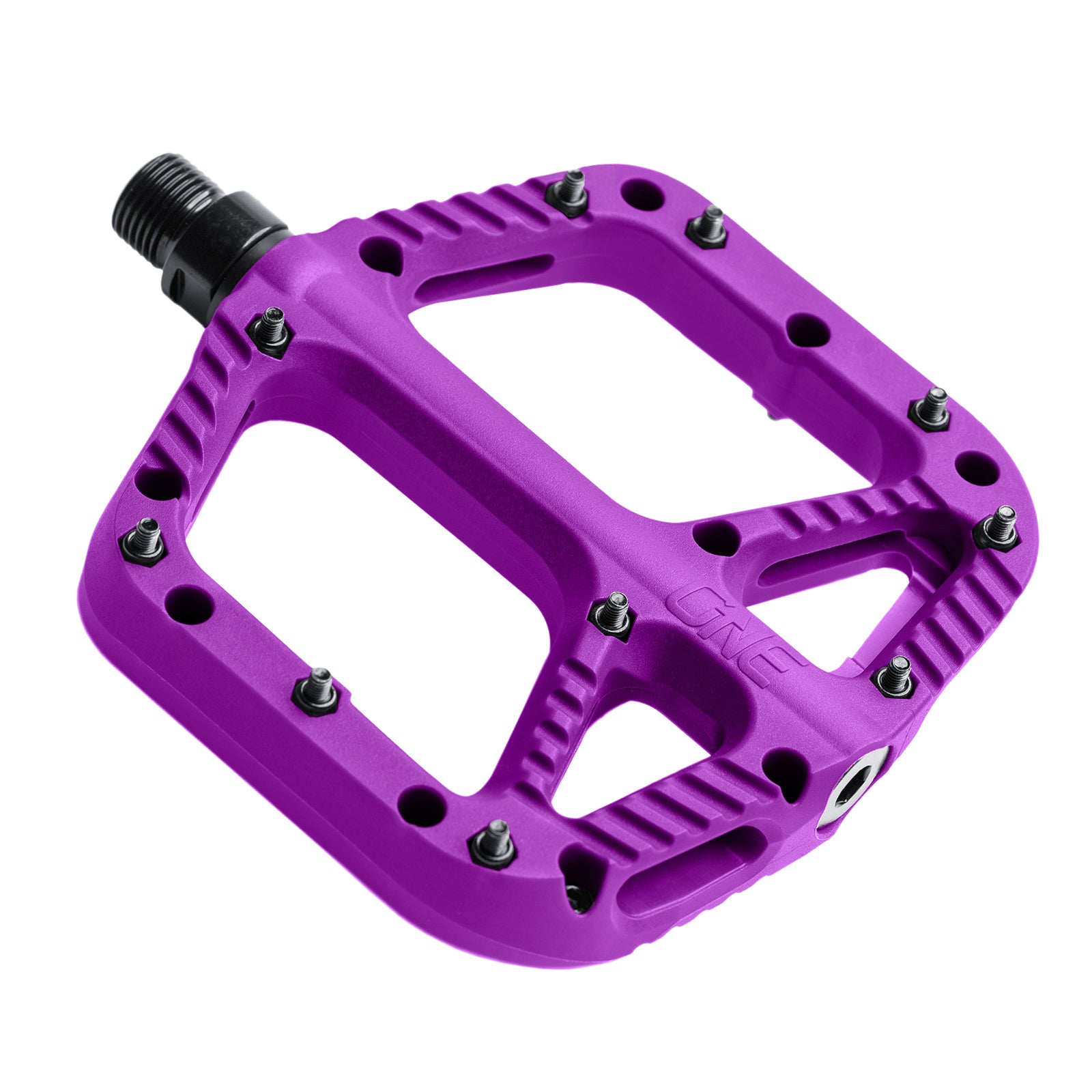
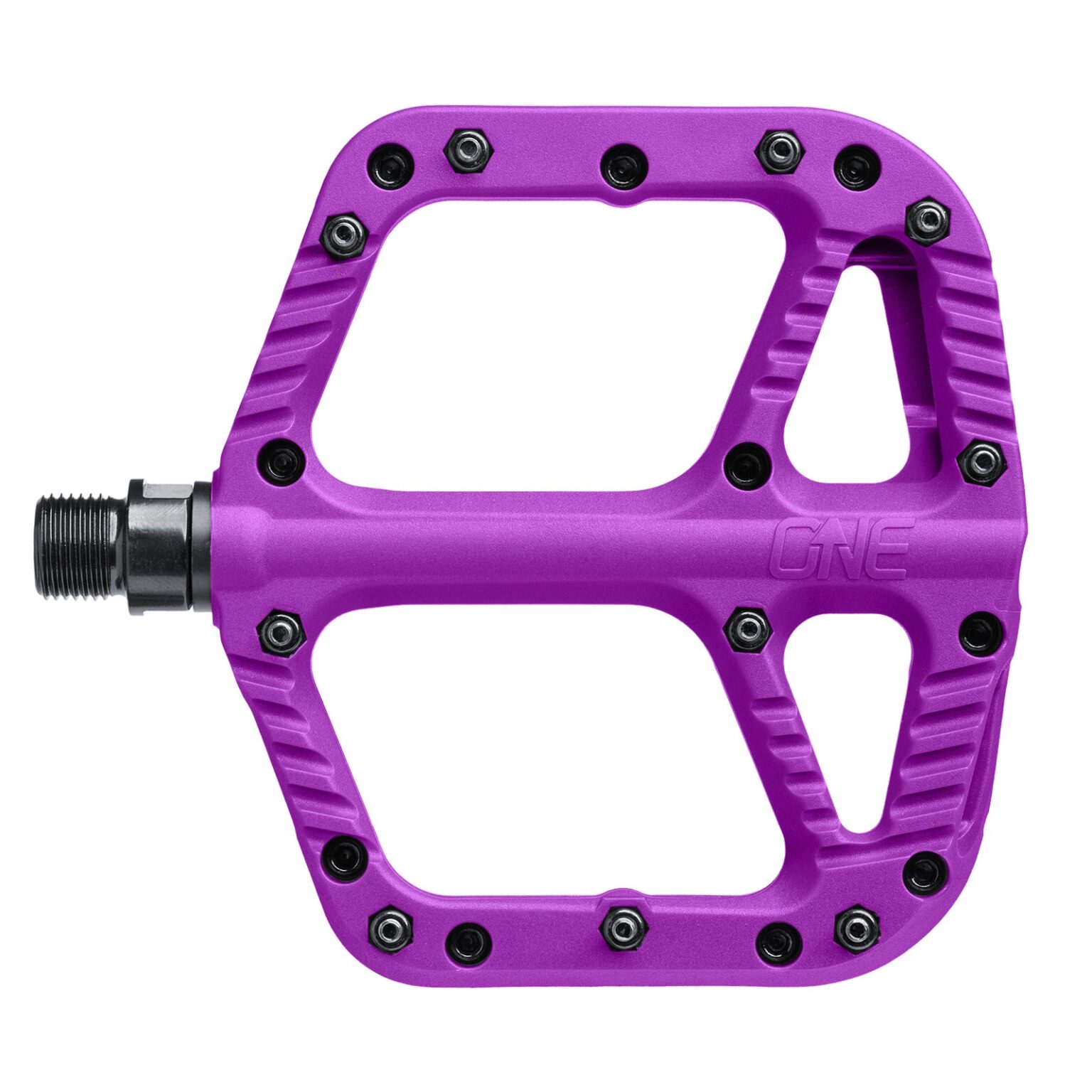
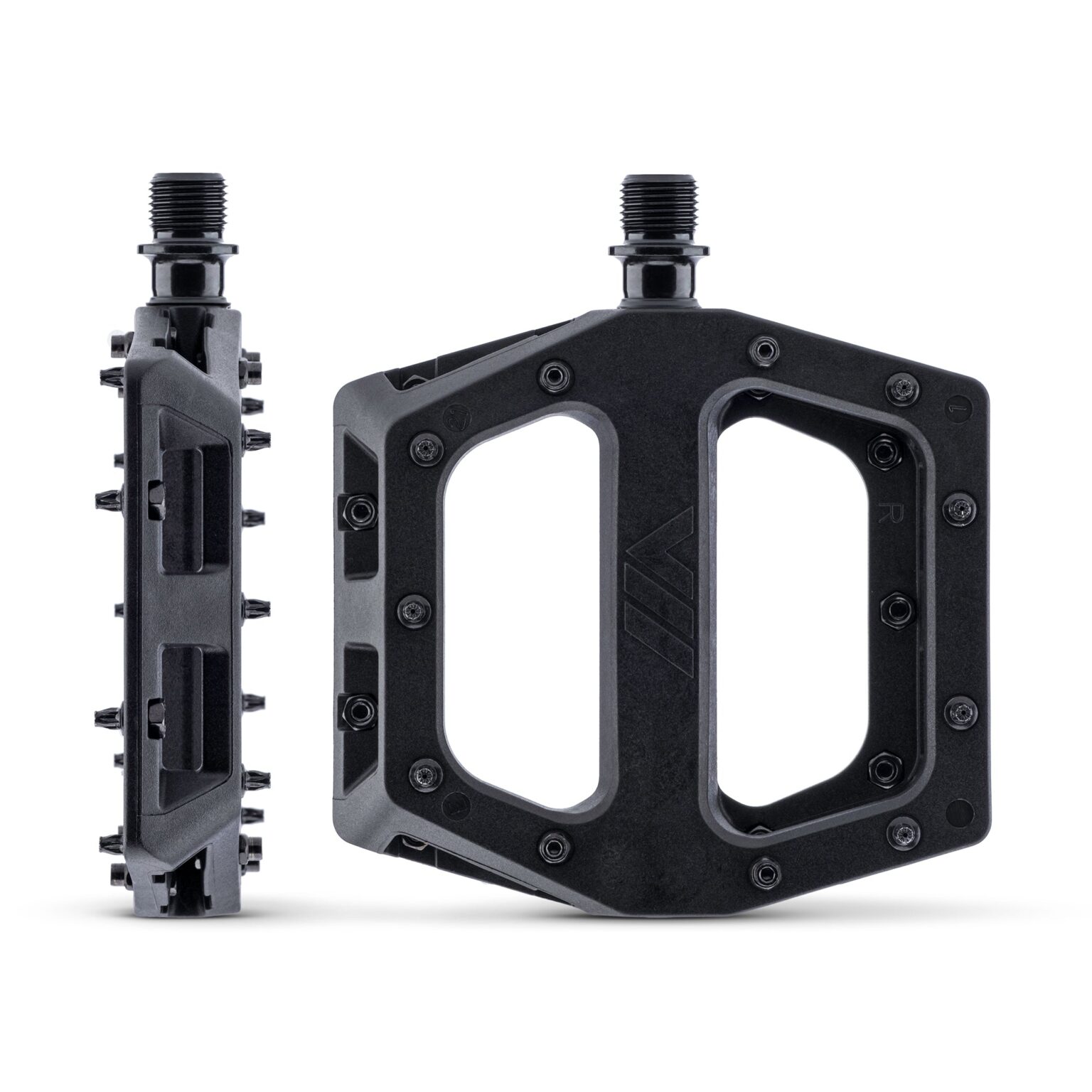
A flat pedal does not need an eMTB label to deserve consideration. It needs to support your shoe, let you control the bike and have manageable maintenance. We compare the full-size OneUp Composite, DMR V11 and the current two-size Race Face Chester. These are three composite-body designs, not three pedals we have ridden back to back.
The distinction from a grip ranking matters: dimensions, pins and spare parts can be checked. Which pedal holds your wet shoe best requires testing that combination. We have not measured impact resistance, wear, mud clearance or foot stability. The following recommendations are reasoned buying advice, not laboratory results or claims of our own riding experience.
Checked specifications: do not mix versions
| Model | Published platform | Pair weight | Pins per side | Profile and caveat |
|---|---|---|---|---|
| Full-size OneUp Composite | 115 x 105 mm | 355 g | 10 metal | Convex; height 13.3-18.5 mm |
| DMR V11 | 105 x 105 mm | 450 g in specifications* | 11 steel | Concave; conflicting weight figures |
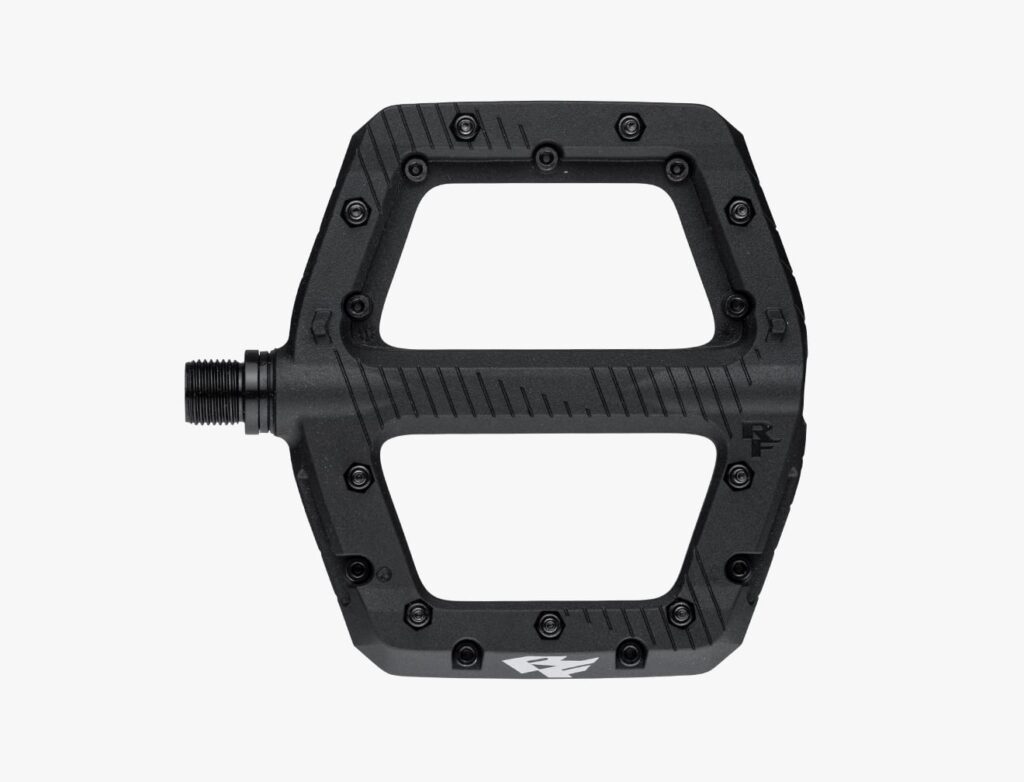
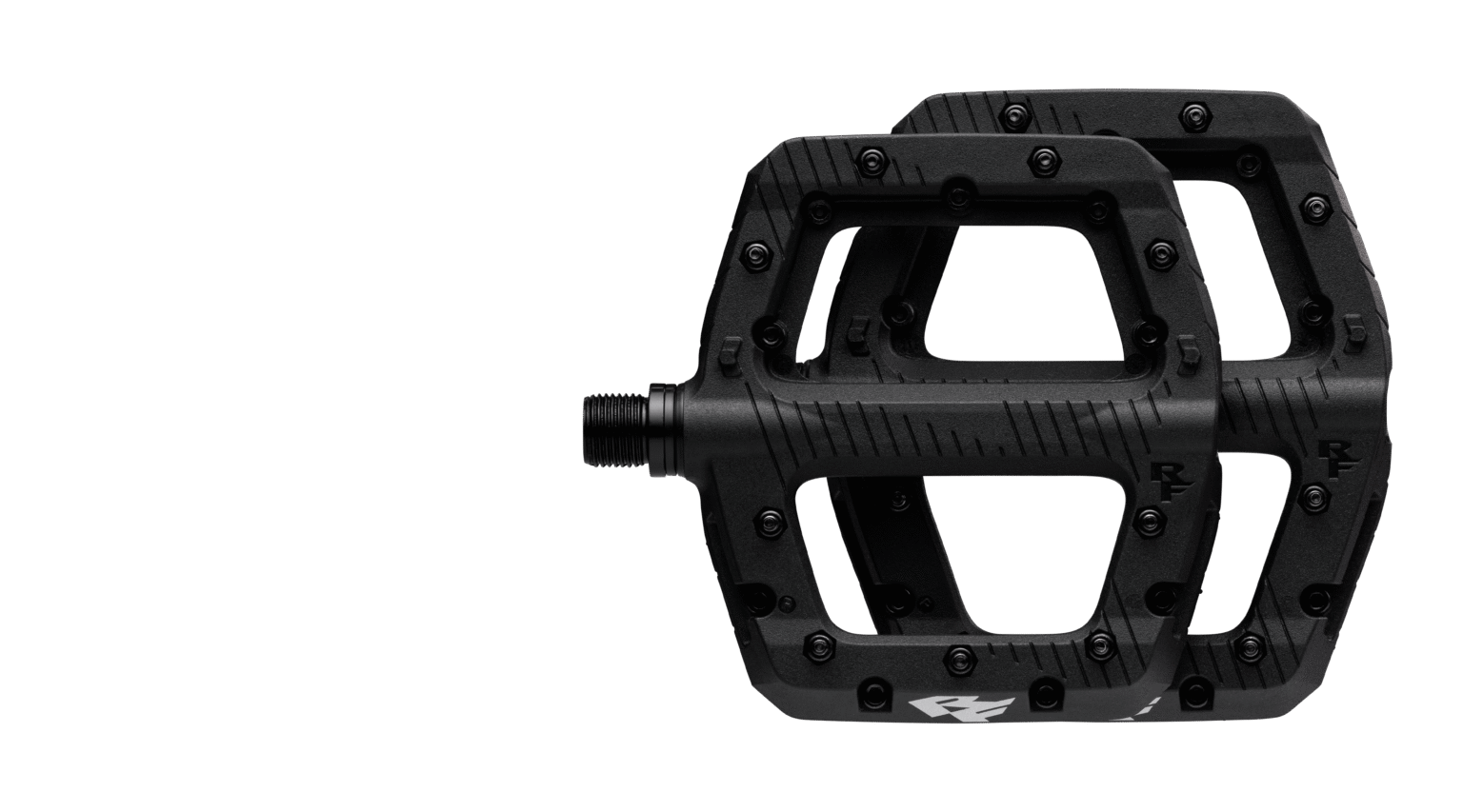
| Current Chester Small | 105 x 100 mm | 345 g | 9 metal + 2 composite | Published height: 16 mm |
| Current Chester Large | 115 x 110 mm | 355 g | 9 metal + 2 composite | Published height: 16 mm |
These are manufacturer figures, not our measurements. DMR lists conflicting weights: a highlight says 430 g, while the specification and another section say 450 g per pair. We identify the latter figure rather than assuming which applies to an individual unit. If weight determines your purchase, ask the seller to confirm it.
Chester here means the current Small/Large design, not every older listing carrying the name. We also do not transfer Small OneUp specifications to the full-size pedal. A similar photograph and an attractive price do not establish generation, size or internal assembly.
Official OneUp Composite specifications
Start with your shoe: compare support
Shoe size is a starting point, not a complete measurement. Two shoes with the same size label can have different widths and sole stiffness. Measure the supporting area and observe where its edges sit over the pedal. Use the shoe you ride in, not whichever shoe you happen to wear to the shop.
As a hypothetical example, a wide shoe has more published platform area available on Chester Large than Small. That alone does not prove greater comfort: spindle position, sole curvature and pins change the contact. Shoe overhang does not automatically make a pedal unsafe either; the supported area and your control of the combination matter.
Our preliminary fit check would be simple: stable support without forcing your stance, no uncomfortable crank contact and room to reposition your foot. Agree the shop conditions before a riding trial. Do not confuse a home fit check with evidence of downhill grip.
Advertisement / sponsored link
Convex, concave or flat: what you can infer
OneUp describes its full-size Composite as subtly convex. DMR gives V11 a concave foot bed. Race Face emphasizes removal of the central spindle-area bulge on the current Chester. These are different geometries, not a universal best-to-worst order. The final interface also includes the shoe and pin arrangement.
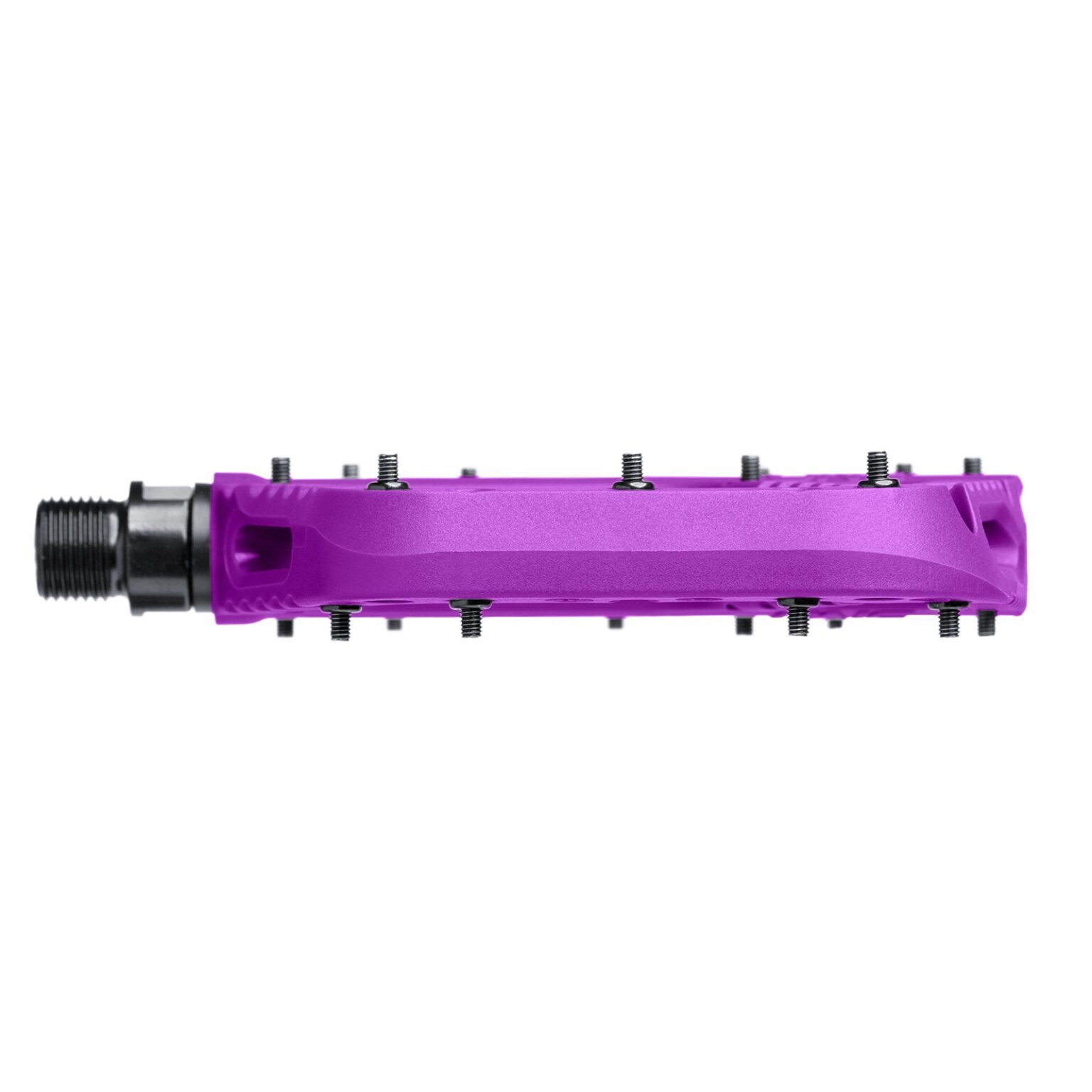
Profile matters on an eMTB for another reason: bike geometry and suspension determine pedal clearance. A thin body can be useful, but comparing one pedal at its thinnest point with another pedal's overall height is not like-for-like. We do not turn catalog millimeters into a promise that rock strikes will disappear.
Before spending, note when strikes occur: line choice, crank position, suspension compression and terrain all contribute. A pedal change does not replace correcting an unsuitable setup. If the behavior started after a suspension change, record that before blaming the pedal body material.
Eleven pins do not always mean the same thing
Chester has an easily missed detail: its eleven points per side include nine metal pins and two co-molded composite points. That is not the same as DMR's eleven replaceable steel pins. OneUp lists ten per side. Counting helps identify the product but does not calculate grip: distribution, exposure and rubber contact matter.
The practical question is whether you can maintain them. Check fastener access, whether a damaged head can be removed and the cost of the correct replacement. A bent pin does not justify fitting any similar-length screw. Use the compatible kit and manufacturer procedure; more exposed pin does not automatically mean better control or fewer injuries.
If you are learning, consider stepping off and repositioning your foot too. Contact that feels ideal at rest may feel too restrictive with your shoe. You do not have to choose the most aggressive pin setup immediately, and shin protection does not make every setup suitable for every rider.
Advertisement / sponsored link
Advertisement / sponsored link
Serviceable does not mean every part is sold separately
This is a reason to open the exploded view before buying. OneUp documents two assemblies identified by a 6 or 8 mm spindle hex. The 8 mm document lists bearing kit SP1C0072 but marks the axle and body as unavailable separately. We would not buy a kit just because Composite appears in its title.
DMR offers a V11 kit with bearings, bushings, seals and other hardware. Its spare-parts catalog also identifies Vault/V11 axles. That lets you ask about a specific repair, but it does not guarantee stock, final price or compatibility with every old unit. For Chester, confirm the reference and generation before ordering parts for an earlier model.
Give the workshop photographs of the reference, affected side and symptom. Rough rotation, play and noise do not necessarily describe the same fault. Check the applicable process before opening a part that may be subject to a support claim. Available service documentation is an advantage, not proof that every home repair is easy.
OneUp 8 mm exploded view and replacement-part limits
Fitting to an eMTB: check the crank as well as the pedal
Before installation, check the interface, left/right markings and crank instructions. Do not infer washers, lubricant or tightening torque from a catalog photograph. The correct instructions belong to the actual components. If the thread will not start by hand as intended, stop: forcing a tool can turn a modest purchase into a damaged crank.
After checking installation, verify free rotation, crank clearance and absence of abnormal play. Make an initial controlled check before a demanding ride. With crank boots, also check the available space; tightening the pedal harder does not fix a rubbing protector. We do not prescribe one torque for three pedals and every crank.
Buying: compare the full cost in your market
We do not rank euro, pound and dollar offers as though they were equivalent. At the check, OneUp's European store displayed EUR 41.99 with EUR 54.99 as a reference; DMR displayed GBP 44 and Race Face USD 60.99 in their respective stores. These are different-market snapshots, not three equivalent Spanish prices or guaranteed color availability.
Ask for the delivered pair price and exact reference. Then consider pins or servicing you may need, without inventing a lifespan in miles. For a US reader, start with the local product page and dealer; a currency conversion does not create a US MSRP or establish support terms.
A discount is worth little if you receive the wrong size or a revision without the spare part you wanted. Keep the purchased description and confirm the box contents. With multi-revision products, that record is often more useful months later than remembering the discount percentage.
Three reasoned decisions, not a made-up winner
If you do not know which size fits, start by checking support and stance: the current Chester offers two sizes within one design. Full-size OneUp provides another large footprint and a different shape. We do not promise shoe-size matches for every platform because one size label does not define every sole. Eliminate poor fits first.
If you want to keep pedals for several seasons, open the exploded views and ask your shop about parts. V11 deserves attention for its service catalog; OneUp requires assembly identification. Your choice depends on repair scope and actual parts access, not an unqualified durable label.
For more confidence descending, first check shoe and foot position and seek technique guidance if needed. No specification sheet establishes the safest pedal in mud. Change one variable at a time and record the difference. Keeping your current pedals may be the best result if they already hold well and are serviceable.
A five-minute inspection that gives useful information
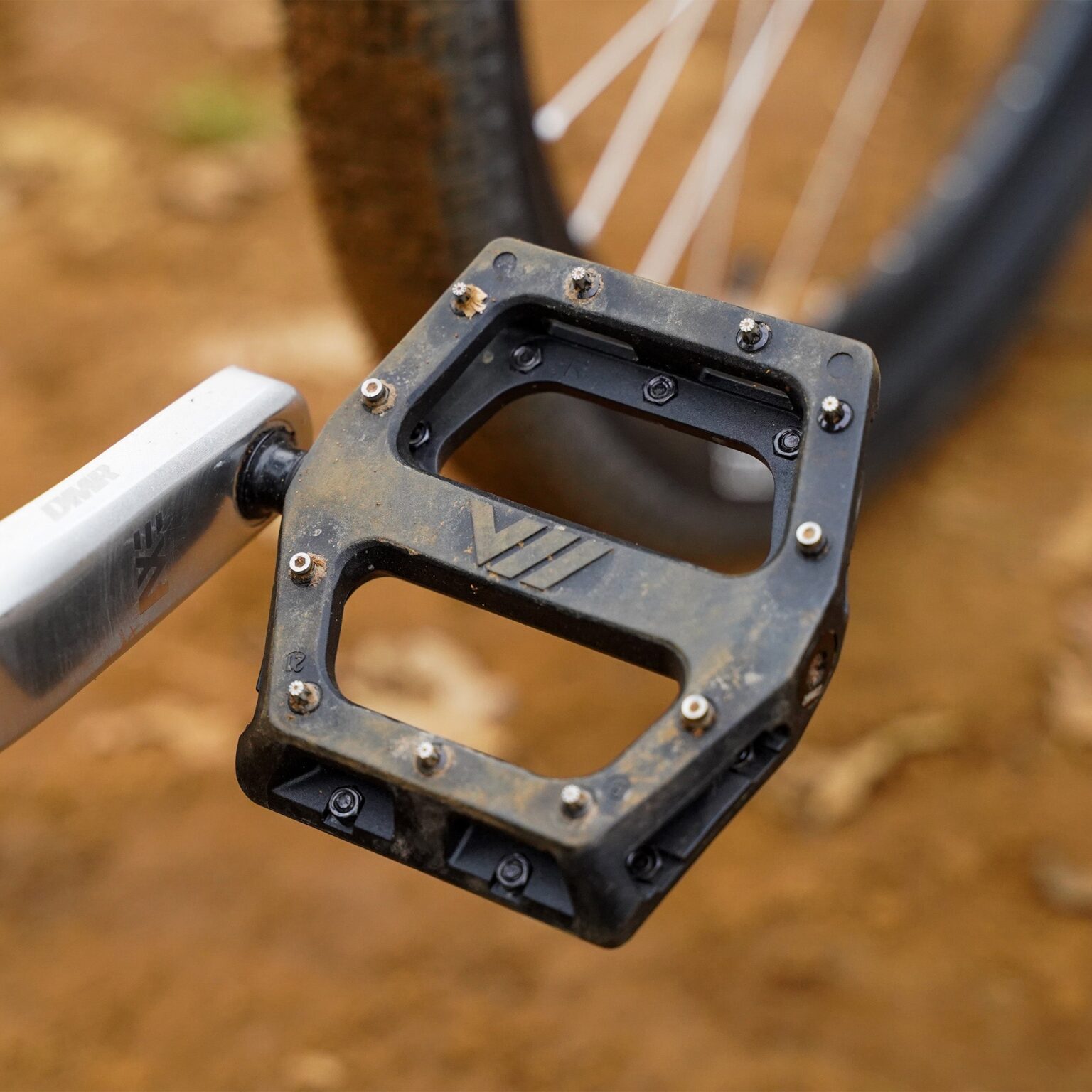
Inspect with the bike stable and the assistance system unable to activate while you work. First clean enough to distinguish dirt from damage. Check both sides: one may retain every pin while the other has lost several. A bike that still moves does not prove that its foot support is in good condition.
Then examine the body, spindle interface and threaded area. A visible crack or substantial deformation calls for stopping use and consulting the manufacturer or workshop. A superficial use mark is not permission to ignore damage. This guide cannot certify a pedal's integrity remotely, and a photograph does not replace inspection.
Compare both pedals without expecting identical spin times: seals, lubricant and construction affect feel. Detecting a change from their previous condition is more useful. Record the side, noise, play, when it happens and any preceding impact. That helps a mechanic more than simply saying the pedal feels wrong.
Advertisement / sponsored link
After a repair, verify the result using the applicable procedure. Silence on the workstand alone does not finish the job. Check installation, fitted parts and operation before a demanding ride. If you cannot identify the part or cause, seek an assessment and keep the component without further disassembly.
Questions to settle before buying
Is composite worse than aluminum?
Material alone cannot decide that. Design, fit, condition and serviceability count. This comparison includes no failure tests that establish a strength order between brands.
Does Chester have eleven metal pins?
The current specification distinguishes nine metal pins and two co-molded composite points per side. Identify the generation before applying that count to another Chester.
Which V11 weight do we use?
450 g per pair, identified as the specification figure. The same page shows 430 g in another block; that discrepancy remains unresolved, not presented as a measured weight.
Compare quotes using a short repeatable list: model and revision, size, delivered pair price, correct service kit and support route. A shop that cannot clearly identify the product calls for another question. If your existing pedal has a repairable problem, obtain that quote too before replacing the complete pair.
A sensible purchase ends with four answers: it fits, it is compatible, you know the maintenance route and you know the final price. Ask before adding another component if one is missing. Our aim is a verifiable choice for your situation, not manufacturing a winner from a table.
Sources and documentation
Specifications checked on October 28, 2026. Editorial guide based on official documentation, not our own ride test. Equipment and availability may vary by market.
Have you used this bike, motor or component?
Join eRIDERSeMTB on Telegram to discuss real experiences with other riders: Bosch, Avinox, Shimano, deals, faults and buying decisions. The community currently speaks Spanish.
Join TelegramAdvertisement / sponsored link
Advertisement / sponsored link
Advertisement / sponsored link