Shimano XT Di2 M8200 for eMTBs: M8250, M8260 and choosing the right upgrade
Technical guide · September 2026
Separate battery or eBike power, cassette and shifter: plan an XT Di2 upgrade without mixing up models and features.
Advertisement / sponsored link
Choose the exact product first, then the XT level
Buying Shimano XT Di2 for an eMTB seems simple until four near-identical product references appear in the shop. A useful decision starts with two questions: where will the rear derailleur get its power, and what drivetrain does the bike have now? Resolving them before hunting for deals avoids buying an excellent component that does not fit the project.
M8200 is the family name. Within it, Shimano distinguishes the wireless M8250 rear derailleur and the M8260 for compatible eBikes; it also separates cassette versions and speed counts in its Official presentation of DEORE XT. Therefore, a commercial description that only says ‘XT Di2 twelve-speed’ is insufficient.
This guide is for anyone comparing new bikes or considering upgrading their own. Our buying assessment is based on components, documentation and usage scenarios; it does not attribute impressions from our own testing to this groupset. An improvement worth paying for must address a specific need: shifter reach, cable maintenance, integration or shifting control.
M8250 and M8260: two ways to power the rear derailleur
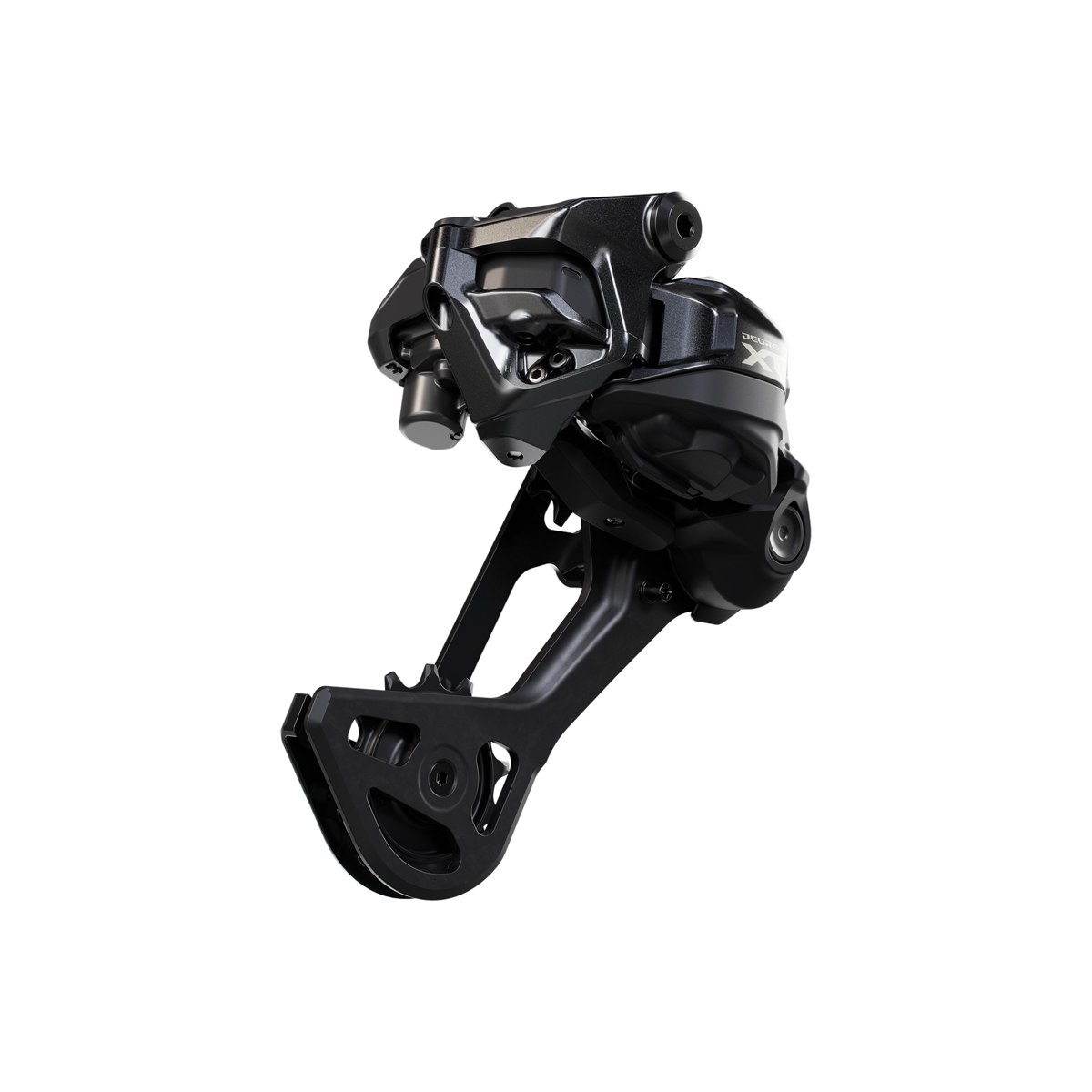
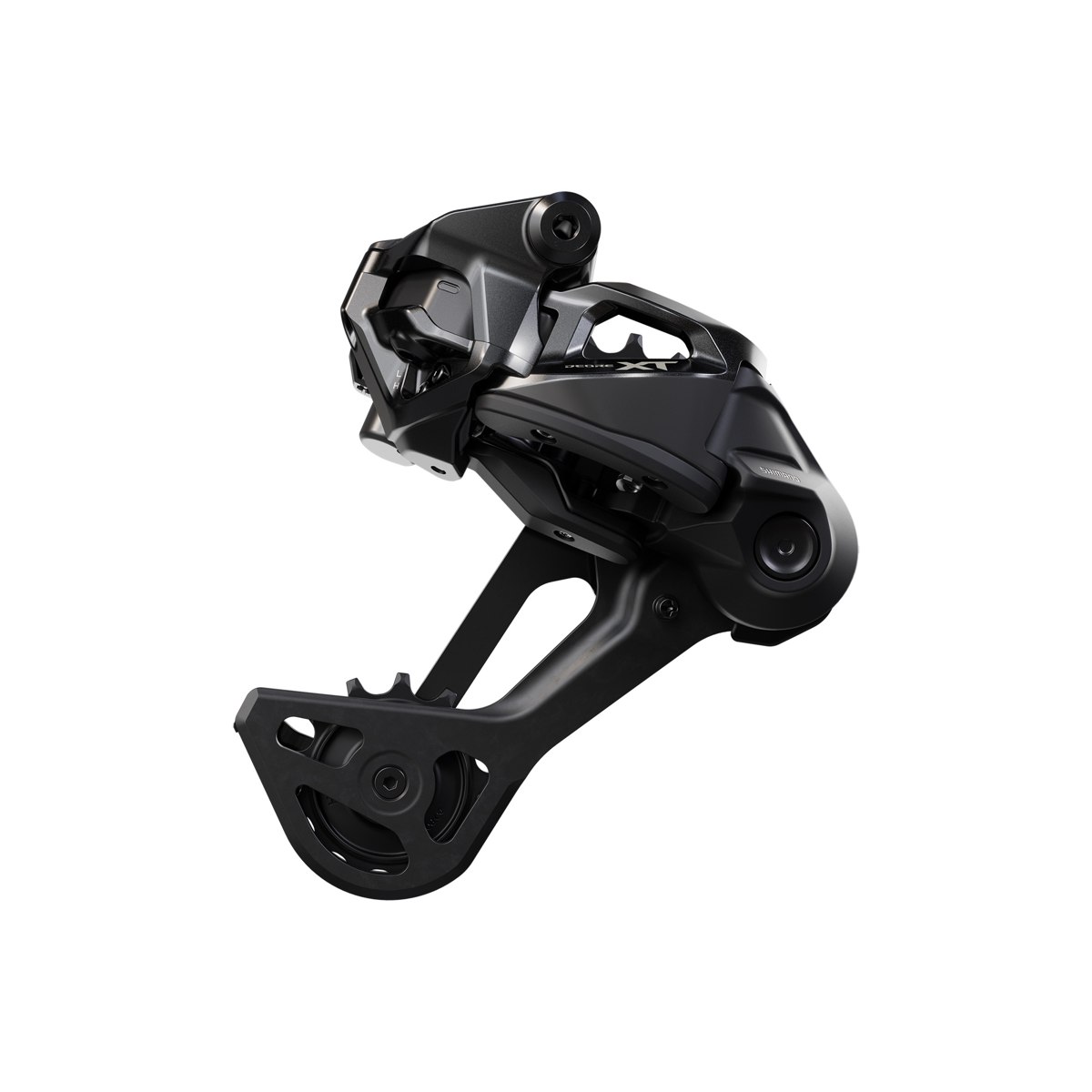
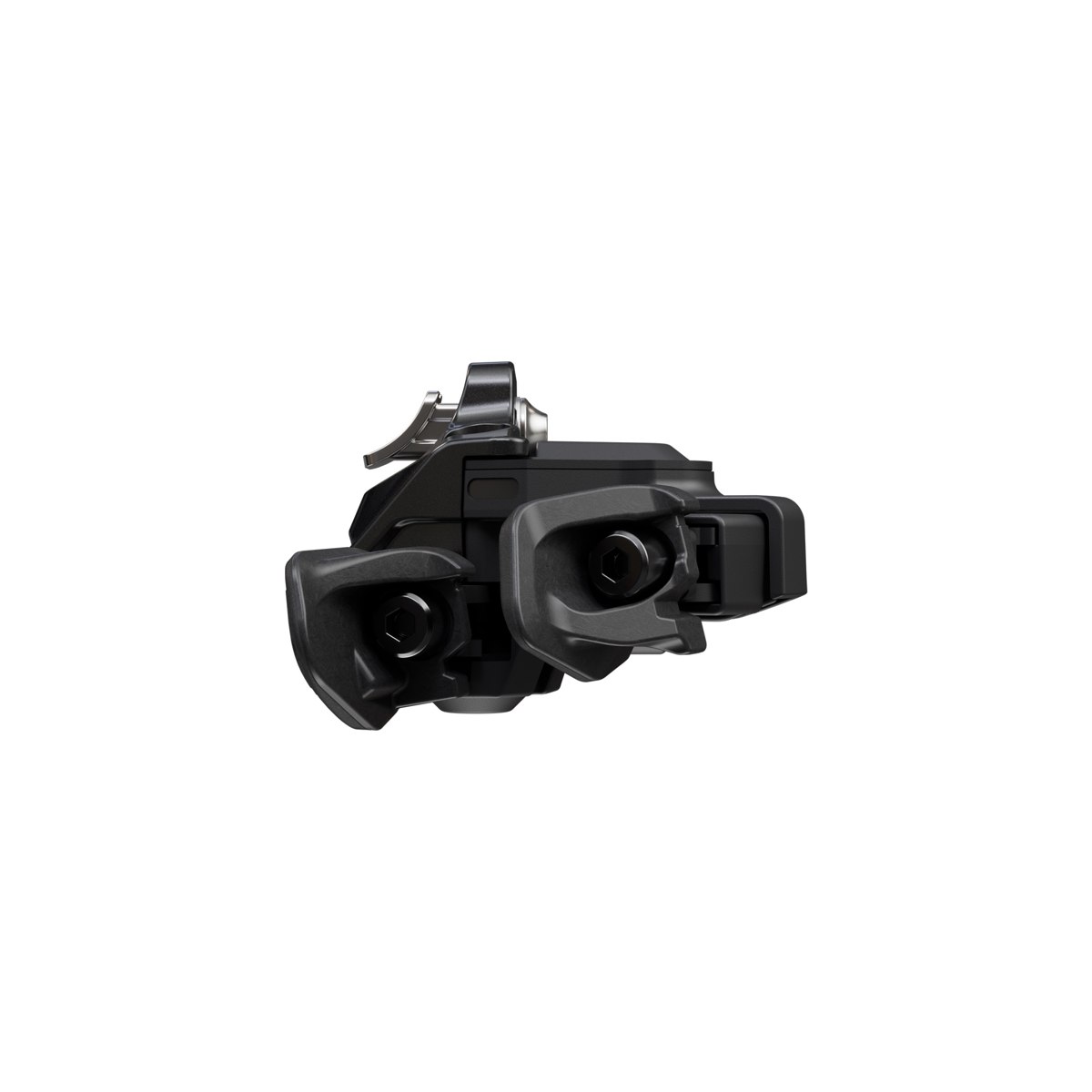
The RD-M8250-SGS uses a removable battery in the rear derailleur itself and is specified for a 10-51 cassette. The RD-M8260-12 draws power from a compatible eBike and works with twelve-speed HYPERGLIDE+. Wireless commands from the shifter do not mean the integrated rear derailleur has no power cable.
Advertisement / sponsored link
| Reference | What changes the buying decision | What to check |
|---|---|---|
| M8250-SGS | Dedicated battery; 10-51 | Drivetrain, mounting, shifter and charging |
| M8250-GS | Compact option for 9-45 | Cassette and overall gearing |
| M8260-12 | Power from the eBike | Electrical system and supported functions |
The practical implications differ for two buyers. Someone keeping their motor while adding electronic shifting can consider a standalone solution. Someone buying an already integrated eBike should request a demonstration of that specific bike's functions. Do not pay for supposed integration inferred solely from the XT logo on the rear derailleur.
Compatibility is checked in two lists
Make a mechanical checklist covering frame, hanger, cassette, freehub, chain and chainring. Add an electrical checklist with the motor, rear derailleur, shifter and battery references, plus the supported configuration. Separating these checks helps explain why a drivetrain can fit physically yet still lack the functions you expected.
The Shimano 2026-2027 compatibility table places M8260 within specific eBike system combinations. The motor's commercial name is no substitute for that table: the complete drive-unit reference and accompanying diagram notes matter. Nor does it make any bicycle battery a suitable power source.
For an upgrade, give the shop legible photographs of your current product references and request a written proposal identifying the parts it will retain. If the quote requires a new cassette, ask whether that is due to incompatibility, wear or a gearing choice. Those are different reasons and should be explained separately.
For a new bike, ask for the advertised functions to appear in the specifications of the exact build. A demonstration on another display model does not confirm what you will receive. With that information, you can compare quotes without assuming every XT-equipped eMTB offers the same features.
10-51 and 9-45: compare the gears you are going to use
The CS-M8200-12 offers 10-51 with a 510% range and 9-45 with 500%. Shimano specifies MICRO SPLINE and, for the nine-tooth option, a dedicated TL-LR021 lockring tool. The percentage describes gear range; alone, it does not tell you how much effort your usual climb will require.
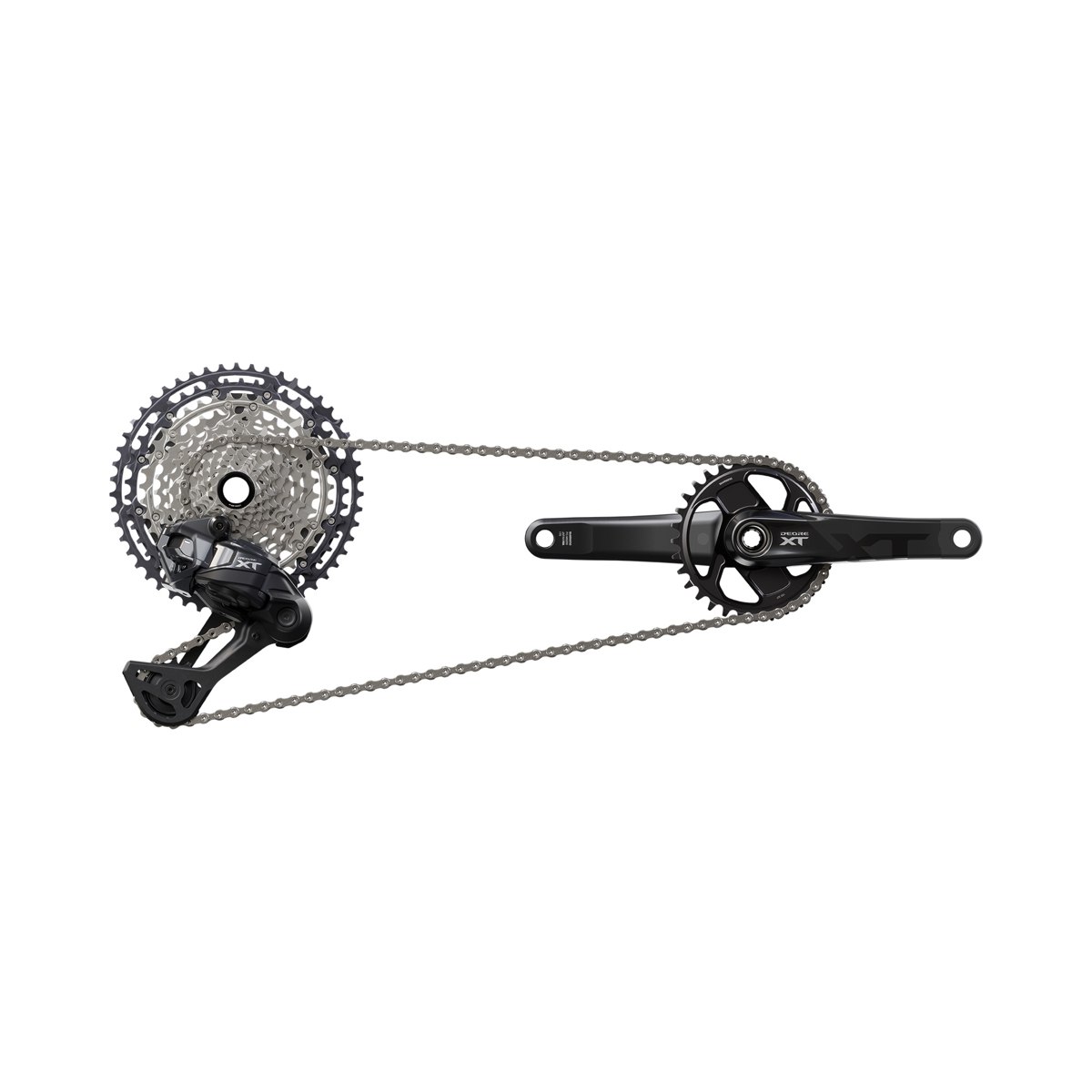
A worked example makes this clearer. With a 34-tooth chainring, the lowest gear of 34/51 equals 0.667 wheel revolutions per crank revolution, without considering tire circumference. With the same chainring and a 45-tooth sprocket, the ratio becomes 0.756: approximately 13.3% higher. A cassette with almost the same overall range can leave you with a noticeably harder lowest gear.
With a hypothetical 30-tooth chainring and a 45-tooth sprocket, the ratio returns to 0.667. That explains the logic of a compact setup, but does not authorise fitting any 30-tooth chainring to any motor. Check availability, interface, chainline and approval for the installation.
For an upgrade, our editorial preference is to retain a low gear that already works well. Reducing the system's size is worthwhile only when the bike supports the complete combination and the extra clearance benefits your routes.
The shifter must work with your brakes and gloves
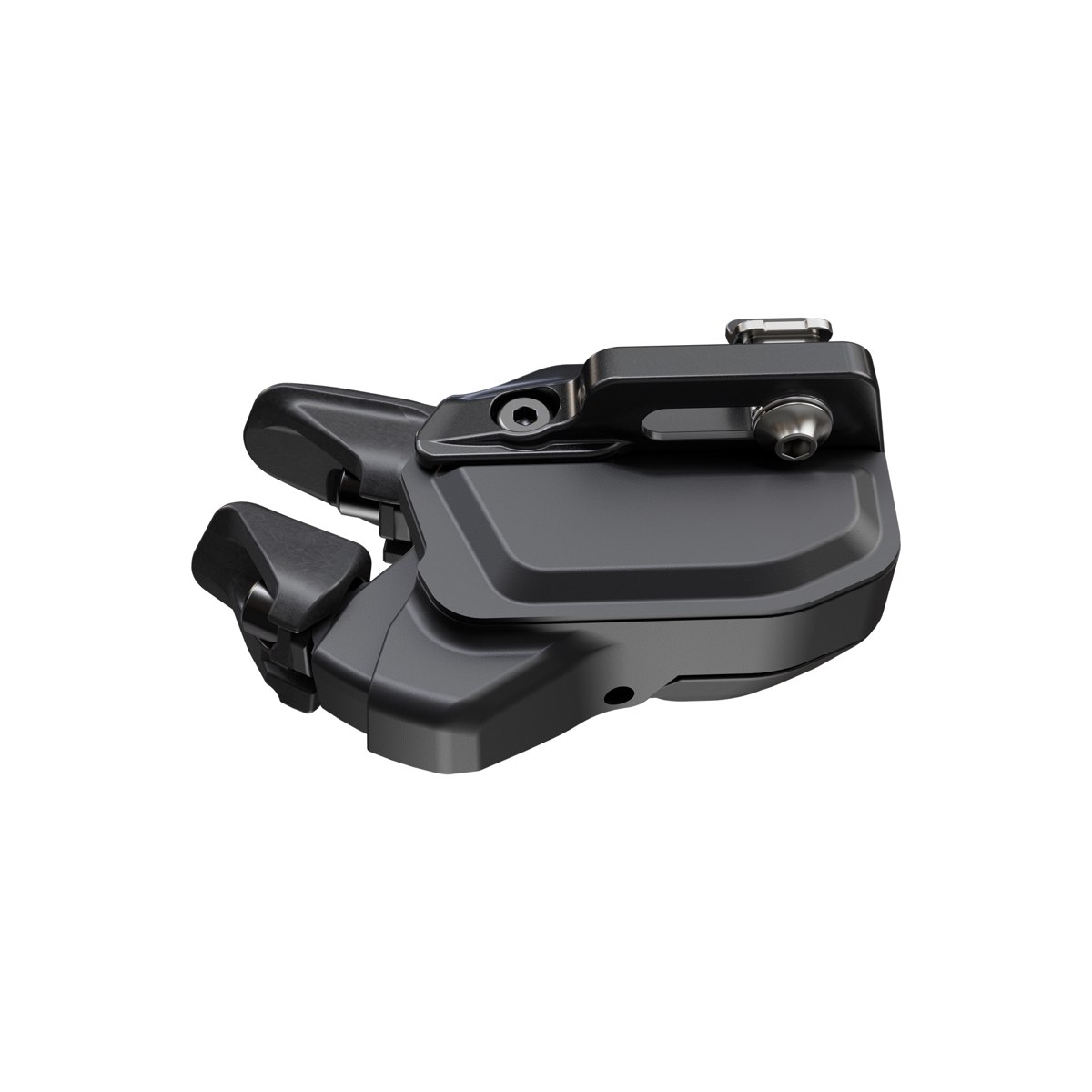
The SW-M8250-IR uses I-SPEC EV, offers position adjustment and has a third button programmable through E-TUBE PROJECT. The range also includes the clamp-mounted SW-M8250-R. This is an installation choice, not a detail to leave to the advert's photograph.
Advertisement / sponsored link
First position the brake lever where you can operate it naturally. Then check that you can reach the shifter without twisting your wrist or opening your hand. Test both seated and standing, wearing your winter gloves: a position that feels comfortable in the car park may not remain so when braking and shifting your weight.
Advertisement / sponsored link
When first using it, we suggest assigning only a few functions and learning them well. A press that does more than expected can be awkward when negotiating a step at low speed. Try the available button-press options in an easy area and keep a configuration you can anticipate.
The quote should also identify the required clamp or adapter. A brake and shifter sharing a brand does not establish compatibility across every mounting generation. And a poorly positioned brake lever cannot be fixed with a software update.
What changes in your charging routine
The documentation of Di2 with BT-DN320 includes the M8250 rear derailleurs and their shifter combinations. A protected battery compartment and removal for charging are part of the M8250 design. Buyers should check which battery and charging system are included in the exact package being compared.
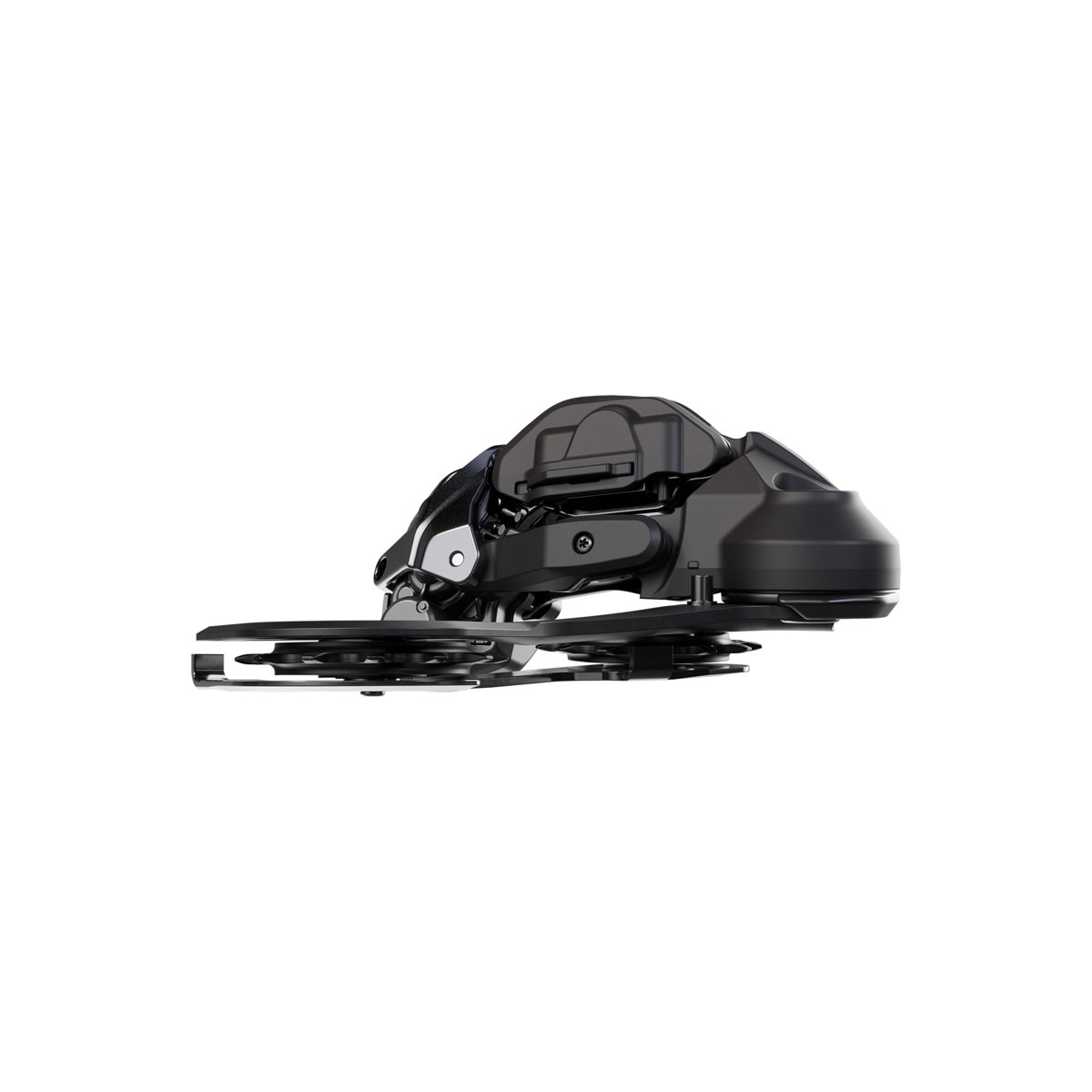
For a bike with standalone shifting power, we suggest checking charge when you prepare your water and tools. There is no need to invent a range in kilometres: what matters is knowing the charge before leaving and learning which warning your setup provides. Shifting frequency differs between a steady track and a route with constant short climbs.
With M8260, preparation centres on the eBike system. Before a trip, clarify with the shop what to expect when the main battery charge drops and how to restore operation after transport. Do not extrapolate from behaviour seen with another motor.
You may prefer a separate battery for its independence, or integrated power for a simpler routine. Neither preference requires claiming the other architecture is worse for everyone.
AUTO SHIFT and FREE SHIFT need a compatible bike
Shimano announces AUTO SHIFT and FREE SHIFT for M8260-12 within a compatible system. These are different functions: one manages shifts automatically, while the other lets you shift while coasting without pedalling. Do not attribute them to the standalone M8250 simply because it shares the family name or appearance.
During a demonstration, suggest three simple situations: a steady climb, exiting a slow corner and a coasting section ending in a short climb. Observe whether the selected gear lets you resume pedalling as expected. The useful question is not how often the system shifts, but how many corrections you want to make yourself.
It also matters to know how to return to manual control without searching menus during a difficult section. Ask for an explanation of the settings available on that eBike and repeat the operation while stationary until it is familiar. Learning the system beforehand is easier than discovering it on a narrow climb.
Our editorial criterion is that automation makes sense when it reduces tasks without adding uncertainty. If you prefer selecting every gear, a good electronic shifter can still appeal. And if your current rear derailleur works correctly, another build having more functions does not create an obligation to replace it.
Impact protection does not mean automatic repair
The M8250 incorporates Automatic Impact Recovery, alongside a profile designed to reduce exposure and guards around the pulley wheels. These manufacturer solutions do not mean a bent hanger, damaged chain or broken part will repair itself.
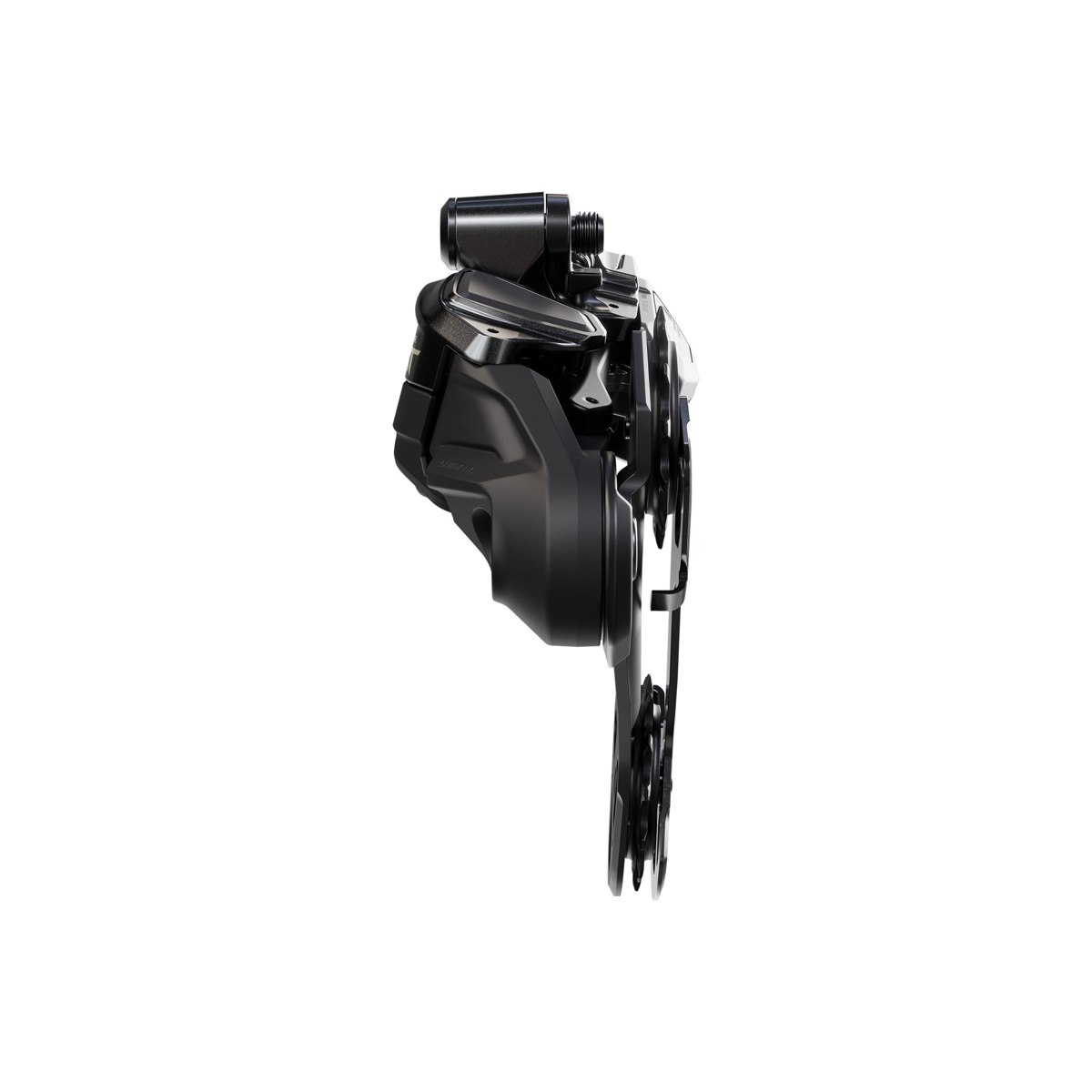
After an impact, stop and inspect the rear derailleur, hanger, wheel and visible chain path. If you find deformation, interference or unsafe operation, do not keep forcing shifts to see how much it can take. Electronic protection addresses a designed-for situation; mechanical damage needs a separate assessment.
For an intermittent problem, note when it appears: on a particular sprocket, after removing the wheel, only under hard pedalling or since a crash. That record helps the workshop more than the conclusion 'the Di2 is failing'. One symptom can have several causes.
Do not immediately blame every noise on software either. A methodical check of installation, wear and power supply avoids trial-and-error component replacement. Documenting the problem lets you assess the repair under the same conditions in which you found it.
How to compare two quotes without overlooking parts
Ask for a total installed upgrade price as well as individual component prices. Split the proposal into rear derailleur and shifter, power supply, drivetrain parts requiring replacement, mounting parts and labour. This reveals whether an apparently cheaper offer excludes items already included in the other.
Three scenarios are particularly useful. If you retain a compatible drivetrain in good condition, spending may focus on the shifting controls and actuation. If chain and cassette are nearing replacement, it makes sense to consider the upgrade alongside that maintenance. If the change also requires converting the wheel or addressing electrical integration, compare the whole project with keeping the current system.
We do not give here a universal price: the reference, the contents of the box and the sales market change what you actually pay in Spain. Ask the seller to confirm taxes, availability, accessories and who will perform the first setup.
Advertisement / sponsored link
Also reserve a small part of the budget for ergonomic corrections and an installation check after initial use. The purchase is complete when you can use every gear normally and know how to prepare the bike for a ride, not when a box with the right logo arrives.
A handover check that helps you decide
Request an initial check of all gears and verify that each shifter command produces the expected behaviour. Then, in a safe area, pedal gently, shift from one gear to the next and repeat under moderate load. The aim is to recognise normal operation for your setup.
To assess ergonomics, alternate gentle braking and shifter presses without moving your hand on the grip. If you must reposition it every time, correct the position before changing functions. Also test access to the extra button without confusing it with the main control.
Keep a photograph of the setup and a list of installed product references. For an upgrade, also retain the quote identifying reused parts. If a problem arises, these details let you check exactly what was installed and changed.
A second ride on a familiar route will help you decide whether the investment makes something specific easier. Assess shifting comfort, ease of gear selection and your preparation routine. There is no need to turn personal observations into an absolute ranking against every groupset on the market.
Questions before buying XT Di2
Does M8200 always mean an electronic rear derailleur?
No. The official family includes mechanical options too. The series name alone does not identify the component: insist on its full reference and a description of the actuation system.
Can I buy M8260 just because my eBike has a Shimano motor?
That is not a sufficient check. Compare the drive unit and the rest of the system against the current compatibility table, including its notes. The shop should confirm the installation and intended functions before ordering.
Does switching to Di2 eliminate all maintenance?
No. There are still a chain, teeth, pivots and an installation to inspect. The decision changes how you operate the drivetrain and, depending on the version, how you power it; it does not make wear parts last forever.
What option would we choose for a sensible purchase?
The option that meets a demonstrable need while replacing the fewest serviceable parts. For an upgrade, we would first check whether the current gearing can be retained. For a new bike, we would assess the complete system's operation and ergonomics without automatically assigning a premium to the Di2 name.
Sources and documentation
Information checked on September 8, 2026. Photographs belong to the identified manufacturers; specifications and availability may vary by market. Editorial analysis, not our own ride test.
Have you used this bike, motor or component?
Join eRIDERSeMTB on Telegram to discuss real experiences with other riders: Bosch, Avinox, Shimano, deals, faults and buying decisions. The community currently speaks Spanish.
Join TelegramAdvertisement / sponsored link
Advertisement / sponsored link
Advertisement / sponsored link